Request
Quote

International Equipments is one of the world's leading manufacturers, suppliers and exporters of laboratory Pipe Testing Equipments — with our Mumbai manufacturing facility established in 1971 and our equipment exported to over 50 countries across the Persian Gulf, Middle East, Europe, USA and Latin America. Our pipe testing instruments are installed in the QC laboratories of major polypropylene (PP), polyvinyl chloride (PVC, R-PVC, CPVC), polyethylene (HDPE, MDPE) and PPR pipe manufacturers — for water supply, gas distribution, sewerage, sprinkler irrigation, drip irrigation and telecom cable ducting applications.
Pipe testing covers a focused but technically demanding set of laboratory measurements — long-duration hydrostatic creep rupture testing at controlled elevated temperature, low-temperature drop-weight impact resistance, polymer compositional analysis (carbon black content + dispersion + ash content + OIT), mechanical properties (tensile, compression, ring stiffness), thermal properties (Vicat softening point, reversion), rheological properties (melt flow index) and physical properties (density, opacity). A complete plastic pipe QC laboratory typically needs 10 to 15 different instruments depending on the pipe types and applications being tested. We supply ALL of these from a single Mumbai facility.
International Equipments is amongst leading manufacturer of testing equipment for pipes and fittings across the world having manufacturing unit in India established in year 1971. Extending export to more than 50 countries which mainly include Persian Gulf, Middle East, Europe, USA, Latin American territory, it is one of the renowned name in plastic pipe testing field. Equipment are mainly manufactured to check quality of Polypropylene pipe (PP), Polyvinyl chloride pipe (PVC, R-PVC and C-PVC), Polyethylene pipe (HDPE and MDPE) as well as pipe fittings used in varied applications of gas pipe, sprinkler irrigation, Sewage piping etc. Few of these equipment manufactured for such application are Hydrostatic pressure testing machine and tank with End caps for checking internal creep rupture of pipes, Impact testers, Zero Degree chamber, Universal testing machine for tensile, Compression & Ring Stiffness, Vicat Sofetning point, Carbon Content, Carbon Dispersion, Reversion Oven.
Pipe testing is the systematic laboratory measurement of plastic pipe properties — covering pressure resistance, impact resistance, mechanical properties, thermal properties and compositional analysis — to verify that a finished pipe meets the specification it was designed and procured against. Different from generic plastic testing, pipe testing is fundamentally about WHOLE-PIPE testing — the pipe sample is tested in its actual as-manufactured geometry, not as a small specimen cut from the pipe wall. This whole-pipe approach ensures that real-world failure modes (cracking at the longitudinal weld line, splitting at internal pressure peaks, impact failure at pipe wall) are captured.
Pipe quality control is non-negotiable in the modern Indian and export markets — every plastic pipe carrying water for human consumption (IS 4984 HDPE, IS 4985 uPVC, IS 15778 CPVC, IS 15801 PPR), gas distribution (IS 14885 PE gas), sewerage (IS 14333 HDPE), telecom ducting (IS 14930 HDPE PLB) or irrigation must be tested per the applicable Indian Standard before sale. BIS certification (ISI mark) requires the manufacturer to demonstrate in-house testing capability for every test specified in the relevant standard. Without ISI mark, the pipe cannot be sold for most government and certified-private projects in India.
Our pipe testing equipment supports the complete range of plastic pipe materials used in modern infrastructure:
Polyethylene (HDPE) Pipe
High-Density Polyethylene — the most common pipe material for water supply, sewerage, irrigation, telecom PLB duct and gas distribution. Tested under IS 4984 (water), IS 14333 (sewerage), IS 14930 (PLB duct), IS 14885 (gas). HDPE pipe QC is the most demanding — requires Hydrostatic Pressure Panel + Tank, Impact Tester + Zero Degree Chamber, OIT, ESCR, Carbon Black Content + Dispersion, MFI, Density, UTM and more.
Polyethylene (MDPE) Pipe
Medium-Density Polyethylene — used primarily for natural gas distribution pipe (IS 14885) and some water supply applications. Similar test suite to HDPE — pressure testing, impact, OIT, carbon black, density.
Polyvinyl Chloride (PVC / uPVC) Pipe
Unplasticized PVC — most common pipe material for low-cost water supply, drainage and SWR (Soil-Waste-Rainwater) applications. Tested under IS 4985 (water) and IS 13592 (SWR drainage). PVC pipe testing emphasises Vicat Softening Point, Impact Tester at 0°C, Opacity, Hydrostatic Pressure and Tensile.
Reinforced PVC (R-PVC) Pipe
Glass-fibre-reinforced or other-reinforced PVC pipe — for higher-pressure and structural applications. Tested under specific R-PVC standards. Requires UTM with higher load capacity for ring stiffness and compression tests.
Chlorinated PVC (CPVC) Pipe
CPVC — used for hot water plumbing and chemical process applications. Tested under IS 15778. CPVC needs Vicat Softening Point testing at HIGHER temperatures than uPVC plus Hydrostatic Pressure testing at elevated temperatures (typically 82°C+).
Polypropylene (PP / PPR) Pipe
Polypropylene Random Copolymer — used for hot and cold water plumbing, HVAC and food-grade applications. Tested under IS 15801 (PPR water). PP/PPR pipe QC similar to HDPE but emphasises Hydrostatic Pressure testing at elevated temperatures and PP-specific MFI ranges.
Pipe Fittings (All Material Types)
Plastic pipe fittings — elbows, tees, reducers, couplings, valves — undergo the same QC test suite as the parent pipe material, plus specific fitting-geometry tests like burst pressure, joint integrity, ring stiffness. Our UTM is configured with custom fixtures for fitting compression and burst testing.
Our pipe testing equipment supports all major plastic pipe application categories:
Potable Water Supply Pipes
HDPE (IS 4984), uPVC (IS 4985), CPVC (IS 15778), PPR (IS 15801) — pipes carrying treated water from municipal supply to homes, hospitals, schools, offices, industries. Most rigorously tested category — pressure testing, impact, OIT, density, carbon black are all mandatory per the applicable BIS standard.
Gas Distribution Pipes
PE gas pipes (IS 14885) — used for natural gas distribution from city-gate to consumers. Highest safety-criticality of all pipe categories — additional testing for pressure, oxidation resistance and long-term hydrostatic strength (LTHS). Failure at consumer end is unacceptable.
Sewerage Pipes (Underground)
HDPE sewerage pipe (IS 14333), uPVC drainage and SWR (IS 13592). Underground service — tested for ring stiffness (compression on UTM), impact resistance, density and material integrity.
Telecom Cable Ducting (HDPE PLB Duct)
HDPE Pre-Lubricated telecom duct (IS 14930) — for OFC cable blowing. Specialised testing including internal COF between duct wall and OFC. We have a dedicated industry landing page for HDPE PLB Duct Manufacturers.
Sprinkler & Drip Irrigation Pipes
LDPE / HDPE drip and sprinkler irrigation pipes — UV stabilisation testing (carbon black content + dispersion), tensile and impact testing, density verification.
Industrial & Chemical Process Pipes
CPVC chemical pipes, HDPE chemical lines — chemical resistance testing (specialised soak tests), pressure testing at elevated temperatures, density and tensile properties.
Plumbing & HVAC Pipes (Hot Water)
CPVC hot water plumbing pipes (IS 15778), PPR hot/cold water (IS 15801) — Vicat Softening Point at elevated temperature, Hydrostatic Pressure at hot temperatures (CPVC at 82°C and above), heat resistance verification.
Pipe testing instruments fall into seven broad categories based on the property they measure. A complete pipe QC laboratory typically needs at least one instrument from each category:
Pressure Testing (the Central Pipe QC Test)
Long-duration internal pressure creep rupture testing at controlled elevated temperature — the most important single QC test for any pressure-rated pipe. Conducted on the Hydrostatic Pressure Panel + SS Tank + End Caps as an integrated system. Test durations from 1 hour for quality verification up to 10,000 hours for Long-Term Hydrostatic Strength (LTHS) curve generation per ISO 9080.
Impact Testing (Whole-Pipe Drop-Weight Method)
Drop-weight impact testing of whole pipe samples at 0°C — simulates real-world impact loading during installation, transportation and accidental knocks. Conducted on the Impact Tester for Pipes + Zero Degree Chamber. Mandatory per IS 4985 / IS 12235 (Part 9) for water pipes and IS 14930 for PLB duct.
Polymer Compositional Analysis
Carbon Black Content (by pyrolysis per ASTM D 1603 / IS 4984), Carbon Black Dispersion (microscope grading per ISO 18553), Ash Content (Muffle Furnace per ASTM D 5630). Verifies the pipe compound has the correct UV stabilisation and filler loading. Critical for HDPE pipe specifications.
Thermal Property Testing
Oxidation Induction Time (OIT) per ASTM D 3895 — verifies antioxidant content and 50+ year service life. Vicat Softening Point (VSP) and Heat Deflection Temperature (HDT) — verify thermal performance. Reversion Oven testing — measures dimensional stability of PVC pipes when heated.
Mechanical Property Testing
Tensile, compression and ring stiffness testing on the UTM — verifies mechanical strength of pipe wall material. Special configurations for ring stiffness (pipe cross-section flattening) and butt-fusion joint testing.
Rheological & Physical Testing
Melt Flow Index (MFI) of incoming polymer granules — the gatekeeper test before extrusion. Density Apparatus — verifies polymer batch composition. Opacity Tester — verifies pipe wall opacity (especially uPVC water pipes which must block light to prevent algae growth).
Environmental Stress Cracking Resistance (ESCR)
ESCR Apparatus per ASTM D 1693 — determines polymer resistance to crack initiation under sustained stress with surfactant exposure. Critical for HDPE water pipes (resistance to detergent residues) and PLB duct (underground stress exposure).
The following 18 instruments form our complete pipe testing equipment range. Each is hyperlinked to its individual product page:
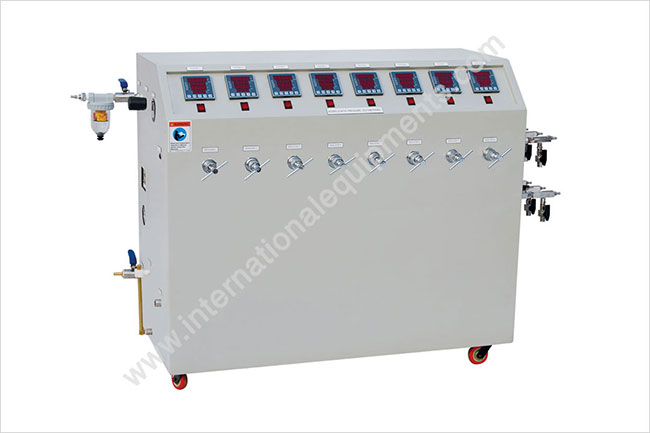
8-station computerised panel with hydro-pneumatic pump, MMI display and PC connection for data logging. THE central pipe certification instrument. Tests up to 8 pipe samples simultaneously at controlled pressure (0-100 bar) for durations from 1 hour to 999.9 hours.
What it tests: Long-term internal pressure creep rupture testing of all plastic pipes per IS 4984, IS 4985, IS 15778, IS 15801, ISO 1167, ASTM D 1598.
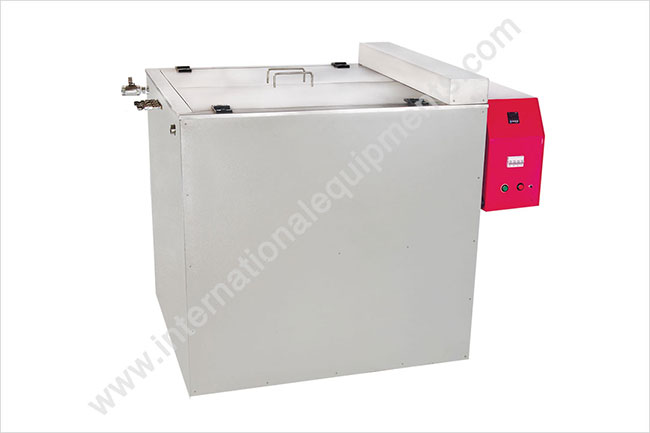
Double-walled, fully insulated stainless-steel water bath. Capacities from 200 litres up to 5000 litres. SS manifolds with quick-release couplings on inside and outside faces. Matched companion to the Hydrostatic Pressure Panel.
What it tests: Insulated water bath that holds pipe samples at controlled elevated temperature (typically 20°C, 60°C or 80°C) during hydrostatic creep rupture testing.

Stainless-steel end caps covering the full plastic pipe diameter range — 16 mm through to 450 mm OD. Sold separately and matched to the customer's pipe production size range. Essential third component of the hydrostatic test system.
What it tests: Pressure-tight end seals for the pipe sample during hydrostatic testing.
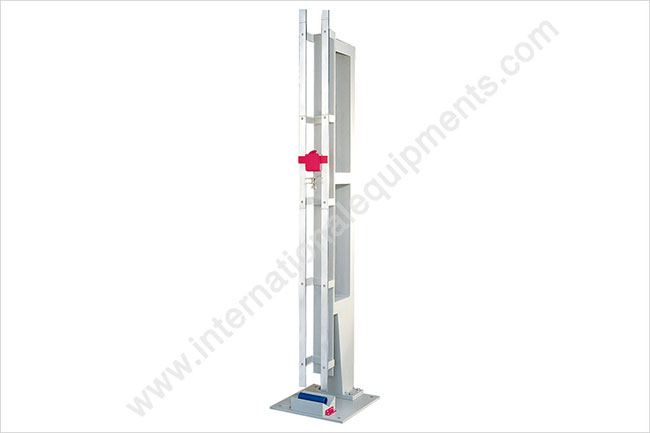
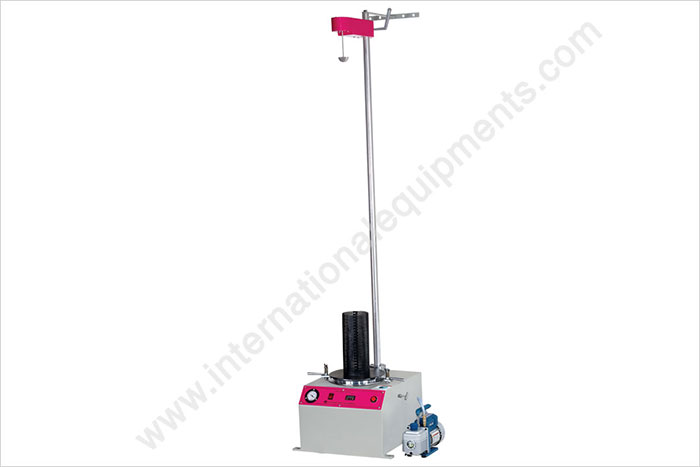
Drop-tower with 9 calibrated impact-energy combinations (3 fall heights of 500/1000/2000 mm × 3 striker weights of 250/500/1000 g). Tests whole pipe samples on a 120° V-block. Mandatory for ISI mark certification of any pressure-rated plastic pipe.
What it tests: Drop-weight impact resistance of whole pipe samples per IS 4985, IS 12235 (Part 9), IS 14930 and ASTM D 2444.
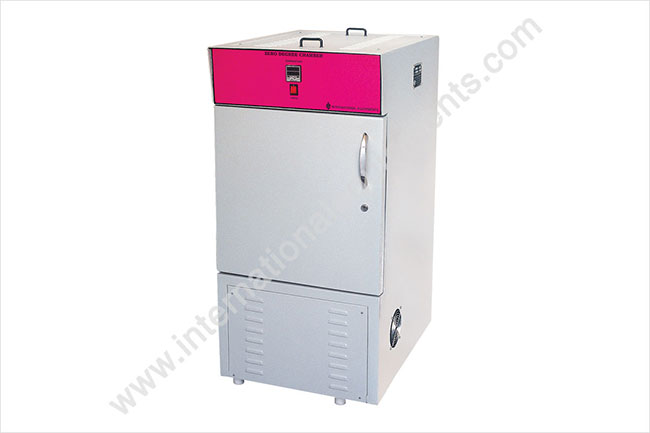
Refrigerated conditioning chamber — required companion for the Impact Tester for Pipes. 16×16×16 inch SS bath, CFC-free compressor, holds pipe samples at 0°C for the worst-case low-temperature impact test.
What it tests: Pre-conditioning of pipe samples at exactly 0°C before drop-weight impact testing per IS 4984 and IS 12235 (Part 9).
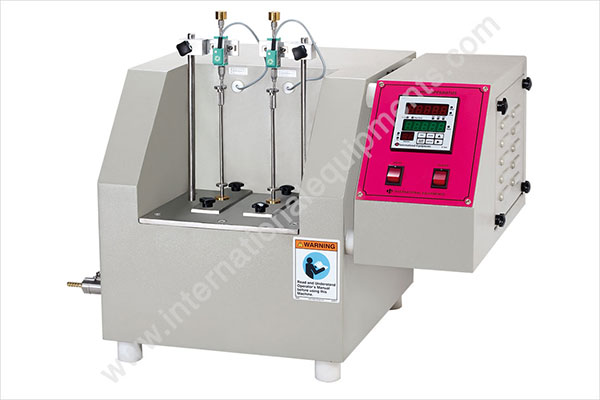
Combined VSP + HDT apparatus — critical for PVC and CPVC pipe testing where the softening temperature determines maximum service temperature. CPVC hot-water pipes require Vicat at higher temperatures than uPVC water pipes.
What it tests: Vicat Softening Point (VSP) per ASTM D 1525 / ISO 306 and Heat Deflection Temperature (HDT) per ASTM D 648 / ISO 75.
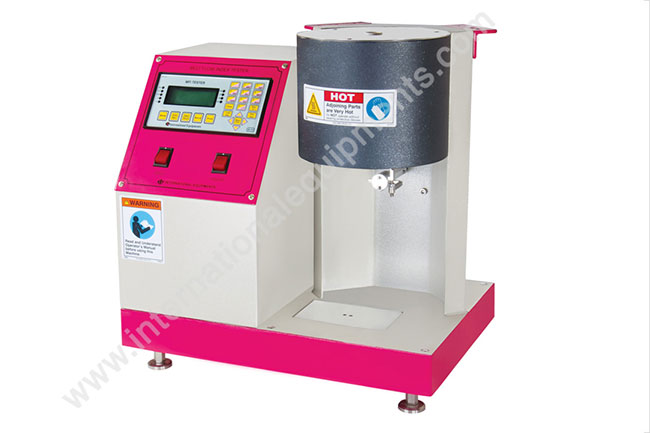
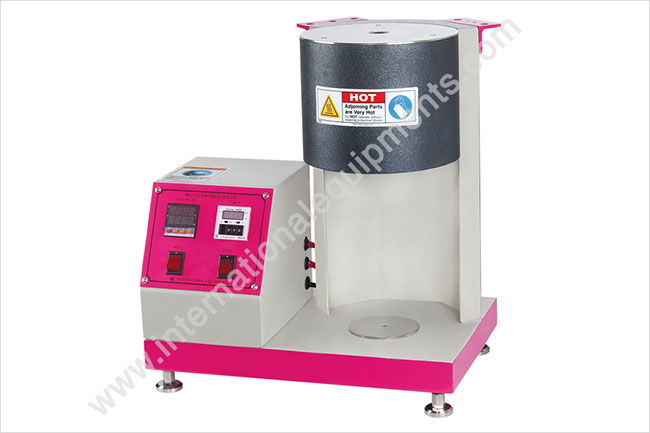
Fully computerised MFI variant for high-accuracy work — the gatekeeper test between incoming polymer batches and the pipe extruder. Also available in Manual and Auto-cut variants on the main MFI Tester product page.
What it tests: Melt flow rate (MFR) of HDPE / MDPE / PP / PVC granules per ASTM D 1238 (Test Method A) and ISO 1133.
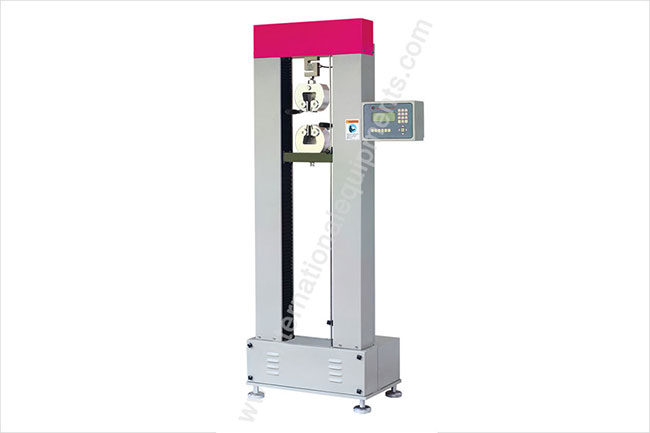
Twin-column computerised UTM with PC software — handles tensile + compression + ring stiffness + bond tests on a single machine. Configurable with pipe-specific fixtures: ring stiffness rings, butt-fusion joint grips, internal COF fixture for PLB duct.
What it tests: Tensile, compression, ring stiffness and special pipe tests per ASTM D 638, D 695, ISO 9969 (ring stiffness), IS 14930 (internal COF for PLB duct).
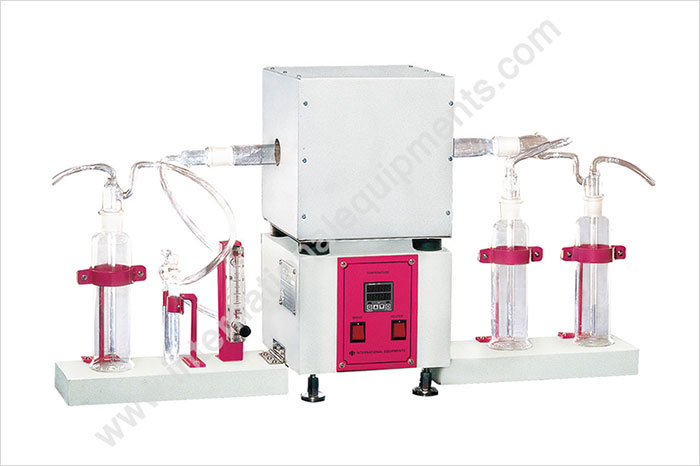
Dedicated pyrolysis furnace + complete glassware set. Verifies the UV-stabiliser loading (typically 2.0-2.5% in HDPE pipes). Mandatory test for HDPE water pipe and PLB duct ISI mark certification.
What it tests: Percentage carbon black in HDPE / MDPE pipes by pyrolysis per ASTM D 1603 and IS 4984.
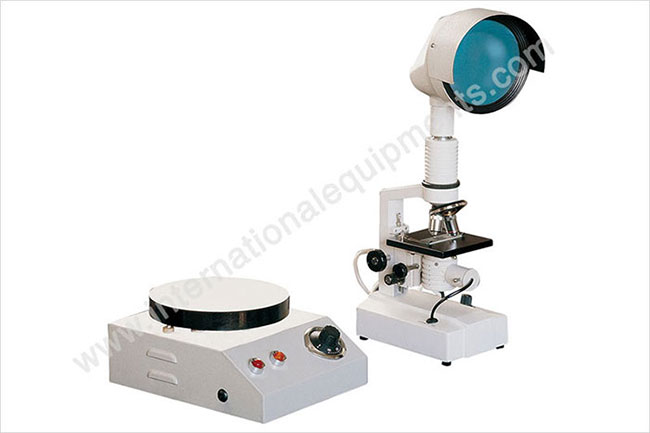
Integrated hot plate + dual-magnification microscope. Grades whether the carbon black is uniformly distributed (good) or agglomerated in clumps (bad). Pairs with the Carbon Black Content apparatus for the complete UV-stabilisation QC story.
What it tests: Carbon black dispersion uniformity (grade scale per ISO 18553) in HDPE pipe compounds.
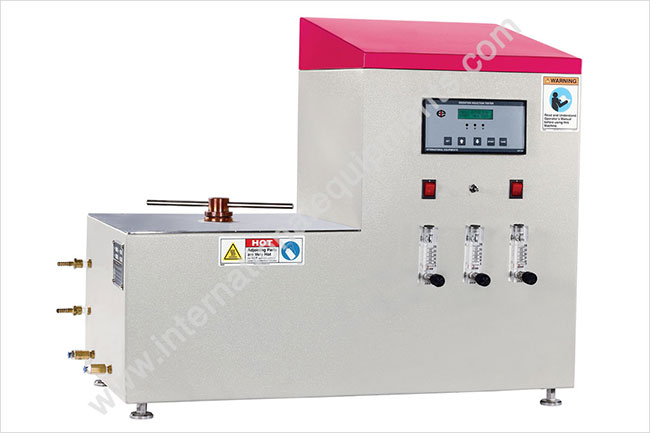
Differential Thermal Analysis-based OIT apparatus. Verifies the polymer has sufficient antioxidant loading to survive 50+ year service life without oxidative degradation. DOT-mandated for PLB duct; BIS-required for HDPE pipes.
What it tests: Antioxidant content / oxidation induction time of HDPE / MDPE / PP pipes per ASTM D 3895 (DTA method).
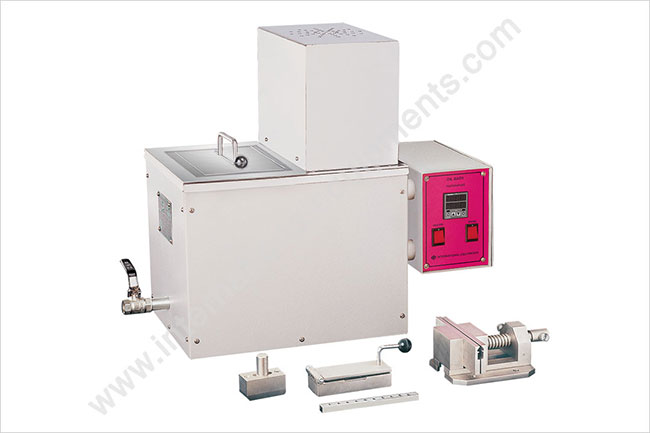
Tests polymer resistance to crack initiation under sustained stress in surfactant exposure. Critical for HDPE water pipes and PLB ducts which face exactly this kind of long-term, low-stress, environmentally-aggressive loading.
What it tests: Environmental Stress Cracking Resistance of HDPE pipes per ASTM D 1693.
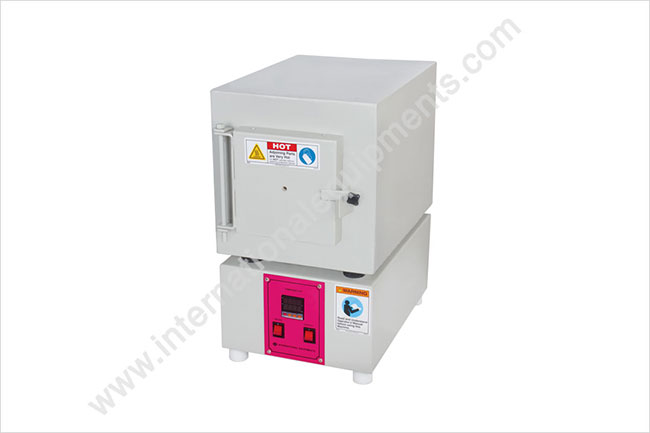
High-temperature furnace (ambient to 1150°C) that burns away the polymer matrix, leaving only the inorganic filler residue. Verifies compound filler loading is per spec.
What it tests: Ash content of plastic pipe samples per ASTM D 5630 and IS 4984.
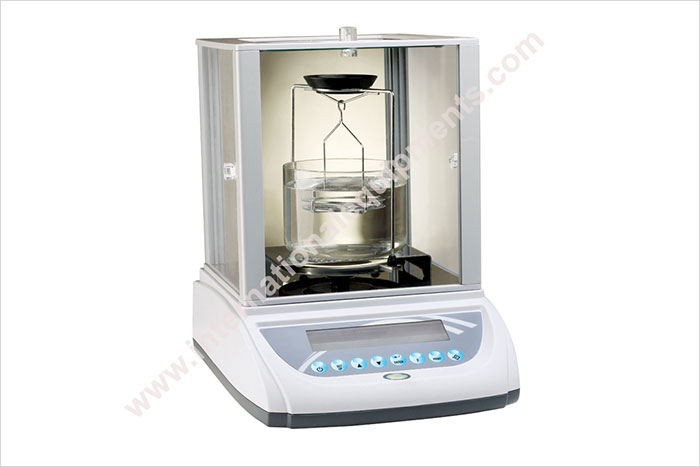
Digital balance with built-in density-determination kit — gives direct density readout via Archimedes / water-immersion method. Routine incoming-batch QC for pipe compounders.
What it tests: Density of pipe-grade polymer granules and finished pipe samples per ASTM D 792 and ISO 1183.
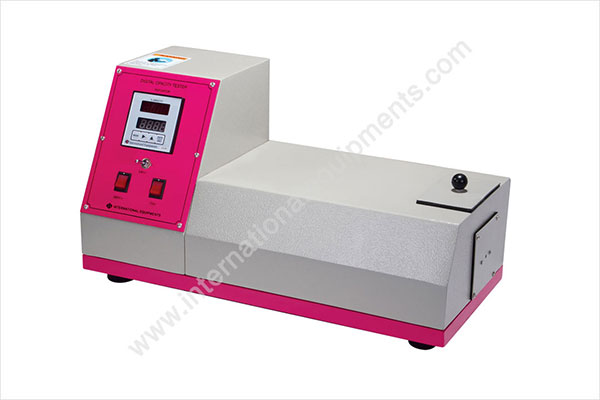
Direct % opaque readout. Essential for uPVC water pipes where wall opacity must be high enough to block sunlight (prevents algae growth inside the pipe). Also for HDPE pipes which must be effectively opaque.
What it tests: Light transmission / opacity of pipe wall samples per IS 4985 and IS 12235 (Part 3).
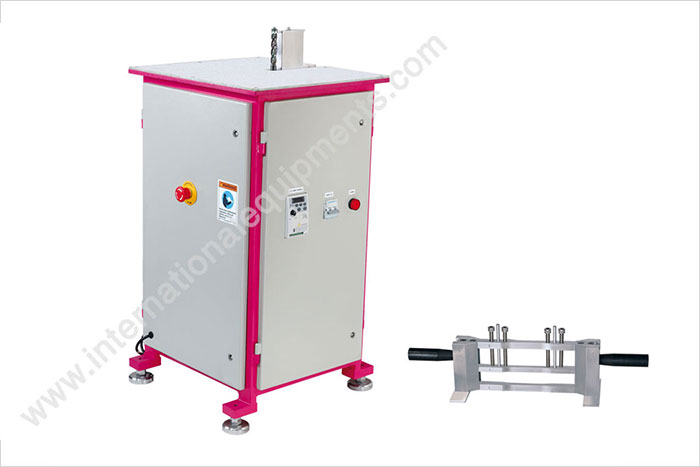
Powered cutting tool that follows template outlines — cuts dumbbell specimens, ring stiffness rings, and butt-fusion joint specimens from pipe wall samples. Essential companion to UTM-based pipe testing.
What it tests: Cutting specimens from pipe samples for downstream tensile, butt-fusion joint, and ring stiffness testing.
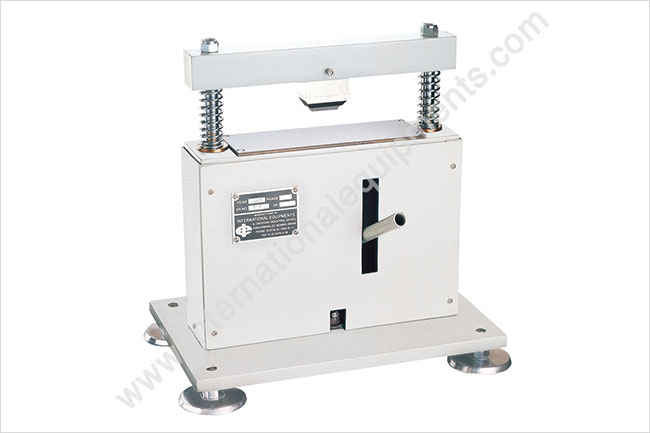
5-tonne bench-top sample cutting press — the foundation sample-preparation instrument for any pipe QC lab. Cuts the standard test specimens for downstream tensile, COF and density tests on the UTM.
What it tests: Cuts standard ASTM D 638 / ISO 527 dumbbell, strip and disc test specimens from pipe wall samples.
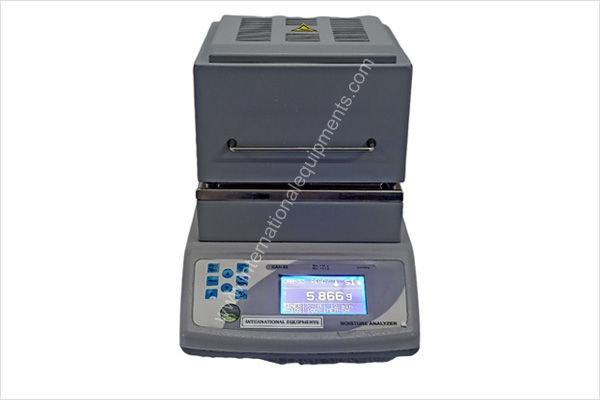
Halogen-lamp moisture analyser — gives fast moisture readout for incoming pipe-grade HDPE / PVC / PP granules. Excess moisture causes voids and weak spots in extruded pipe.
What it tests: Moisture content of pipe-grade polymer granules before extrusion.
Different pipe types require different combinations of tests. The matrix below shows which tests are typically applied to each pipe category:
| Pipe Type | Tests Required |
|---|---|
| HDPE Water Pipes (IS 4984) | Hydrostatic Pressure, Impact + Zero Degree Chamber, OIT, Carbon Black Content + Dispersion, ESCR, MFI, Density, UTM Tensile, Muffle Furnace, Opacity |
| HDPE PLB Telecom Duct (IS 14930, DOT) | Hydrostatic Pressure, Impact + Zero Degree Chamber, OIT, Carbon Black Content + Dispersion, ESCR, MFI, Density, UTM (with internal-COF fixture), Muffle Furnace |
| HDPE Sewerage Pipes (IS 14333) | Hydrostatic Pressure, Impact + Zero Degree Chamber, MFI, Density, UTM Tensile, UTM Ring Stiffness, Carbon Black, Muffle Furnace |
| PE Gas Pipes (IS 14885) | Hydrostatic Pressure (with LTHS curve per ISO 9080), Impact + Zero Degree Chamber, OIT, Carbon Black, ESCR, MFI, Density, UTM |
| uPVC Water Pipes (IS 4985) | Hydrostatic Pressure, Impact + Zero Degree Chamber, Vicat Softening Point, Opacity, Density, UTM Tensile |
| uPVC SWR / Drainage Pipes (IS 13592) | Impact + Zero Degree Chamber, Vicat Softening Point, UTM Ring Stiffness, Density, Opacity |
| CPVC Hot Water Pipes (IS 15778) | Hydrostatic Pressure at 82°C+, Vicat Softening Point at elevated temperature, Impact, Density, UTM Tensile |
| PPR Hot/Cold Water Pipes (IS 15801) | Hydrostatic Pressure at 95°C, MFI, Density, UTM Tensile, Vicat Softening Point, OIT |
| LDPE / HDPE Drip Irrigation Pipes | Carbon Black Content + Dispersion (for UV stabilisation), Tensile, Density, MFI, Impact |
| Plastic Pipe Fittings (All Materials) | Hydrostatic Pressure (with fitting fixture), UTM Burst Pressure, Vicat Softening Point, Density, Material composition tests |
Our pipe testing equipment is installed in QC laboratories of leading Indian and multinational pipe manufacturers, including:


Manufacturing Pipe Testing Equipment Since 1971
Over 50 years of focused experience in plastic pipe testing instrumentation — our equipment is built on five decades of feedback from pipe manufacturers across India and 50+ export countries.
Exported to 50+ Countries
Our pipe testing equipment is installed across the Persian Gulf, Middle East, Europe, USA, Latin America — proven international reliability in demanding plastic pipe QC environments. Customers include Reliance, Finolex, Kimplas, Duraline, Georg Fischer, John Deere and many more.
Complete Pipe QC Range Under One Roof
Hydrostatic Pressure Panel + SS Tank + End Caps + Impact Tester + Zero Degree Chamber + OIT + Carbon Black Content + Dispersion + UTM + ESCR + MFI + Density + VSP/HDT + Muffle Furnace + Opacity + Contour Cutter + Hydraulic Press + Moisture Analyser — 18 instruments, all designed and built at our Mumbai facility. One supplier for the complete pipe QC laboratory.
Specialised Pipe Test Fixtures
UTM configured with pipe-specific fixtures — ring stiffness, butt-fusion joint, internal COF for PLB duct, pipe compression. SS End Caps from 16 mm to 450 mm OD. SS Tank capacities from 200 to 5000 litres. Custom configurations for unusual pipe diameters or specialised tests on request.
Full Coverage of IS, ISO and ASTM Standards
Every instrument complies with the central Indian Standards (IS 4984, IS 4985, IS 14333, IS 14885, IS 14930, IS 15778, IS 15801, IS 12235) plus the international ISO (1167, 9080, 9969) and ASTM (D 1598, D 2444, D 2837, D 1603, D 3895, D 1693) standards. Covers domestic and export market requirements from a single supplier.
Complete Laboratory Package Pricing
Buy your entire pipe QC laboratory from us — package quotations cover all 10-18 instruments needed for your specific pipe type, with single commissioning visit, single training programme. Significantly more attractive than buying instruments one-by-one over time.
Used by India's Leading Pipe Manufacturers
Our equipment is installed in QC laboratories of Reliance, Finolex, Kimplas, Duraline, Georg Fischer, John Deere and many more leading Indian and multinational pipe manufacturers — plus government testing labs, NABL accredited labs and the major BIS-approved test houses.
ISO Certified, CE Marked Manufacturing
Designed and built at our Mumbai facility under ISO certified quality systems, with CE marking for export to the Middle East, Africa, South-East Asia, Europe, USA and South America.
Free Installation, Training & Calibration
Free on-site commissioning of the complete laboratory, operator training on every test method (with particular emphasis on pipe-specific procedures: Hydrostatic LTHS curve generation, low-temperature impact testing, ring stiffness, butt-fusion joint testing), factory calibration certificates anywhere in India.
For a starter plastic pipe QC lab the typical 'minimum viable' suite is: (1) Hydrostatic Pressure Testing Panel + SS Tank + End Caps — the central pipe certification instrument; (2) Impact Tester for Pipes + Zero Degree Chamber — for low-temperature impact testing; (3) Universal Testing Machine — for tensile and mechanical properties; (4) Melt Flow Index Tester — for incoming polymer QC; (5) Digital Density Apparatus — for density verification; (6) Hydraulic Press + ASTM/ISO dies — for specimen preparation. These six capabilities cover the foundation of BIS / ISI mark certification for most plastic pipe products. Beyond these, the specific extension depends on your pipe type: HDPE manufacturers add OIT + Carbon Black Content + Dispersion + ESCR; PVC/CPVC manufacturers add VSP/HDT + Opacity Tester; sewerage pipe manufacturers add UTM ring stiffness fixture.
Yes. We commonly supply complete pipe QC laboratories as a single integrated quotation — covering the full instrument suite for the customer's specific pipe type and applicable standards, with one commissioning visit, one training programme covering all instruments, one set of factory calibration certificates. Package pricing is significantly more attractive than instrument-by-instrument pricing. Please share your pipe type (HDPE, PVC, CPVC, PPR, PE gas, PLB duct), production volume and the BIS / ISO standards you must follow — our team will recommend the right instrument suite and quote the complete package.
HDPE water pipe ISI mark certification under IS 4984 requires the following minimum instrument set: (1) Hydrostatic Pressure Panel + SS Tank + End Caps; (2) Impact Tester for Pipes + Zero Degree Chamber; (3) Oxidation Induction Tester (OIT); (4) Carbon Black Content Apparatus; (5) Carbon Black Dispersion Tester; (6) Universal Testing Machine; (7) Melt Flow Index Tester; (8) Digital Density Apparatus; (9) ESCR Apparatus; (10) Opacity Tester; (11) Muffle Furnace for ash content; (12) Hydraulic Press for sample preparation. We supply ALL of these as a complete package — please ask for the HDPE pipe certification quotation.
uPVC water pipe ISI mark certification under IS 4985 requires: (1) Hydrostatic Pressure Panel + SS Tank + End Caps; (2) Impact Tester for Pipes + Zero Degree Chamber (the IS 12235 Part 9 low-temperature impact test); (3) Vicat Softening Point Apparatus; (4) Digital Opacity Tester (uPVC water pipes must block sunlight); (5) Universal Testing Machine for tensile testing; (6) Digital Density Apparatus; (7) Hydraulic Press for sample preparation. PVC pipe testing is somewhat less instrument-intensive than HDPE pipe testing (no OIT, no Carbon Black for typical white uPVC pipes), but the Vicat softening point and Opacity tests are PVC-specific essentials.
Pipe Testing Equipments (this page) is the CATEGORY page — organised by product type. The Plastic Pipe Manufacturers and HDPE PLB Duct Manufacturers pages are INDUSTRY landing pages — organised by customer industry. Significant content overlap because the underlying instruments are the same. Use this category page if you are evaluating the full pipe testing range; use the industry landing pages if you are specifically supplying water pipes (Plastic Pipe Manufacturers) or telecom duct (HDPE PLB Duct Manufacturers) and want industry-specific test guidance.
Yes — our equipment supports the full IS 14885 PE gas pipe test suite, including the demanding LONG-TERM HYDROSTATIC STRENGTH (LTHS) curve generation per ISO 9080 (which requires Hydrostatic Pressure testing at multiple temperatures across thousands of hours). The Hydrostatic Pressure Panel's 999.9-hour timer and the SS Tank's continuous-temperature-control capability are essential for this work. The LTHS curve is the foundation document for any new PE gas pipe grade qualification — without it, the pipe cannot be released for gas distribution service.
Ring stiffness is a property specific to UNDERGROUND pipes (sewerage, PLB duct, certain water mains) — it measures the pipe's resistance to crushing or deformation under external earth/traffic load. The test compresses a short pipe sample diametrically until it deflects by a specified percentage of its outside diameter (typically 3%), then calculates the stiffness from the force-deflection data. We test ring stiffness on the Universal Testing Machine with a specialised ring stiffness fixture — pipe is laid horizontally on a flat lower plate, with a flat upper plate compressing from above. Per ISO 9969 / IS 14333.
Yes. We provide free online installation, commissioning, and operator training. On-site installation and training can also be arranged on a chargeable basis depending on location and requirements.
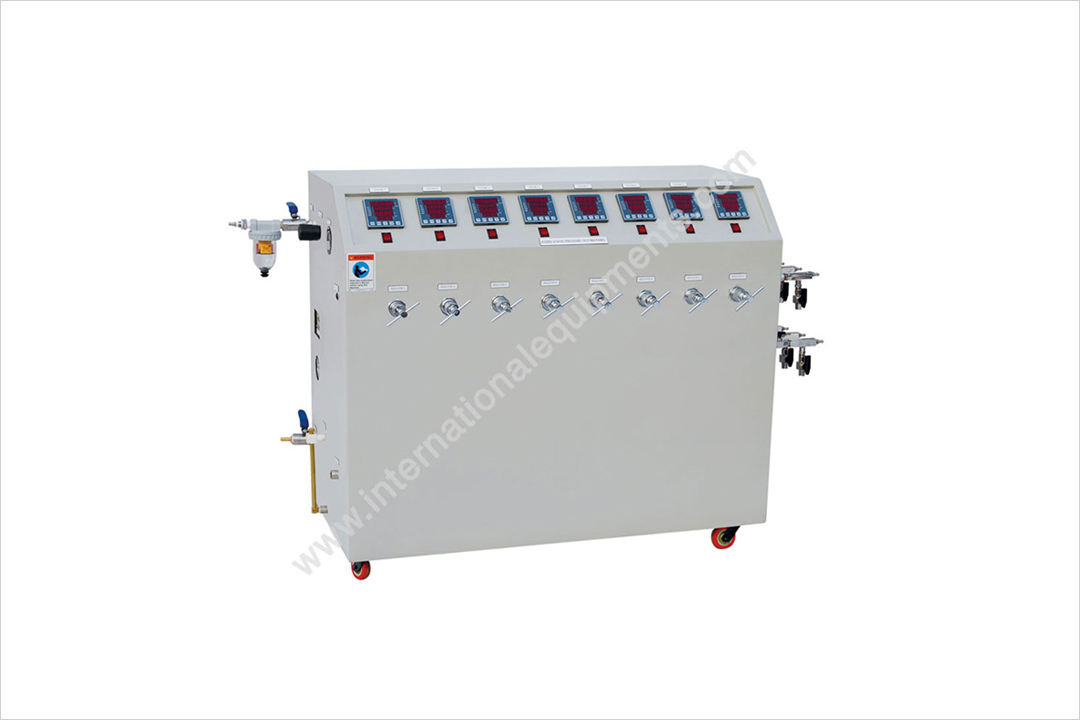
Computerised Hydrostatic Pressure Testing Panel
SS Tank for Hydrostatic Pressure Testing
Impact Tester for Pipes
Digital Zero Degree Chamber
Computerised VSP / HDT Apparatus
Computerized Melt Flow Index Tester
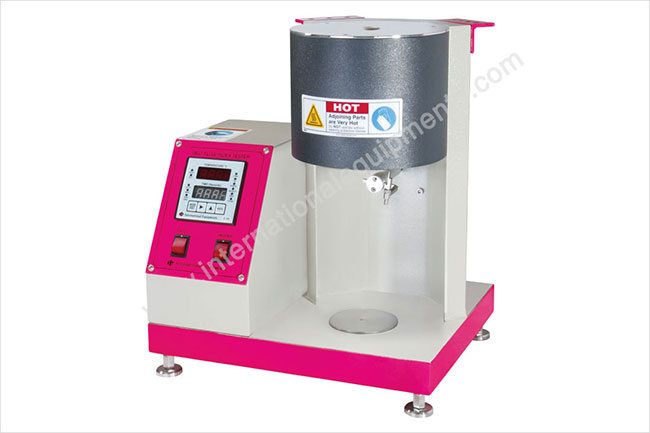
Melt Flow Index Tester (Main Range)
Universal Testing Machine (UTM)
Carbon Black Content Apparatus
Carbon Black Dispersion Tester
Oxidation Induction Tester (OIT)
E.S.C.R. Apparatus
Muffle Furnace
Digital Density Apparatus
Digital Opacity Tester
Contour Cutter with Templates
Hydraulic Press (Sample Cutting Press)
Moisture Analyser
Plastic Testing Equipments
Film Testing Equipments
Material Testing Equipments

Polymers Testing Equipments
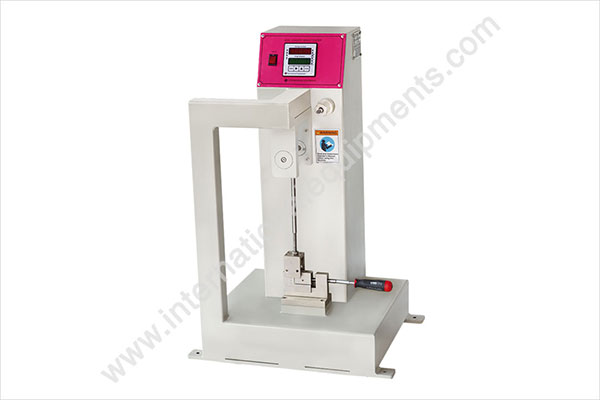
Rubber Testing Equipments
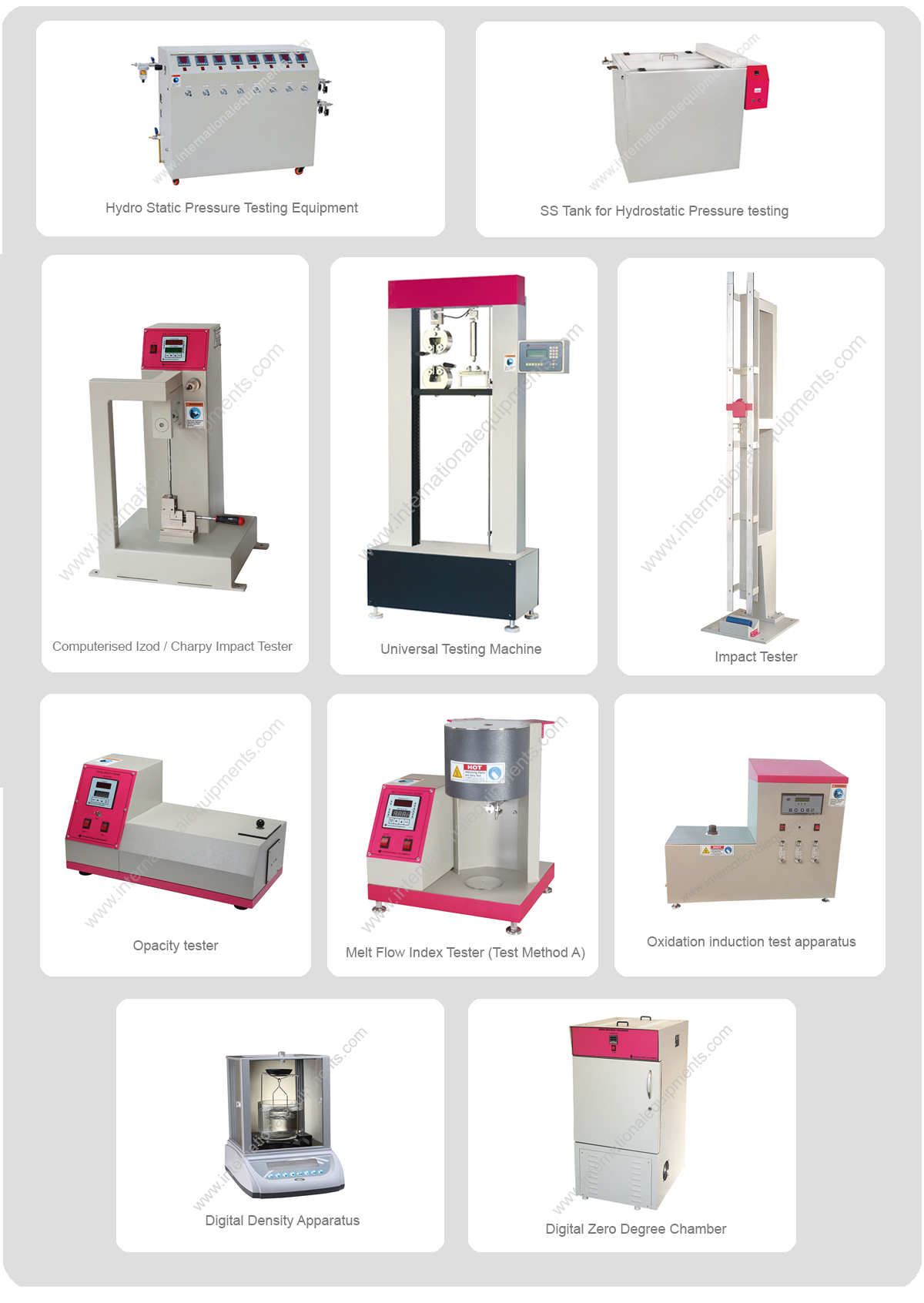
Testing Equipment for Plastic Pipe Manufacturers
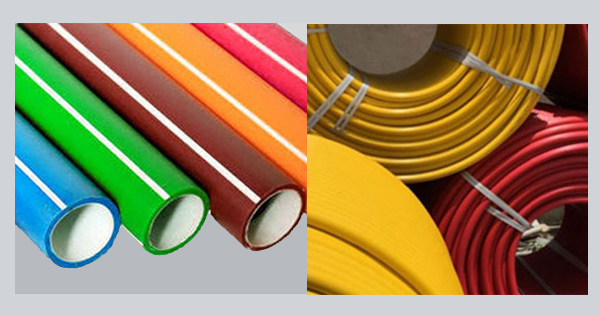
Testing Equipment for HDPE PLB Duct Manufacturers
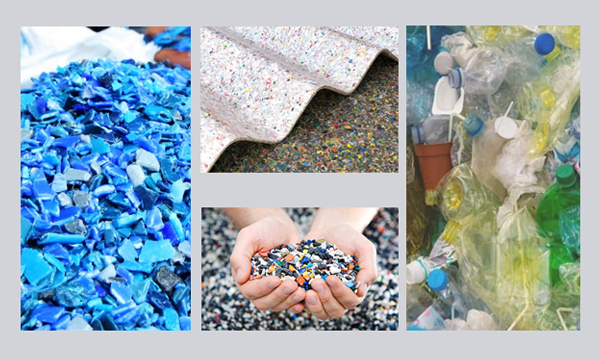
Testing Equipment for Recycled Plastics
Computerised Hydrostatic Pressure Testing Panel
SS Tank for Hydrostatic Pressure Testing
Impact Tester for Pipes
Digital Zero Degree Chamber
Computerised VSP / HDT Apparatus
Computerized Melt Flow Index Tester
Melt Flow Index Tester (Main Range)
Universal Testing Machine (UTM)
Carbon Black Content Apparatus
Carbon Black Dispersion Tester
Oxidation Induction Tester (OIT)
E.S.C.R. Apparatus
Muffle Furnace
Digital Density Apparatus
Digital Opacity Tester
Contour Cutter with Templates
Hydraulic Press (Sample Cutting Press)
Moisture Analyser
Plastic Testing Equipments
Film Testing Equipments
Material Testing Equipments
Polymers Testing Equipments
Rubber Testing Equipments
Testing Equipment for Plastic Pipe Manufacturers
Testing Equipment for HDPE PLB Duct Manufacturers
Testing Equipment for Recycled Plastics
Contact International Equipments today for a personalised quotation, demo video, or factory visit. Our team is ready to help you choose Testing Equipment for Pipe for your laboratory.
Get Free Quote