Request
Quote

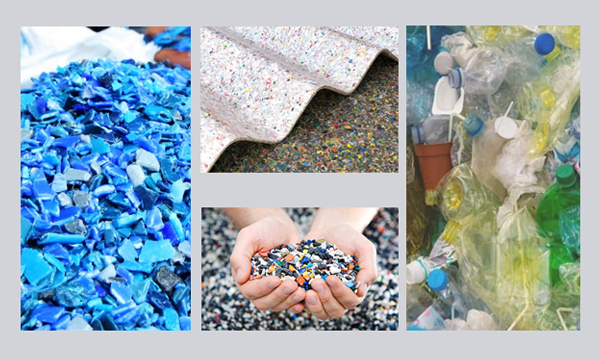
International Equipments is a leading manufacturer, supplier and exporter of complete testing equipment for the Recycled Plastics industry in India. Built at our Mumbai facility, our range serves the specific QC and grade-qualification needs of plastic recycling companies, recycled-resin compounders, post-consumer recyclate (PCR) processors and recycled-content product manufacturers — covering the full range of tests needed to re-qualify recycled granules and verify that they meet the property specifications the end-customer expects. Whether you are a recycling company collecting and reprocessing waste plastic into granules, a compounder blending recycled content with virgin resin, or a manufacturer using recycled material in your finished products, our complete testing-laboratory solution supports your operations.
Recycled plastic granules need re-qualification testing because the recycling process — by its nature — exposes the polymer to a second heat treatment cycle that can change its physical properties significantly. Melt flow rate, melt density, tensile strength and elongation, impact toughness, ash content and carbon content can all shift from the virgin-material values. Without comprehensive in-house testing capability, the recycler has no way to verify what their output granules actually contain, and no way to give downstream customers the confidence that the recycled material will perform as specified. This page describes the complete testing equipment package — organised in two tiers — that recycling and recycled-compound facilities need.
Plastic recycling is nothing but reprocessing of plastic waste into new products.
As all know plastic being non-perishable & cannot be destroyed, this is one important reason why re-cycling and re-utilization of waste plastic plays a vital role towards maintaining healthy environment.
There are several such plastic recycling companies who collect the plastic waste from moulders, clean it up and recycle the same converting them into granules and re-sell to the same customers or new customers in the industry.
When this recycling process is performed correctly, this can reduce dependence on landfill, conserve resources and protect the environment from plastic pollution and greenhouse gas emissions.
Normally the waste plastic has already undergone heat treatment similarly in the process of recycling a second heat treatment is given where there is strong possibility of change in original physical properties like melt flow rate, melt volume rate, melt density, tensile strength and modulus, Izod impact strength, Density, Ash %, carbon % etc.
The plastic recycling industry in India has grown rapidly over the past decade, driven by environmental awareness, government policy (Plastic Waste Management Rules, EPR requirements, BIS specifications for recycled-content products), corporate sustainability commitments and the simple economic reality that recycled granules cost significantly less than virgin resin. The industry now spans thousands of small and medium recycling plants collecting waste from converters, brand-owner take-back programmes, post-consumer waste streams and industrial scrap — processing it into clean granules and re-selling to converters, compounders, master-batch producers and product manufacturers.
The downstream customers of recycled granules increasingly demand documented property verification — comparable in scope to the documentation supplied with virgin polymer batches. Recycled HDPE going into pipe applications, recycled PET going into bottle-grade or fibre applications, recycled PP going into automotive parts — all require evidence that the recycled material meets the same MFI, density, tensile, impact and thermal-property specifications as the virgin equivalent. This is the fundamental business case for in-house testing capability at every recycling facility.
Comprehensive testing of recycled plastic granules is non-negotiable for several reasons. Six reasons every plastic recycler and recycled-resin compounder needs in-house testing capability:
Recycling Exposes the Polymer to a Second Heat Treatment
Every recycling cycle subjects the polymer to additional shear, oxidation and thermal degradation during washing, drying, melting and re-pelletising. This second heat treatment changes the molecular weight (and therefore MFI), the additive content (depleted by the previous service life), the tensile and impact properties and the thermal performance. The recycled granules cannot be assumed to have the same properties as virgin resin — they must be tested.
Compliance with BIS Specifications for Recycled Content
BIS has issued specifications for recycled-content plastic products (IS 14534 for recycled plastics, IS 17088 for biodegradable plastics, and various end-product standards with recycled-content provisions). These specifications require documented compliance with property thresholds that can only be demonstrated through in-house testing.
at the converter level.
Batch-to-Batch Variation in Recycled Feedstock
Recycled granules show much higher batch-to-batch variation than virgin resin because the feedstock (waste plastic) varies in age, contamination, polymer-type mixing and additive history. Routine testing catches this variation before it causes problems at the downstream customer.
Verification of Polymer Identity and Purity
Recycled streams may be contaminated with the wrong polymer type (PP mixed with HDPE, for instance), or with non-polymer contaminants. MFI and density testing are the basic identity-verification checks; ash content (Muffle Furnace) catches filler and inorganic contamination; carbon black content catches carbon-loaded scrap mixed with natural-coloured recyclate.
Premium Pricing for Documented-Quality Recycled Granules
Recycled granules sold with full QC documentation command significantly higher prices than undocumented bulk recyclate — often 30-50% higher per kilogram. The testing-equipment investment typically pays for itself within a few months through improved pricing and customer retention.
The original page identifies the specific properties that can change during recycling — all of which our testing equipment range measures. The two-tier framework groups the tests by whether they can be performed directly on granules (entry-level) or whether they require specimen moulding first (specialised):
Melt Flow Rate (MFR) and Melt Volume Rate (MVR)
The most sensitive indicator of recycling-induced polymer degradation. Each pass through the recycling extruder can shift MFI substantially due to chain scission (PE, PP) or chain extension (PET). The Melt Flow Index Tester is the foundation incoming-batch QC instrument for any recycler.
Tensile Strength, Elongation and Modulus
Recycling typically reduces both tensile strength and (especially) elongation at break — the polymer becomes more brittle. The UTM measures these properties on moulded specimens cut from injection-moulded plaques.
Izod / Charpy Impact Strength
Recycling can dramatically reduce impact toughness — engineering plastics like ABS lose impact strength much faster than they lose tensile strength. The Izod / Charpy Impact Tester (with Notch Cutter for specimen preparation) is the standard impact-property measurement.
Density
Direct verification of polymer identity and a check for inorganic contamination (which raises density) or air voids (which lower density). The Digital Density Apparatus gives rapid density verification on granule samples.
Ash Content (Filler / Inorganic Contamination)
Recycled streams may contain unexpected fillers — talc from PP automotive parts, glass fibre from engineering plastic scrap, calcium carbonate from filled packaging. The Muffle Furnace burns off the polymer matrix leaving the inorganic residue for direct weighing.
Thermal Properties — Vicat & HDT
Recycling can shift the softening point and heat deflection temperature of engineering polymers. The VSP / HDT Apparatus measures both on moulded bar specimens.
Below tests are therefore essential to such companies involved in to recycling of plastics:
Basic Entry level equipment - as the tests could be directly carried out on granules:
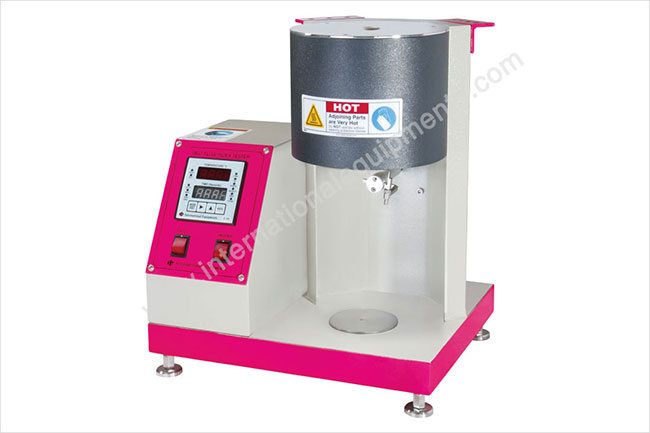
Melt Flow index tester- flow rate of plastics.
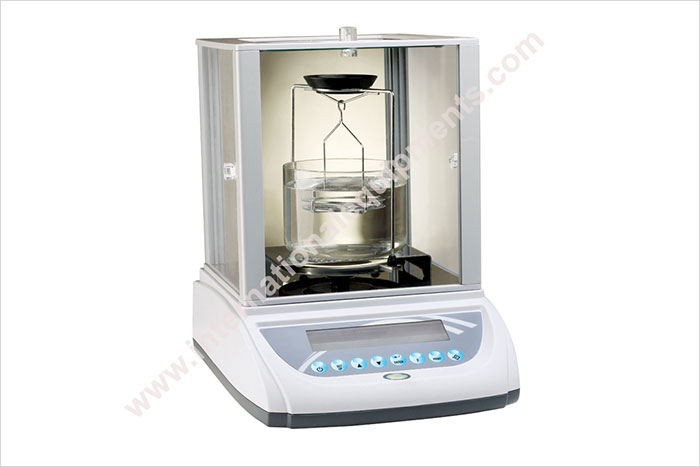
Density apparatus to check the density of plastics
Muffle furnace for checking ash % of plastics.
Moisture Analyser for checking moisture % in plastics
What it does: Measures the flow rate of molten polymer per ASTM D 1238 / ISO 1133 — the single most-used recycled-plastic QC test. Tests granules directly without specimen preparation. Manual, Auto-cut and Computerised variants available.
Why essential: MFI is the most sensitive indicator of recycling-induced polymer degradation and the foundation incoming-batch QC test. Every recycler needs an MFI Tester — it's the gatekeeper between an unverified recycled batch and the customer's order.
What it does: Measures the density of polymer granules per ASTM D 792 / ISO 1183 via the water-displacement (Archimedes) method. Tests granules directly. Built-in digital balance and density kit for direct readout.
Why essential: Density verifies polymer identity and catches gross contamination in the recycled stream. Quick verification that the granules are actually the polymer type labelled on the bag.
What it does: Measures ash content / filler loading per ASTM D 5630 / ISO 3451 by heating granules to high temperature (typically 600°C+) and weighing the inorganic residue. Tests granules directly.
Why essential: Catches inorganic filler contamination (talc, calcium carbonate, glass fibre) in the recycled stream that would otherwise reach the customer undetected. Essential for any recycler
handling mixed-source feedstock.
What it does: Measures moisture content of granules using the halogen-lamp loss-on-drying method. Tests granules directly. Fast 5-20 minute test cycle with 0.1% moisture resolution.
Why essential: Recycled granules pick up moisture during washing and storage. Critical for recycled engineering polymers (recycled PA, PC, PET) which suffer hydrolytic degradation if processed wet. Verifies the recycled material is dry enough to mould.
Specialized equipment that requires specimen moulding and then tests are conducted on such moulded specimen:
Universal testing Machine - To check tensile, Elongation, Flexural & Compression.
VSP/HDT apparatus - To check Vicat Softening Point & Heat Deflection temperature
Izod / Charpy impact tester - To check the impact resistance of plastics.
Motorized Notch cutter - To notch Izod / Charpy specimens
What it does: Twin-column computerised UTM measures tensile strength, elongation at break, flexural strength and compression strength per ASTM D 638, D 790, D 695 and ISO 527. Requires moulded specimens (typically dumbbells or bars cut from injection-moulded plaques using the Hydraulic Press).
Why essential: Tensile and elongation are the most-degraded properties in recycled polymers — elongation at break can drop dramatically with each recycling cycle. UTM verification is mandatory for any recycled material going into structural or load-bearing applications.
What it does: Computerised 2 or 6 station apparatus measures Vicat Softening Point per ASTM D 1525 / ISO 306 and Heat Deflection Temperature per ASTM D 648 / ISO 75. Requires moulded bar specimens.
Why essential: Defines the maximum service temperature of the recycled polymer. Critical for recycled engineering plastics (recycled ABS, PC, PA) and recycled materials destined for heated applications (automotive under-hood, electrical housings).
What it does: Computerised pendulum impact tester measures notched impact strength per ASTM D 256, D 6110 and ISO 180. Requires notched bar specimens prepared on the Motorized Notch Cutter.
Why essential: Impact toughness is one of the first properties to degrade in recycled polymers — especially engineering plastics. Required for any recycled material destined for applications where
impact resistance matters (automotive parts, consumer products, packaging).
What it does: Cuts the precise ASTM D 256 / ISO 180 'V' notch into Izod / Charpy specimens before impact testing. Essential companion to the Izod / Charpy Impact Tester for valid impact results.
Why essential: The accuracy of impact results depends entirely on the accuracy of the notch. Hand-cutting the notch is not acceptable for valid ASTM / ISO results — the Motorized Notch Cutter is the only way to ensure reproducible impact testing.
For a complete recycled-plastic re-qualification laboratory, we recommend the following 4-instrument starter package (entry-level) plus the 4-instrument expansion package (specialised) — combined into a single integrated quotation:
Starter Package (4 instruments — Entry-Level on Granules)
Melt Flow Index Tester + Digital Density Apparatus + Muffle Furnace + Moisture Analyser. This 4-instrument package gives you the most-essential incoming-batch QC for any recycled polymer stream. Tests directly on granules — no specimen preparation needed. Suitable for any recycler at any scale.
Expansion Package (4 instruments — Specialised on Moulded Specimens)
Universal Testing Machine + VSP / HDT Apparatus + Izod / Charpy Impact Tester + Motorized Notch Cutter. Adds the specimen-based mechanical, thermal and impact testing required for full property re-qualification of recycled granules going into demanding end applications. Add when customer documentation requirements grow or when you handle engineering polymer recyclates.
Optional Add-Ons for Specific Recycled Polymer Types
Recycled HDPE going into pipe → add ESCR Apparatus + OIT Apparatus + Carbon Black Content Apparatus. Recycled PA / Nylon → make sure Moisture Analyser is part of the starter package. Recycled PVC → add VSP for softening verification. Recycled PET going into bottle-grade → add specialised intrinsic viscosity test (sourced separately). Our team configures the right additional instruments for your specific polymer streams.
Sample Preparation (Required for the Specialised Package)
The specialised mechanical, thermal and impact tests require moulded specimens — typically prepared by injection-moulding the recycled granules into plaques and then cutting test specimens with the Hydraulic Press + dies. We supply the Hydraulic Press and dies as part of the laboratory package.
Different recycled polymer streams have different QC priorities. The instrument package can be tuned to match the polymer types you handle:
Recycled HDPE (Bottles, Containers, Pipe Scrap)
MFI (highly sensitive to recycling damage), Density (HDPE-LDPE separation), Ash Content (filler contamination), ESCR (for pipe-grade applications), OIT (for pipe-grade applications), Carbon Black Content (for black recyclate).
Recycled LDPE / LLDPE (Film & Bag Scrap)
MFI, Density, Ash Content, Tensile (for re-pelletised film grades), Dart Impact (for film-grade recyclate).
Recycled Polypropylene (PP) — Automotive, Packaging, Caps
MFI, Density, Ash Content (talc filler verification), Tensile, Izod / Charpy Impact (for engineering-grade recycled PP), VSP / HDT.
Recycled PET (Bottle-Grade Recyclate)
MFI, Density, Moisture Analyser (essential — PET is highly hygroscopic), Tensile, intrinsic viscosity (specialised). For bottle-to-bottle recycling, additional contamination testing is required.
Recycled PVC (Pipe Scrap, Profile Scrap)
MFI, Density, VSP (critical for pipe grades), Tensile, Izod / Charpy Impact.
Recycled ABS / Engineering Plastics
MFI, Density, Moisture Analyser, Tensile, Izod / Charpy Impact (critical — engineering plastics lose impact rapidly), VSP / HDT, Ash Content.
Recycled Multi-Layer or Mixed-Polymer Streams
Density (polymer-type screening), Ash Content (filler / contamination), MFI (degradation indicator), Tensile and Impact on representative moulded specimens.
IS 14534 — Indian Standard guidelines for the recycling of plastics (the central Indian recycling-quality standard)
IS 17088 — Indian Standard specification for compostable plastics
Plastic Waste Management Rules 2016 (as amended) — Indian regulatory framework for plastic waste
Extended Producer Responsibility (EPR) Guidelines for Plastic Packaging — Indian framework
ASTM D 7611 — Standard Practice for Coding Plastic Manufactured Articles for Resin Identification
ASTM D 5033 — Guide for Development of ASTM Standards Relating to Recycling and Use of Recycled Plastics
ASTM D 1238 — Melt Flow Rates of Thermoplastics (for incoming MFI QC)
ASTM D 792 — Density and Specific Gravity of Plastics (for incoming density QC)
ASTM D 5630 — Ash Content in Plastics (for filler / contamination QC)
ASTM D 6980 — Moisture Determination of Plastics by Loss in Weight
ASTM D 638, D 790, D 695 — Tensile, Flexural, Compressive Properties (for re-qualification)
ASTM D 256, D 6110 — Izod and Charpy Impact (for re-qualification)
ASTM D 1525, D 648 — Vicat Softening and Heat Deflection (for re-qualification)
ISO 15270 — Plastics — Guidelines for the recovery and recycling of plastics waste
ISO 14021 — Environmental labels and declarations (self-declared environmental claims)
ISO 1133 — Melt Mass-Flow Rate, ISO 1183 — Density, ISO 3451 — Ash, ISO 527 — Tensile
A typical recycled-plastics QC workflow at a well-equipped recycler runs as follows — from incoming waste-plastic batch to outgoing certified recycled granules:
Step 1 — Incoming Waste Plastic Batch Identification
Spot-check the incoming waste-plastic batch by density (identifies the dominant polymer type) and visual inspection. Reject batches with obvious polymer-type contamination before processing.
Step 2 — Pre-Recycling Sample Testing
Take a representative sample of the waste batch. Test on the Muffle Furnace (ash content — detects unexpected filler), Density Apparatus (polymer-type verification), Moisture Analyser (water/contaminant content). Compare against the expected baseline for that polymer type.
Step 3 — Recycling Process (Wash, Dry, Extrude, Pelletise)
Process the waste plastic through your recycling line — washing, drying, melt extrusion, pelletising. Capture the output recycled granules in process bins.
Step 4 — Post-Recycling Granule QC (Entry-Level Tests)
Take a representative sample of the output recycled granules. Test on all four entry-level instruments: MFI (degradation check), Density (consistency), Ash Content (filler verification), Moisture (drying performance). This is the mandatory QC step before releasing the batch.
Step 5 — Specialised Re-Qualification Testing (If Required)
For higher-value applications or customers requiring full re-qualification, inject-mould the recycled granules into test plaques. Cut specimens on the Hydraulic Press. Test on UTM (tensile, flexural, compression), Izod / Charpy (impact), VSP / HDT (thermal). Compile the full property data sheet.
Complete Recycled-Plastics QC Range Under One Roof
Entry-level (MFI + Density + Muffle Furnace + Moisture Analyser) plus Specialised (UTM + VSP/HDT + Izod/Charpy + Notch Cutter) plus all the supporting instruments (Hydraulic Press, Hot Air Oven, OIT, ESCR, Carbon Black) — all designed and built at our Mumbai facility. One supplier for the complete recycled-plastics testing laboratory.
Two-Tier Package Pricing
Buy the 4-instrument starter package now, expand to the full 8-instrument package later as your business grows. Significantly more attractive pricing than instrument-by-instrument purchasing, with a single commissioning visit and a single training programme covering all instruments.
Manufacturing Since 1971, Exported to 50+ Countries
Over five decades of polymer testing instrumentation experience — our equipment is installed in plastic recycling and recycled-resin compounding facilities across India and 50+ export countries.
Full Coverage of ASTM, ISO, BIS, IS Standards
Every instrument complies with the relevant ASTM (USA), ISO (international) and BIS / IS (India) plastic test standards — including IS 14534, the central Indian recycled-plastics quality standard. Covers domestic, USA-export and European-export specifications from a single supplier.
Configurations for Every Recycled Polymer Type
Our instrument range is configured for the full spectrum of recycled polymers — commodity polyolefins (HDPE, LDPE, PP), packaging (PET, PVC), engineering plastics (ABS, PA, PC), and mixed-stream / multi-layer recyclate. Our team tailors the equipment package to your specific polymer streams.
Trusted by Polymer Producers, Master-batch & Compound Manufacturers
Our testing equipment is used by leading polymer producers, master-batch compounders, engineering plastic moulders, automotive component manufacturers and research institutions across India and internationally. The same instruments serve the recycled-plastics segment with the same accuracy and reliability.
ISO Certified, CE Marked Manufacturing
Designed and built at our Mumbai facility under ISO certified quality systems, with CE marking for export to the Middle East, Africa, South-East Asia, Europe and South America.
Calibration Support
We offer one calibration visit per year, which is sufficient to maintain the accuracy and performance of the equipment. The calibration visit is provided after completion of the initial 1-year warranty period.

The 4-instrument entry-level package gives you the most-essential incoming-batch QC: (1) Melt Flow Index Tester — the foundation polymer-degradation indicator; (2) Digital Density Apparatus — polymer identity verification; (3) Muffle Furnace — filler / inorganic contamination check; (4) Moisture Analyser — incoming-granule moisture before processing. All four can be performed directly on granules without specimen preparation. This package suits any recycler at any scale and supports the most-common customer documentation requirements. Add the 4-instrument specialised package later when you need full mechanical / thermal / impact re-qualification for higher-value customers.
Plastic recycling subjects the polymer to a second heat treatment — washing, drying, melt extrusion and re-pelletising add additional thermal, oxidative and shear stress on top of whatever the polymer experienced during its first life. This second heat treatment can cause: chain scission (in PE, PP — reduces molecular weight, increases MFI); chain extension (in PET — reduces MFI); depletion of antioxidants (reduces long-term thermal stability, measured by OIT); reduction in tensile, elongation and impact properties; possible discoloration or visual defects. The exact changes depend on the polymer type, the original additive package, the recycling conditions and the number of recycling cycles. Comprehensive testing is the only way to know the actual properties of your output recyclate.
Yes — all of the test instruments listed work equally well on virgin and recycled polymers. The instruments measure the polymer's actual properties; they do not distinguish between virgin and recycled sources. This is convenient for many of our customers who use the same lab for incoming virgin polymer QC, post-recycling output QC, and downstream blend (virgin + recycled compound) characterisation. The same MFI, Density, Tensile, Impact and Thermal tests apply across all three.
Yes. The Moisture Analyser VERIFIES that your drying step has actually achieved the required moisture target — it doesn't replace drying, it confirms drying performance. Dryer performance can drift due to filter clogging, dessicant degradation, ambient humidity changes or process upsets. Without moisture verification, you cannot tell your downstream customer with confidence that the recycled granules meet their moisture spec. For recycled engineering polymers (recycled PA, PC, PET) where hydrolytic degradation is catastrophic, moisture verification is non-negotiable.
Carbon black content is critical when you mix carbon-loaded scrap (black HDPE pipe, black ABS automotive parts) with natural-coloured recyclate. Even small amounts of carbon-loaded material in a natural-coloured recyclate batch cause colour-matching problems at the downstream moulder. Carbon Black Content testing (per ASTM D 1603, on the Carbon Black Content Apparatus — sold separately on our website) catches this contamination. For recyclers handling mixed natural-and-black streams, the Carbon Black Content Apparatus is worth adding to the standard 8-instrument package.
Yes. We commonly supply complete recycled-plastics QC laboratories as a single integrated quotation — covering the 4-instrument starter package, the 4-instrument specialised expansion, plus the supporting Hydraulic Press for specimen preparation, and any optional add-ons for your specific polymer streams.
Yes. We provide free on-line installation of every instrument, operator training on each test method and each instrument's software, and factory calibration certificates anywhere in India. For multi-instrument laboratories a single commissioning team installs and commissions all instruments together.
Melt Flow Index Tester (Entry-Level)
Digital Density Apparatus (Entry-Level)
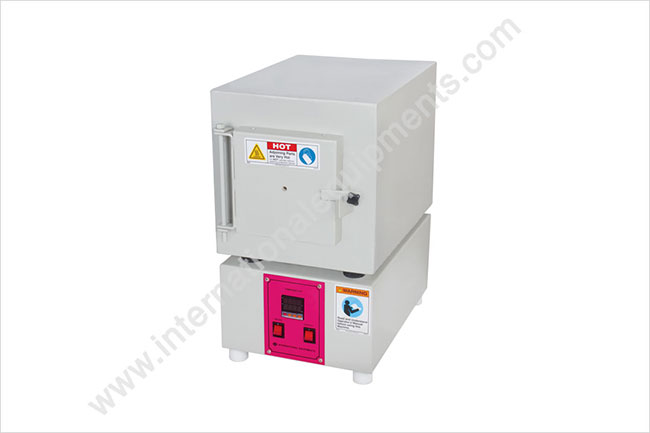
Muffle Furnace (Entry-Level — Ash Content)
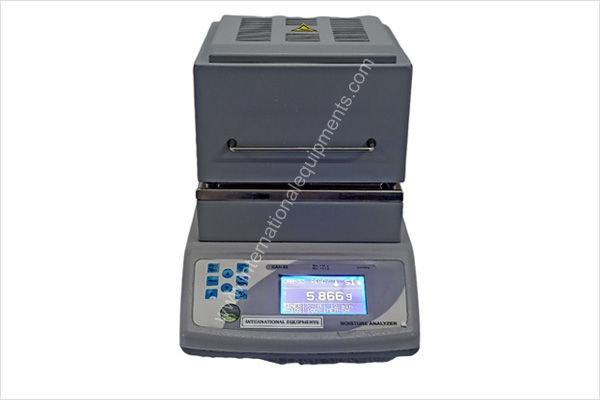
Digital Moisture Analyser (Entry-Level)
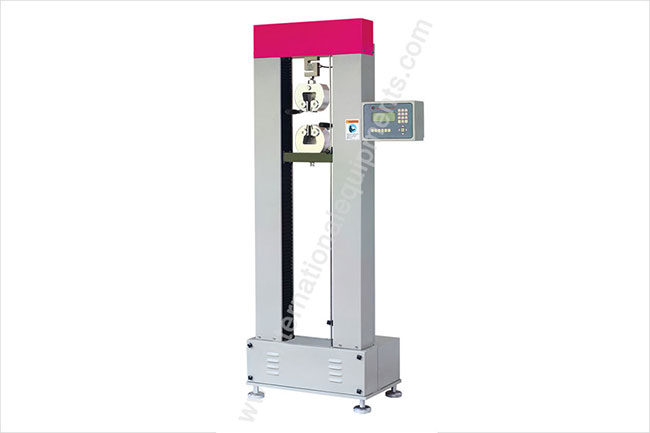
Universal Testing Machine (Specialised)
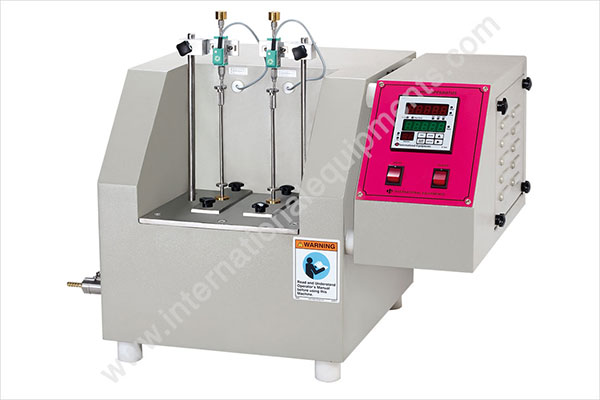
VSP / HDT Apparatus (Specialised)
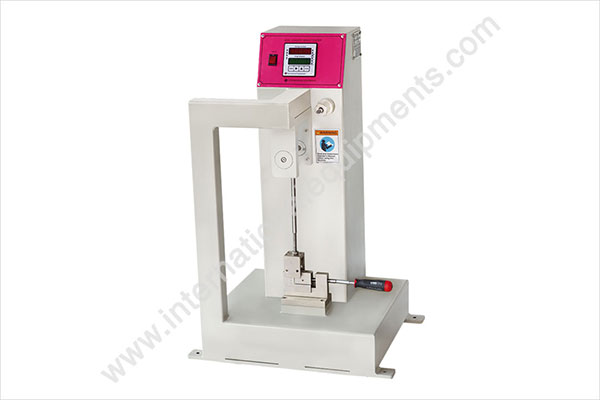
Izod / Charpy Impact Tester (Specialised)
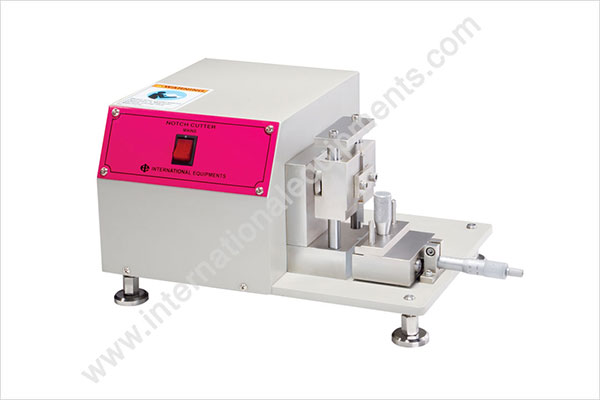
Motorized Notch Cutter (Specialised)
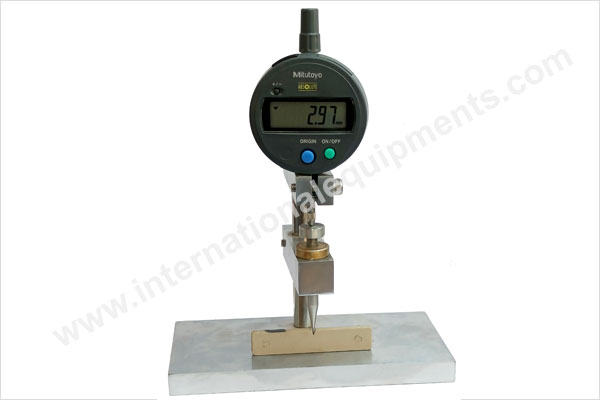
Micro-meter Jig for Notch Measurement (Companion to Notch Cutter)
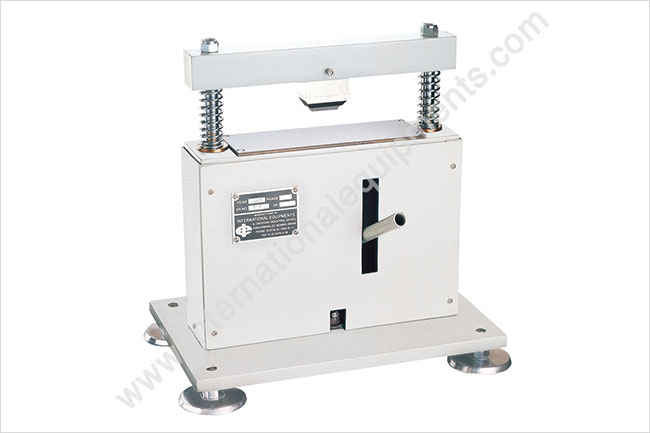
Hydraulic Press (Sample Cutting Press)
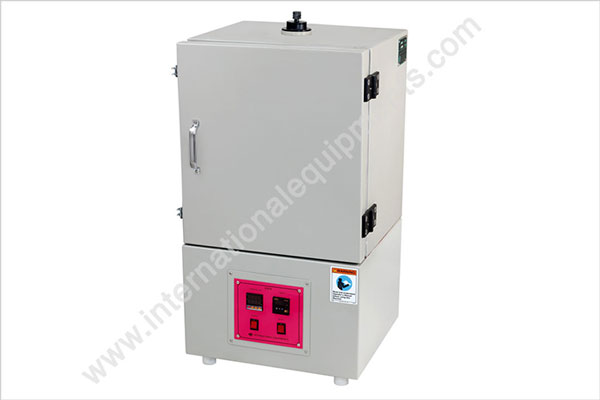
Hot Air Oven (Drying & Conditioning)
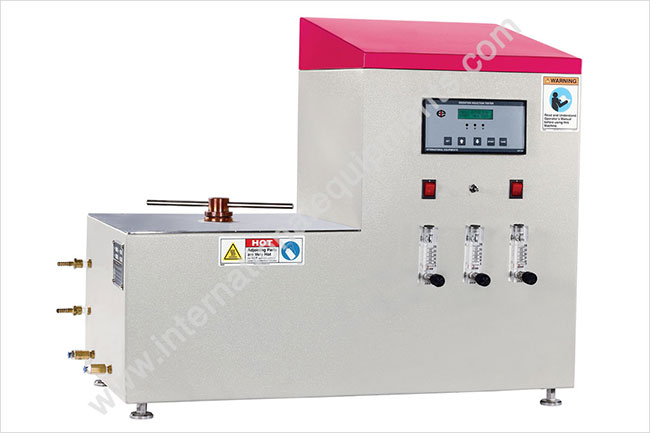
Oxidation Induction Tester (OIT — for HDPE Pipe Recyclate)
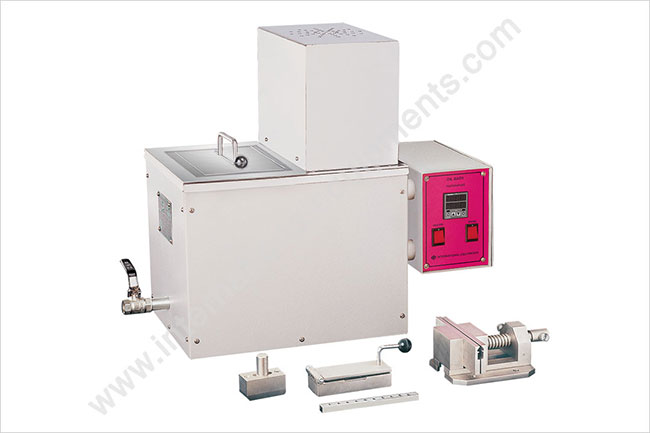
E.S.C.R. Apparatus (For HDPE Recyclate)
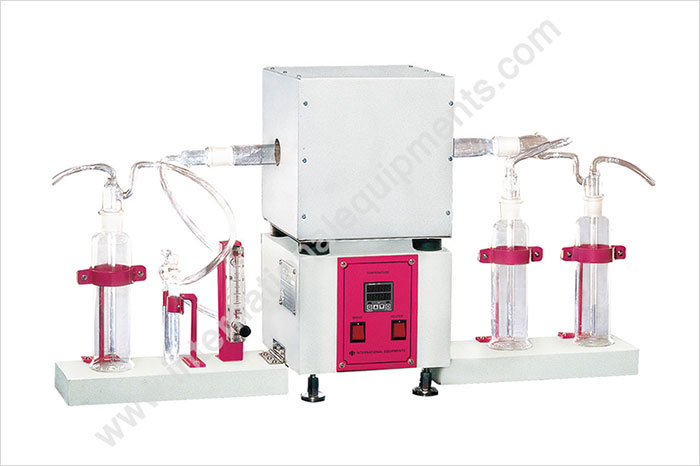
Carbon Black Content Apparatus (For Black HDPE Recyclate)
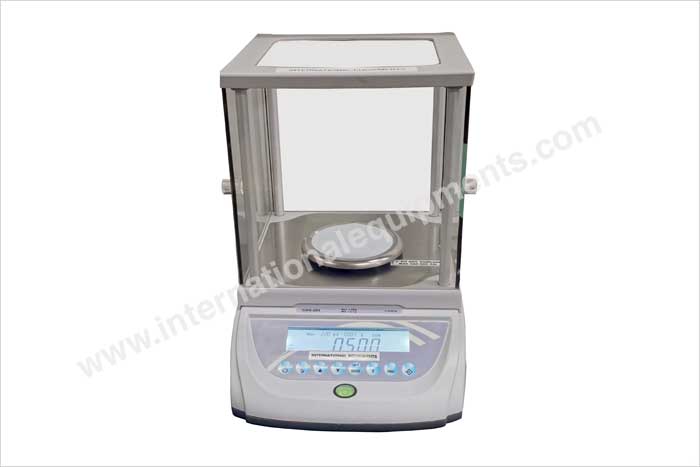
Digital GSM Weighing Balance
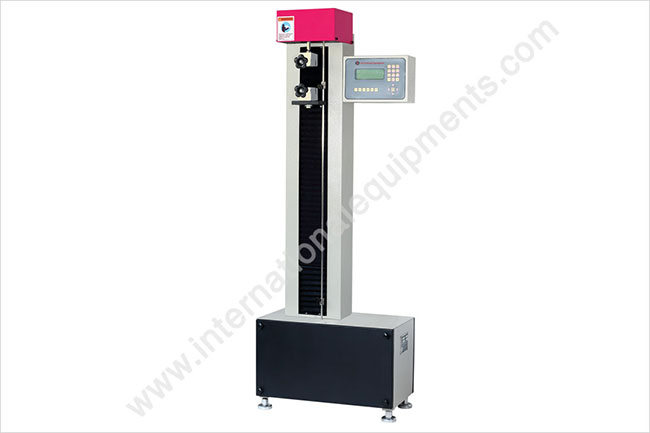
Single Screw Tensile Testing Machine
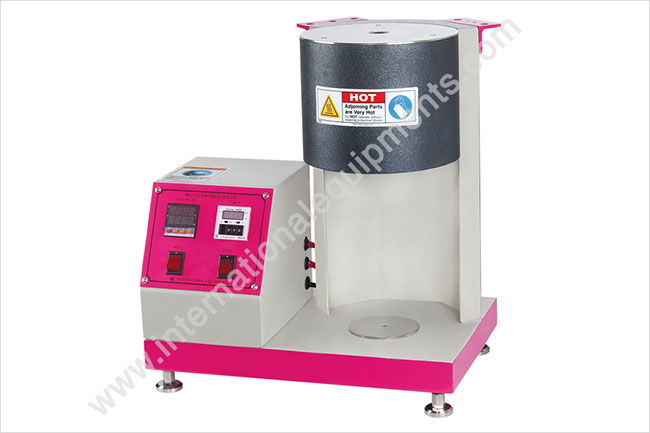
Plastic Testing Equipments (Category)

Polymers Testing Equipments (Category)
Material Testing Equipments (Category)
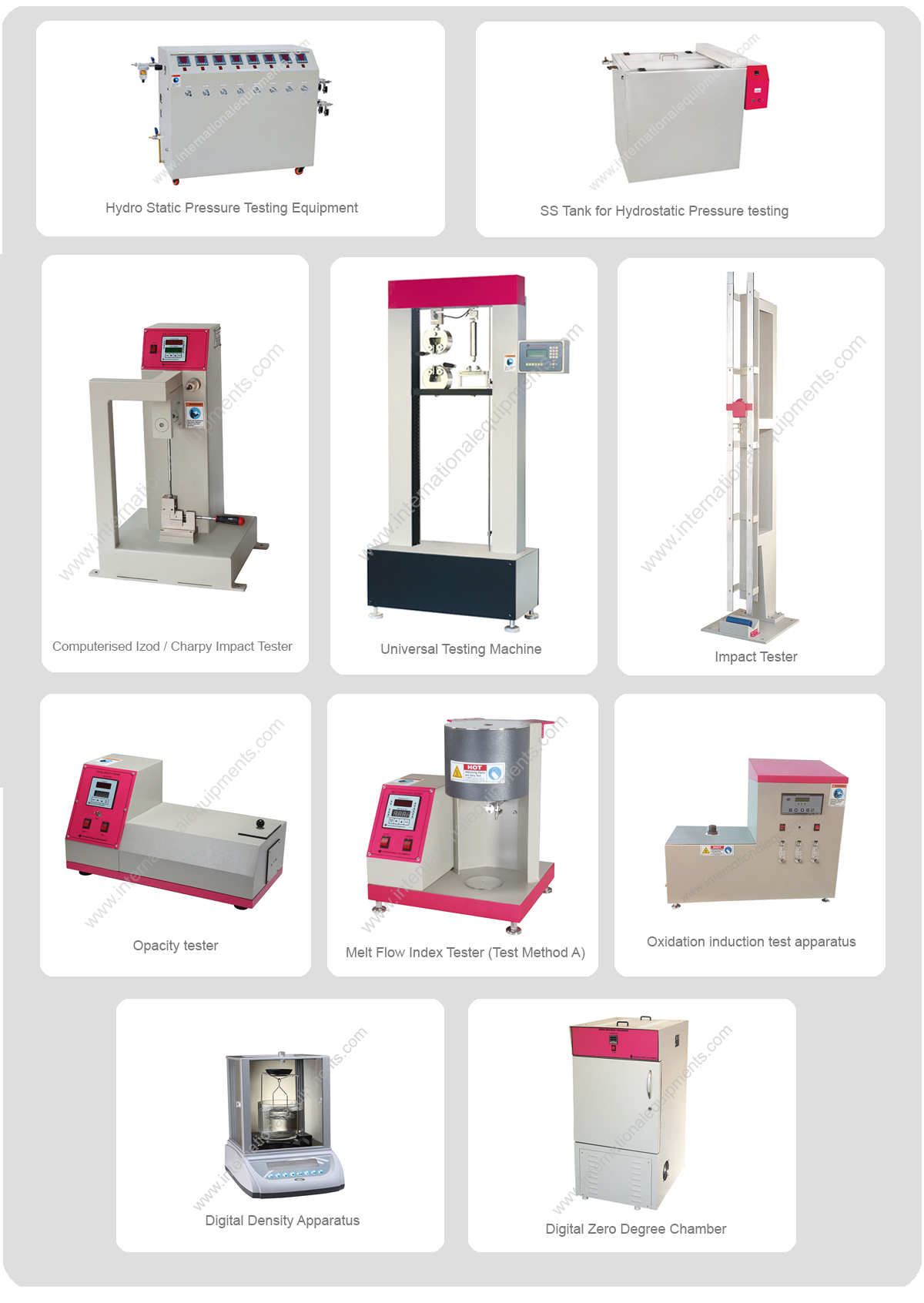
Testing Equipment for Plastic Pipe Manufacturers (Industry)
Testing Equipment for HDPE PLB Duct Manufacturers (Industry)

Testing Equipment for Packaging Industry
Melt Flow Index Tester (Entry-Level)
Digital Density Apparatus (Entry-Level)
Muffle Furnace (Entry-Level — Ash Content)
Digital Moisture Analyser (Entry-Level)
Universal Testing Machine (Specialised)
VSP / HDT Apparatus (Specialised)
Izod / Charpy Impact Tester (Specialised)
Motorized Notch Cutter (Specialised)
Micro-meter Jig for Notch Measurement (Companion to Notch Cutter)
Hydraulic Press (Sample Cutting Press)
Hot Air Oven (Drying & Conditioning)
Oxidation Induction Tester (OIT — for HDPE Pipe Recyclate)
E.S.C.R. Apparatus (For HDPE Recyclate)
Carbon Black Content Apparatus (For Black HDPE Recyclate)
Digital GSM Weighing Balance
Single Screw Tensile Testing Machine
Plastic Testing Equipments (Category)
Polymers Testing Equipments (Category)
Material Testing Equipments (Category)
Testing Equipment for Plastic Pipe Manufacturers (Industry)
Testing Equipment for HDPE PLB Duct Manufacturers (Industry)
Testing Equipment for Packaging Industry
Contact International Equipments today for a personalised quotation, demo video, or factory visit. Our team is ready to help you choose the right MFI tester model for your laboratory.
Get Free Quote