Quote Request
Quote
Manufacturers and Suppliers of Charpy Impact Tester / Izod Impact Tester

Motorized Notch Cutter — V-Notch Specimen Cutter for Izod & Charpy Testing

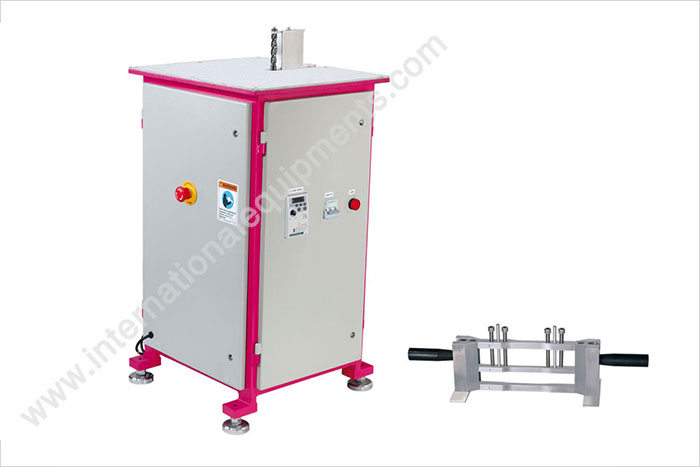
Motorized Notch Cutter

For making 'V' notch in the Izod / Charpy samples as per ASTM D - 256 & ASTM D 6110 as well as ISO 179 and ISO 180 standards.
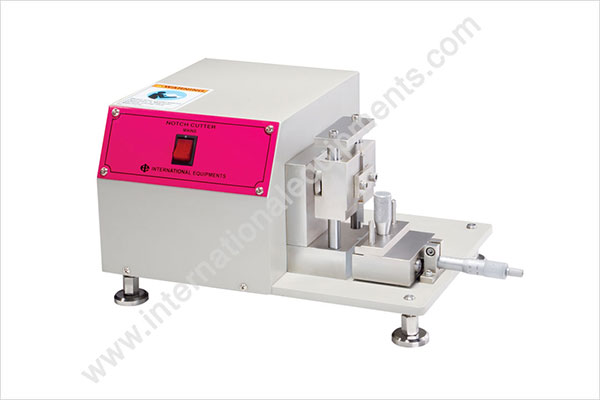

Motorized Notch Cutter Standard Model Manufacturer India — V-Notch Cutter for Izod Charpy Specimens
Motorized Notch Cutter (Variable Speed)

As per ASTM D - 256 & ASTM D 6110 as well as ISO 179 and ISO 180 to test impact resistance of plastics by Izod and Charpy method respectively. The test indicates the energy required to break specimen by axial impact
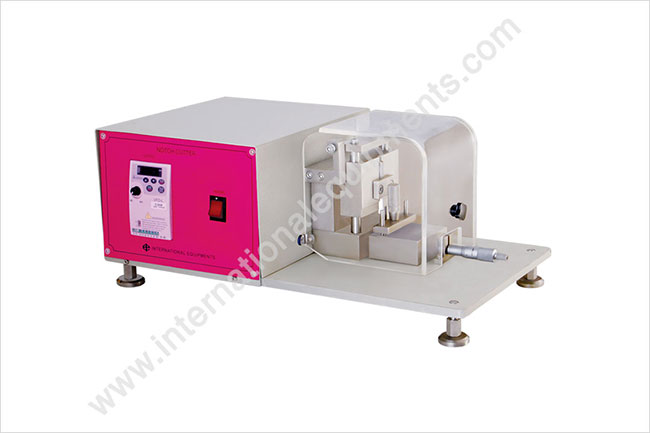
Motorized Notch Cutter Variable Speed Model with Vector-Controlled VFD and Acrylic Safety Jacket

About Motorized Notch Cutter — V-Notch Specimen Cutter for Izod & Charpy Testing

For making 'V' notch in the Izod / Charpy samples as per ASTM D - 256 & ASTM D 6110 as well as ISO 179 and ISO 180 standards. .

International Equipments is a leading manufacturer, supplier and exporter of Motorized Notch Cutters in India. Built at our Mumbai facility, our Notch Cutters are precision sample-preparation machines designed to cut a standard 45° V-notch into plastic test specimens for Izod and Charpy impact testing, fully compliant with ASTM D 256, ASTM D 6110, ISO 179 and ISO 180.

We offer the Notch Cutter in two variants — a Standard Motorized model and a Variable Speed model with vector-controlled drive — both fitted with a high-precision Mitutoyo depth micrometer (least count 0.01 mm). A correctly cut notch is the single most important factor for repeatable Izod and Charpy results, which is why every serious impact-testing laboratory invests in a dedicated motorized notch cutter alongside the impact tester itself.

What is a Motorized Notch Cutter?

A Motorized Notch Cutter — also called a V-Notch Cutter, Specimen Notching Machine or Impact Specimen Notcher — is a precision laboratory machine used to cut a controlled, standard-dimension V-notch into rigid plastic test specimens before Izod or Charpy impact testing. The cutter holds the specimen securely in a fixture, then a rotating notching tool with a 45° cutting profile machines a clean, sharp V-notch to a user-set depth controlled by the high-resolution depth micrometer.

Without a properly cut notch, Izod and Charpy impact results are simply not reliable. ASTM D 256, ASTM D 6110, ISO 179 and ISO 180 all specify exact notch geometry (45° angle, defined depth, defined radius at the notch root). A manual file or a generic milling machine cannot meet these tolerances. A dedicated motorized notch cutter, with a calibrated depth micrometer, is the only practical way to prepare compliant test specimens day after day.

Why is the V-Notch So Critical for Impact Testing?

The V-notch concentrates stress at a single, known point in the specimen so that fracture initiates at that point during the impact test. This is what makes impact results repeatable between operators, between batches and between laboratories worldwide.

If the notch is too shallow, the specimen will absorb more energy than the standard expects, and the result will be falsely high. If the notch is too deep, the result will be falsely low. If the notch root radius is inconsistent (caused by a worn cutter or by hand-cutting), the spread of results between samples will be unacceptably wide — making the data useless for quality control.

ASTM D 256 specifies a notch depth of 2.54 mm (0.100 inch) with a 0.25 mm root radius for the standard notched Izod specimen. Our Motorized Notch Cutter, with its 0.01 mm Mitutoyo depth micrometer, sets this depth exactly every time, so every specimen you test is dimensionally identical to the next.

Our Two Models — Standard & Variable Speed with Analogue / Digital micro-meter option

We offer the Motorized Notch Cutter in two variants to suit different laboratory volumes and budget points:

The Standard Motorized Notch Cutter is the workhorse model. It has a fixed motor speed of 1440 RPM and is ideal for laboratories cutting notches in standard thermoplastic specimens such as HDPE, LDPE, PP, ABS, PS and similar polymers — the bulk of typical Indian and export plastic testing requirements.
The Motorized Notch Cutter (Variable Speed) adds a vector-controlled variable-frequency drive that allows the cutting speed to be tuned. Slower speeds give a cleaner notch on tougher engineering plastics (PC, Nylon, Acetal, glass-filled composites) and on soft polymers that tend to smear at high RPM. The Variable Speed model also includes an acrylic safety jacket for operator protection.
Both models use the same precision Mitutoyo depth micrometer, the same 45° cutting angle, and produce notches that fully comply with ASTM D 256, ASTM D 6110, ISO 179 and ISO 180.

Standard Model - Specifications

Parameter Specification
Purpose V-notch cutting on Izod & Charpy plastic test specimens
Compliance ASTM D 256, ASTM D 6110, ISO 179, ISO 180
Depth Micrometer Mitutoyo make
Micrometer Range 0 – 25 mm with least count of 0.01 mm
Cutting Angle 45°
Paint Finish Powder coated
Power Supply 230 Volts, 50 Hz, single phase

Variable Speed Model - Specifications

Parameter Specification
Purpose V-notch cutting on Izod & Charpy plastic test specimens with adjustable cutting speed
Compliance ASTM D 256, ASTM D 6110, ISO 179, ISO 180
Depth Micrometer Mitutoyo make
Micrometer Range 0 – 25 mm with least count of 0.01 mm
Operation Motorized, motor of 1440 RPM
Cutting Angle 45°
Drive Vector Controlled Variable Speed Drive for adjustment of cutting speed
Safety Acrylic safety jacket provided
Paint Finish Powder coated
Power Supply 230 Volts, 50 Hz, single phase

Standard vs Variable Speed Comparison

Standard Motorized Notch Cutter Variable Speed Motorized Notch Cutter
Recommended When You:
  • Cut notches mainly in common thermoplastics (HDPE, LDPE, PP, ABS, PS, PVC).
  • Need a single, well-chosen cutting speed for all specimens.
  • Require a reliable, economical machine for routine Izod / Charpy QC.
  • Prepare specimens in moderate daily volumes.
Recommended When You:
  • Cut notches in tough engineering plastics (Polycarbonate, Nylon/Polyamide, Acetal/POM, PEEK).
  • Work with glass-fibre-reinforced plastics or soft polymers that smear at high cutting speeds.
  • Operate a NABL-accredited or R&D laboratory testing a wide range of polymer grades.
  • Need the acrylic safety jacket for enhanced operator safety.

Use with Izod / Charpy Impact Tester & Micro-meter Jig

The Motorized Notch Cutter is one part of a three-piece impact-testing setup. To get reliable Izod and Charpy impact data, every laboratory needs:

Izod / Charpy Impact Tester
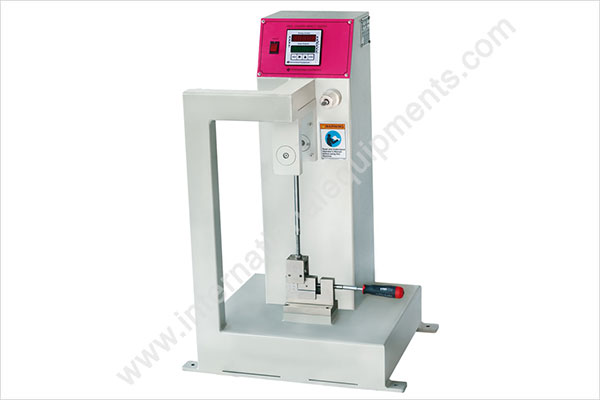
The pendulum-type impact tester that actually performs the Izod or Charpy test. We supply Computerised and Analogue models, with capacities up to 50 Joules.

Motorized Notch Cutter (this product)
Cuts the standard 45° V-notch in the specimen to the exact depth required by ASTM/ISO — without which impact results are not repeatable.

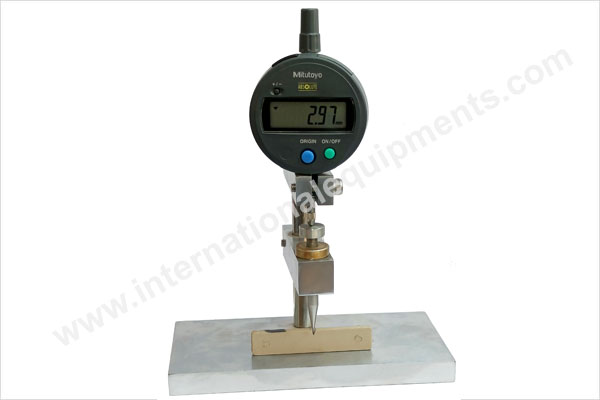
Micro-meter Jig for Notch Measurement
Verifies the actual notch depth and the residual specimen thickness after cutting& ASTM D 256 requires this measurement to confirm the specimen complies before testing.

Buying all three from a single manufacturer ensures dimensional compatibility between the notch cutter fixture, the specimen, the impact tester jaw and the measurement jig. We commonly supply the complete three-piece set as a package & please ask in your enquiry.

Technical Information

  • ASTM D 256 — Standard Test Methods for Determining the Izod Pendulum Impact Resistance of Plastics (defines V-notch geometry).
  • ASTM D 6110 — Standard Test Method for Determining the Charpy Impact Resistance of Notched Specimens of Plastics.
  • ISO 180 — Plastics: Determination of Izod Impact Strength.
  • ISO 179 — Plastics: Determination of Charpy Impact Properties.
  • IS 13360 (Part 5/Sec 7) — Indian Standard for Charpy impact testing of moulded plastics.
  • IS 13208 — Indian Standard for Izod impact testing of plastics.
  • Preparation of V-notched specimens for Izod impact testing per ASTM D 256.
  • Preparation of V-notched specimens for Charpy impact testing per ASTM D 6110.
  • Notching of HDPE, LDPE, PP, ABS, PS and PVC specimens for quality control testing.
  • Notching of engineering plastics such as PC, Nylon, POM, PMMA and PEEK (Variable Speed model).
  • Notching of glass-fibre-reinforced plastics and composite specimens.
  • Sample preparation in NABL-accredited test laboratories and certification bodies.
  • R&D testing of new polymer grades and blends.
  • Specimen preparation in educational institutions, engineering colleges and polytechnic laboratories.
  • Incoming raw-material specimen preparation in polymer manufacturers' quality-control laboratories.
    • Plastic Pipe Manufacturers (HDPE, PPR, PVC, PEX).
    • Plastic Crate, Bottle, Bin & Moulded Product Manufacturers.
    • Automotive Component Plastic Suppliers.
    • Engineering Plastic Producers (ABS, PC, Nylon, POM, PMMA).
    • Composite & FRP Fabricators.
    • Polymer Masterbatch & Compounding Units.
    • Recycled Plastic Processors.
    • Petrochemical & Resin Producers.
    • Government Testing Laboratories, NABL-Accredited Laboratories & Universities.
    • Polytechnic Colleges & ITI Institutes.

Mitutoyo Depth Micrometer & Lab-Grade Precision
Every Motorized Notch Cutter ships with a Mitutoyo brand depth micrometer (0–25 mm, 0.01 mm resolution) & the global benchmark for precision measurement, ensuring repeatable notch depth on every specimen.

Two Models for Every Polymer Type
Choose the Standard model for routine thermoplastic testing or the Variable Speed model for tougher engineering plastics and composites. Both meet the same international standards.

Fully Compliant 45° V-Notch
Cutting tool geometry matches the exact angle and root radius specified by ASTM D 256 and ASTM D 6110 — no improvisation, no shortcuts.

Safety-Jacket Variant Available
The Variable Speed model comes with an acrylic safety jacket as standard, satisfying stricter laboratory operator-safety requirements.

Vector-Controlled VFD (Variable Speed Model)
Vector-controlled variable-frequency drive delivers smooth speed adjustment from low (for soft / smear-prone polymers) to high (for hard / brittle polymers) without losing torque.

Complete Impact-Testing Package from One Supplier
Buy your Impact Tester, Notch Cutter and Micro-meter Jig as a matched set from International Equipments — dimensional compatibility guaranteed.

ISO & CE Certified
Designed and built at our Mumbai facility under ISO-certified quality systems, with CE marking for export to Europe and the Middle East.
Free Installation, Training & Calibration
Free online commissioning, operator training and a factory calibration certificate are provided. Spares are available for long-term support.

Frequently Asked Questions

A. No. ASTM D 256, ASTM D 6110, ISO 179 and ISO 180 all require the V-notch to have a specific 45° angle, a defined depth (typically 2.54 mm for Izod), and a controlled root radius (typically 0.25 mm). Hand-cutting with a file or a generic milling machine cannot reliably meet these tolerances. The result is inconsistent impact values — sometimes high, sometimes low — making the data unfit for QC decisions or certification. A motorized notch cutter with a calibrated depth micrometer is the only practical way to prepare compliant specimens repeatedly.
A. The Standard model has a fixed motor speed of 1440 RPM, which works well for most common thermoplastics (HDPE, LDPE, PP, ABS, PS, PVC). The Variable Speed model adds a vector-controlled variable-frequency drive that lets you tune the cutting speed — slower for tough engineering plastics like PC, Nylon and POM (which can chip at high speed) and for soft polymers that smear at high speed. The Variable Speed model also includes an acrylic safety jacket. Both models use the same Mitutoyo depth micrometer and produce notches to the same international standards.
A. The cutting tool is ground to the standard 45° included angle required by ASTM D 256, ASTM D 6110, ISO 179 and ISO 180. The notch depth is operator-set using the Mitutoyo micrometer (0–25 mm range, 0.01 mm least count). For the standard notched Izod specimen, ASTM D 256 specifies a notch depth of 2.54 mm — but other standards and specimen types may use different depths, which is why a variable depth micrometer is provided rather than a fixed stop.
A. Rigid thermoplastics including HDPE, LDPE, PP, PVC, ABS, PS, PC, Nylon (PA), POM/Acetal, PMMA/Acrylic, PEEK and similar engineering plastics. The Standard model handles common thermoplastics well; the Variable Speed model is better for tougher engineering plastics, glass-fibre-reinforced composites, and softer polymers that benefit from slower cutting speeds. Very soft elastomers and rubber are not typically notched on this machine.
A. Mitutoyo is the global benchmark brand for precision dimensional-measuring instruments. Using a Mitutoyo depth micrometer (rather than a generic one) gives your lab a traceable, internationally recognised measurement reference. This matters during NABL audits, ISO 9001 surveillance audits and export quality audits where buyers will check that your measuring instruments are from a recognised manufacturer.
A. Either way. The Motorized Notch Cutter can be purchased as a standalone product if you already own an impact tester, or as part of our complete three-piece impact-testing package along with the Izod / Charpy Impact Tester and the Micrometer Jig for Notch Measurement. Buying the matched set from a single manufacturer guarantees fixture and dimensional compatibility — please ask in your enquiry.
A. The Variable Speed model includes an acrylic safety jacket as standard, which encloses the cutting zone during operation. Even with the Standard model, operators should wear safety glasses and avoid loose clothing or jewellery near the cutting tool. We provide a safety briefing during installation and operator training. The machine should always be operated by trained personnel only.
A. Yes. We provide free on-site installation, commissioning, operator training and a factory calibration certificate at the customer's location anywhere in India. The Mitutoyo depth micrometer is supplied with its own factory calibration certificate. Annual Maintenance Contracts (AMC) and recalibration services are available through our service network. International customers receive commissioning support remotely with detailed documentation; on-site international installation can be arranged at additional cost.

Need a reliable Motorized Notch Cutter for your impact-testing laboratory?

Contact International Equipments today for a personalised quotation. Tell us the types of plastics you cut (standard thermoplastics or tougher engineering plastics) and whether you want the matched Notch Cutter + Impact Tester + Micro-meter Jig package — our team will recommend the right model and share pricing, delivery timeline and the client list of leading manufacturers already using our notch cutters.

Get Free Quote