Quote Request
Quote
Manufacturers and Suppliers of Charpy Impact Tester / Izod Impact Tester

Hydraulic Press — Laboratory Sample Cutting Press Manufacturer in India

About Hydraulic Press — Laboratory Sample Cutting Press (5 Tonnes, Up to 4 mm Thick)

To cut samples having thickness up to 4mm.

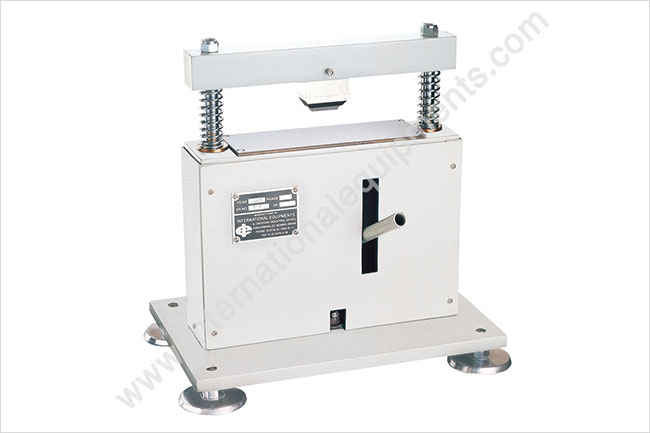
International Equipments is a leading manufacturer, supplier and exporter of Laboratory Hydraulic Presses — also called Sample Cutting Presses, Specimen Cutting Presses or Die-Cutting Hydraulic Presses — in India. Built at our Mumbai facility, our 5-tonne Hydraulic Press is the dedicated laboratory bench-top press used by QC laboratories across the plastic, polymer, rubber, film, packaging, leather and adhesive industries to cut standard-shape test specimens from sheet, film and finished product samples — exactly as required for tensile, impact, peel, COF, density and dozens of other mechanical tests.

The hydraulic press is the unsung workhorse of every well-equipped polymer QC laboratory. Without it, the laboratory cannot produce the dumbbell-shaped tensile specimens required by ASTM D 638 / ISO 527, the rectangular strips required by ASTM D 882, the circular discs required by COF and density tests, or the notched bars used in Izod/Charpy testing. With it, the operator can produce dimensionally accurate, repeatable test specimens in seconds per piece — turning every test on every downstream instrument (UTM, Tensile Tester, Impact Tester, Peel Tester) into a reproducible, audit-ready QC measurement.

★ CLIENT USING THIS MODEL
Exporters Of Hydraulic Press

Specifications Table

Parameter Specification
Capacity 5 tonnes* (other capacities available on request)
Operation Manual (hand-operated hydraulic pump)
Horizontal Daylight 12 inch
Cross Travel 4 inch
Maximum Sample Thickness 4 mm (typical materials)
Paint Finish Powder coated
Primary Application Cutting standard-shape test specimens from plastic film, sheet, rubber, leather, paperboard and similar materials for downstream tensile, impact, peel, COF and density testing

* Equipment with other capacities could also be supplied as per the requirement.

What is a Laboratory Hydraulic Press?

A Laboratory Hydraulic Press — in the sample-cutting configuration sold on this page — is a small bench-top hydraulic press equipped with a flat platen on the lower side and a piston-actuated die-holder on the upper side. The operator places a sheet of sample material on the lower platen, positions a cutting die on top of the material, then operates the manual hand pump to drive the piston downward. The cutting die punches through the sample material against the lower platen, producing one or more standard-shape test specimens with cleanly-cut edges in a single press operation.

Different from large industrial hydraulic presses (which operate at hundreds of tonnes for production-scale metal-forming and forging), the laboratory Hydraulic Sample Cutting Press is purpose-built for the polymer QC use case: low tonnage (5 tonnes is more than enough to cut any plastic or rubber up to 4 mm thick), small footprint (fits on a standard lab bench), manual operation (no power supply needed, no compressed air, no electronics), and full compatibility with the standard ASTM and ISO test-specimen cutting dies used across the polymer testing industry.

About Our 5-Tonne Hydraulic Sample Cutting Press

Our Hydraulic Press has a 5-tonne capacity — comfortably high enough to cut any plastic film, plastic sheet, rubber sheet, leather sample, fabric or paper sample up to 4 mm thick in a single press stroke. For most polymer samples (LDPE, LLDPE, HDPE, PP, PVC, ABS, PC), 5 tonnes is several times more than the actual force required for the cut — giving generous margin for harder materials and ensuring clean edges with no edge crushing or tearing.

The 12 inch horizontal daylight (the open vertical gap between platen and die-holder) accommodates large cutting dies and thicker sample stacks for production-scale specimen preparation. The 4 inch cross travel (the lateral movement of the die-holder relative to the platen) allows multiple cut positions across a single sheet of sample material without re-positioning the entire sample — improving throughput when cutting many specimens from one source sheet.

Operation is manual — a hand-operated hydraulic pump drives the piston. This is by design: manual operation gives the operator full tactile feedback during the cut, eliminates the cost and complexity of a motor / pump / valve / control system, and removes all electrical / electronic failure modes from the press. The press will operate reliably for decades with minimal maintenance, in any laboratory environment, on any continent, without any power source.

Mild-steel construction with powder-coated finish for long laboratory service life. Other capacities (lower or higher than 5 tonnes) can be supplied on request — please mention your typical sample material and thickness in the enquiry. Cutting dies are supplied separately and are matched to the test standards your laboratory needs to follow.

Why You Need a Sample Cutting Press

  • Dimensional Accuracy of Test Specimens
    Tensile, impact, peel, COF and most mechanical tests require specimens of precisely defined dimensions. Die-cut specimens from a hydraulic press have clean, repeatable, accurate edges every time — essential for valid QC data.
  • Compliance with ASTM and ISO Standards
    ASTM D 638, ASTM D 882, ASTM D 412, ASTM D 256, ASTM D 1894 and dozens of other test standards specify exactly what specimen shape and dimensions must be used — the hydraulic press is the instrument that uses the matching dies to produce compliant specimens.
  • Massive Throughput Improvement vs Manual Cutting
    A hydraulic press with the correct die produces one or more test specimens in a single 5-second press stroke — manual scissor-cutting takes minutes per specimen and introduces edge errors.
  • Required for Tensile, Impact, Peel, COF and Density Tests
    The press is the prerequisite instrument before any downstream mechanical test can be run — the foundation of the entire QC laboratory.
  • Mandatory for ISI Mark and BIS Audit
    BIS auditors expect to see the sample cutting press alongside the other instruments in the QC laboratory — it is one of the foundation instruments listed in the BIS scheme of testing and inspection for plastic and polymer products.

How the Sample Cutting Procedure Works

  • Step 1 — Select the Correct Cutting Die
    Choose the die that matches the specimen shape required by your downstream test standard — Type I/IV/V dumbbell for ASTM D 638, strip die for ASTM D 882, square die for COF, disc die for density, bar die for Izod/Charpy.
  • Step 2 — Position the Sample on the Lower Platen
    Place a sheet of the source material flat on the lower platen. Position the cutting die on top of the sample at the desired cut location, square against the platen.
  • Step 3 — Operate the Hand Pump to Cut
    Operate the manual hand pump to drive the piston downward. The piston applies force to the top of the die, which punches through the sample against the lower platen. A steady, smooth stroke gives the cleanest cut.
  • Step 4 — Release Pressure and Inspect the Specimen
    Release the hydraulic pressure via the relief valve, lift the die, remove the cut specimen and inspect the edges. Clean cuts with no tearing, melting or burr formation are the goal.

Cutting Dies — Required Companion Accessories

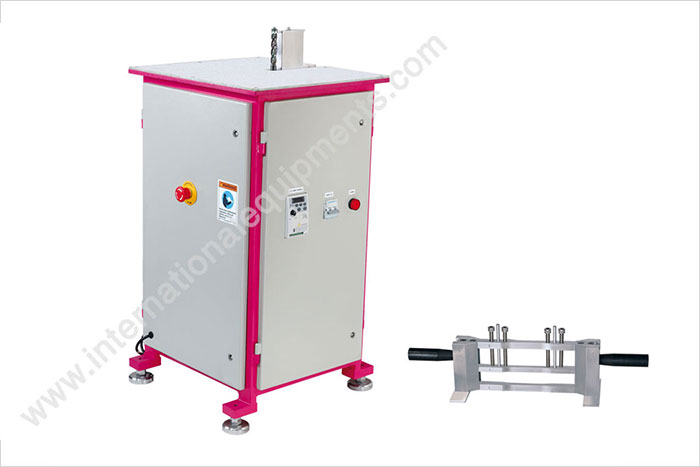
The Hydraulic Press is supplied WITHOUT cutting dies as standard. Dies are matched to the specific test standards your laboratory needs to follow — and the choice of die is the most important decision in equipping the press. Common die types we can supply:
  • ASTM D 638 Type I dumbbell die — for plastic tensile testing of moulded specimens (165 mm overall length)
  • ASTM D 638 Type IV dumbbell die — for plastic tensile testing of thinner specimens (115 mm overall length)
  • ASTM D 638 Type V dumbbell die — for thin film tensile testing (63.5 mm overall length, small-specimen version)
  • ISO 527-2 Type 1A and 1B dumbbell dies — international standards for plastic tensile testing
  • ISO 527-3 Type 5 dumbbell die — international standard for thin film tensile testing
  • ASTM D 412 Type C dumbbell die — for rubber and elastomer tensile testing
  • Rectangular strip dies — typically 10 mm × 150 mm or 25 mm × 150 mm — for ASTM D 882 film tensile testing
  • Square dies (50 × 50 mm, 100 × 100 mm) — for ASTM D 1894 COF testing of plastic film and laminate
  • Circular disc dies (various diameters) — for density, hardness, opacity and disc-shape testing
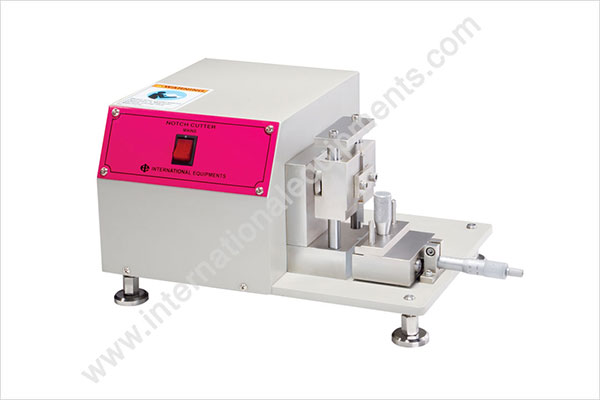
  • Rectangular bar dies (12.7 mm × 64 mm or similar) — for Izod / Charpy notched-bar impact testing (used WITH the Notch Cutter for the notch)
  • Custom dies on request — designed to your specific specimen geometry or to any niche test standard not covered by the standard die set

Hydraulic Press vs Contour Cutter — Which Should You Buy?

  • Hydraulic Press (This Product) — Best for Sheet & Thicker Samples
    5 tonnes capacity handles sheet samples, rubber, leather, paperboard and other thicker / tougher materials up to 4 mm thick. Die-cut method: full-thickness shear punch in a single stroke. Best for: ASTM/ISO standard dumbbell, strip and disc specimens. Operator-friendly, no power needed, very high reliability.
  • Contour Cutter (Separate Product) — Best for Thin Film & Complex Shapes
    Powered cutting tool that follows a die outline to cut thin film and laminate samples up to 5 mm thick. Better than the press for very thin samples where die-cut tearing or edge melting can be a concern. Can produce complex specimen shapes that would require an expensive custom die on the press.
  • Many Labs Have Both
    Most well-equipped polymer / packaging QC labs have both instruments: the Hydraulic Press for thick sheet and standard ASTM/ISO dumbbell/strip specimens, and the Contour Cutter for thin film and any custom specimen shape that does not have a standard die. The two are complementary, not competitive — please discuss your typical material and specimen mix in your enquiry, and we can recommend the right primary instrument plus any companion equipment.

Technical Information

  • ASTM D 638 — Standard Test Method for Tensile Properties of Plastics (Type I, IV, V dumbbell specimens cut on the press)
  • ASTM D 882 — Standard Test Method for Tensile Properties of Thin Plastic Sheeting (rectangular strips)
  • ASTM D 412 — Standard Test Methods for Vulcanised Rubber and Thermoplastic Elastomers — Tension (Type C dumbbell)
  • ASTM D 256 — Standard Test Methods for Determining Izod Pendulum Impact Resistance (rectangular notched bars)
  • ASTM D 6110 — Standard Test Methods for Determining Charpy Impact Resistance (rectangular notched bars)
  • ASTM D 1894 — Coefficient of Friction of Plastic Film and Sheeting (square 50 × 50 mm or larger specimens)
  • ASTM D 1709 — Impact Resistance of Plastic Film by Dart Method (circular discs)
  • ASTM D 5630 — Ash Content of Plastics (specimens cut for the burn cycle)
  • ISO 527-2 — Plastics: Determination of Tensile Properties — Test Conditions for Moulding and Extrusion Plastics
  • ISO 527-3 — Plastics: Determination of Tensile Properties — Test Conditions for Films and Sheets
  • ISO 180 — Plastics: Determination of Izod Impact Strength
  • ISO 8295 — Plastics Film and Sheeting — Determination of the Coefficients of Friction
  • ISO 37 — Rubber, Vulcanised or Thermoplastic — Determination of Tensile Stress-Strain Properties
  • IS 13360 — Indian Standard methods of test for plastics
  • Cutting ASTM D 638 / ISO 527-2 dumbbell tensile specimens from plastic sheet (HDPE, PP, PVC, ABS, PC, PS)
  • Cutting ASTM D 882 / ISO 527-3 rectangular tensile strips from plastic film and laminate
  • Cutting ASTM D 412 / ISO 37 rubber tensile dumbbells from vulcanised rubber sheet
  • Cutting ASTM D 256 / ISO 180 Izod impact bars from moulded plastic sheet
  • Cutting Charpy impact specimens for ASTM D 6110
  • Cutting square specimens for ASTM D 1894 COF testing of plastic film
  • Cutting circular discs for density, opacity and dart impact testing
  • Cutting peel-test strips for ASTM F 88 heat-seal strength testing
  • Cutting samples from rubber sheets, gaskets and seals for QC verification
  • Cutting leather samples for tensile, tear and peel testing
  • Cutting paperboard, fibreboard and corrugated samples for compression and tensile testing
  • Cutting samples from adhesive-bonded laminates for peel and shear testing
  • Cutting woven fabric samples for tensile strength testing
  • Sample preparation for ISI mark certification and BIS audit of plastic and rubber products
  • Educational use in polymer engineering, rubber engineering and material science laboratories
  • Plastic Film, Sheet & Flexible Packaging Manufacturers
  • HDPE / uPVC / CPVC / PPR Pipe Manufacturers
  • Polymer Producers, Compounders & Master-batch Manufacturers
  • Recycled Plastic Processors
  • Rubber, TPE & Elastomer Manufacturers
  • Adhesive Tape, Label & Bonded-Laminate Producers
  • Footwear & Leather Goods Manufacturers
  • Woven Sacks, FIBC, Raffia Tape & Bulk-Bag Manufacturers
  • Paper, Paperboard, Carton & Corrugated Box Manufacturers
  • Automotive Component Manufacturers (rubber gaskets, seals, plastic trim)
  • Government Testing Labs, NABL Accredited Labs & BIS-Approved Test Houses
  • Polytechnic Colleges, ITI Institutes & University Polymer Engineering Departments
  • 5 Tonnes Capacity — Comfortably Cuts Any Polymer or Rubber up to 4 mm
    Generous capacity for the polymer QC use case — handles plastic, rubber, leather, paperboard and fabric samples without straining. Custom capacities (smaller or larger) available on request.
  • 12 Inch Daylight — Accommodates Large Dies
    Generous vertical clearance for the largest standard ASTM and ISO cutting dies, plus thicker sample stacks for production-scale specimen preparation.
  • 4 Inch Cross Travel — Multiple Cuts Per Sheet
    Lateral die positioning allows multiple specimens to be cut from a single sheet of source material without repositioning the sample — improves throughput when cutting many specimens for the same test.
  • Manual Operation — Maximum Reliability
    Hand-operated hydraulic pump means no electrical / electronic failure modes, no power supply required, no compressed air needed. The press will operate reliably for decades with minimal maintenance, in any laboratory environment, on any continent.
  • Robust M.S. Construction with Powder Coat
    Heavy-gauge mild-steel frame with powder-coated finish for long service life in busy QC laboratory environments. Built to last decades.
  • Custom Dies Available
    We can supply standard ASTM / ISO dies plus custom dies designed to your specific specimen geometry or to any niche test standard not covered by the standard set — one-stop sourcing for the complete press + dies package.
  • Used by Leading Indian Polymer Manufacturers
    Our Hydraulic Press is installed in QC laboratories of major HDPE pipe manufacturers, flexible packaging converters, rubber product manufacturers and material testing labs across India and 60+ export countries.
  • ISO & CE Certified Manufacturing
    Designed and built at our Mumbai facility under ISO certified quality systems, with CE marking for export to the Middle East, Africa, South-East Asia, Europe and South America.
  • Free Installation, Training & Calibration
    Free on-site commissioning, operator training on the cutting procedure (including correct die positioning and pump technique for clean edges) and factory calibration certificate at the customer's location anywhere in India. AMC available for long-term support.

FAQs

No. The Hydraulic Press is supplied as standard without dies. Dies are matched to the specific test standards your laboratory needs to follow — and the choice of die depends on whether you do tensile / impact / COF / peel / density testing, which standards (ASTM, ISO, IS) you follow, and your typical sample material. We can supply the standard ASTM and ISO dies (dumbbells, strips, discs, bars) plus custom dies on request — please mention your specimen requirements in your enquiry and we will quote the press + matched dies as a complete package.
Up to 4 mm is the typical limit for standard polymer and rubber samples on the 5-tonne press — comfortable for all plastic film, plastic sheet, rubber sheet, leather, paperboard and fabric samples within that thickness range. Above 4 mm, the cut force needed increases significantly and the cut quality can degrade — for thicker samples, a higher-capacity press is recommended. We can supply 10-tonne and 15-tonne variants on request — please mention your typical sample thickness in the enquiry.
The Hydraulic Press uses a sharp-edged die that punches through the full thickness of the sample in a single stroke — fast and accurate, best for sheet and thicker samples. The Contour Cutter uses a powered cutting tool that follows the outline of a die guide — better for very thin films where die punching can cause tearing, and capable of producing complex specimen shapes that would require an expensive custom die on the press. Many QC labs have both: Hydraulic Press for the standard ASTM/ISO dumbbell, strip and disc specimens; Contour Cutter for thin film and custom-shape specimens.
5 tonnes is sufficient for rubber sheet up to 4 mm thick — comfortable for ASTM D 412 Type C dumbbells, gasket samples, seal samples and similar rubber QC applications. For thicker rubber samples (above 4 mm) or for harder rubber compounds where cutting force is higher, a 10-tonne or 15-tonne press is recommended. Please mention your typical rubber thickness and hardness range in the enquiry.
Manual operation has several practical advantages for the laboratory use case: (1) no electrical / electronic failure modes — the press is essentially maintenance-free for decades; (2) no power supply or compressed air required — works in any laboratory environment; (3) full tactile feedback during the cut — the operator senses the cut quality and can adjust pump speed; (4) much lower cost than a motorised press; (5) generally faster than motorised for single-specimen production (no setup, just position and pump). For very high-volume production cutting (hundreds of specimens per shift), a motorised press becomes economically attractive — please discuss with us if that is your use case.
No — 5 tonnes is not enough capacity to cut metal samples. Metal sample preparation typically requires either much larger hydraulic presses (50-100 tonnes) or specialised metallographic specimen cutters with diamond saws. This press is optimised for plastic, rubber, leather, paperboard, fabric and similar polymeric materials — the target market is polymer QC, not metals QC. For metal sample preparation, please discuss your needs separately.
The press is one instrument in the polymer QC sample-preparation chain. Typical companions include: (1) cutting dies matched to your test standards; (2) Motorized Notch Cutter for adding notches to Izod/Charpy specimens; (3) Hot Air Oven for sample conditioning before testing; (4) the downstream test instruments themselves — UTM or Tensile Tester for tensile, Izod/Charpy Tester for impact, Peel Tester for peel, COF Tester for friction, Digital GSM Balance and Density Apparatus for density. Many of our customers buy the press + multiple downstream test instruments as a package — please discuss your complete QC requirement in your enquiry.
Yes. We provide free on-line commissioning, operator training on the cutting procedure (correct die positioning, pump technique for clean edges, safe operating practice) and a factory calibration certificate for the press capacity at the customer's location anywhere in India.

Need a reliable Laboratory Hydraulic Press for your QC laboratory?

Contact International Equipments today for a personalised quotation. Tell us your typical sample material, sample thickness and the test standards you follow (ASTM D 638, ASTM D 882, ASTM D 412, ISO 527, IS 13360 or others) — our team will recommend the right press capacity, suggest the matching cutting dies for your specimen requirements, and share package pricing for the press + dies + any companion equipment you may need.

Get Free Quote