Quote Request
Quote
Manufacturers and Suppliers of Charpy Impact Tester / Izod Impact Tester

E.S.C.R. Apparatus — Environmental Stress Cracking Resistance Tester Manufacturer in India

About E.S.C.R. Apparatus — Environmental Stress Cracking Resistance Tester Manufacturer in India

E.S.C.R Apparatus is designed as per ASTM D - 1693 to determine Environmental Stress Cracking resistance of ethylene plastics.

International Equipments is a leading manufacturer, supplier and exporter of E.S.C.R. Apparatus — Environmental Stress Cracking Resistance Testers — in India. Built at our Mumbai facility, our ESCR Apparatus is designed strictly to ASTM D 1693 (the international reference standard for Environmental Stress Cracking of Ethylene Plastics) and is used by HDPE pipe manufacturers, plastic bottle and container producers, polyethylene compounders, packaging companies and quality testing laboratories worldwide.

Our six-station ESCR Apparatus uses the Bent-Strip method specified in ASTM D 1693. Specimens are notched, bent into a holder, immersed in a controlled-temperature bath of stress-cracking agent (typically Igepal CO-630 solution), and observed at fixed intervals for the appearance of cracks. The result — F50 (the time at which 50% of specimens have cracked) — is one of the most important long-term durability indicators for any polyethylene product that will be exposed to detergents, surfactants, solvents or aggressive packaged contents during its service life. ★ VIEW INSTALLED CLIENTS
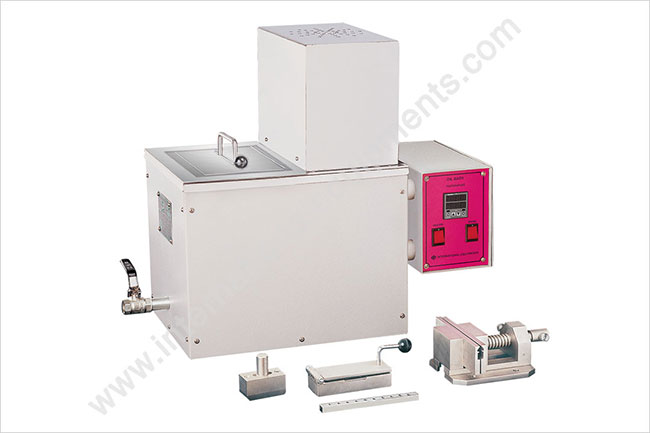
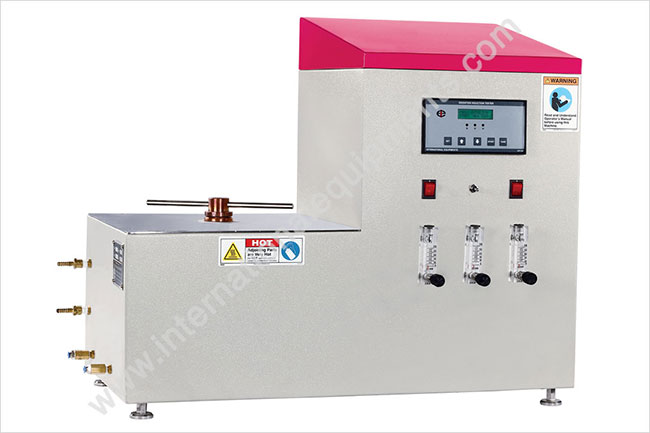
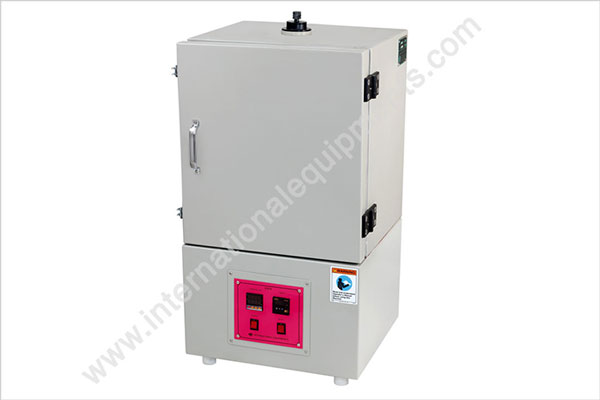
E.S.C.R. Apparatus Manufacturer India — Environmental Stress Cracking Resistance Tester per ASTM D 1693 by International Equipments

Specifications

Parameter Specification
Test Standard ASTM D 1693 — Standard Test Method for Environmental Stress-Cracking of Ethylene Plastics
Test Method Bent-Strip Method
Temperature Range Ambient to 200°C
Number of Stations Six (6) — for parallel testing of six specimens, as required for F50 calculation
Inner Bath Material S.S. (Stainless Steel) — chemical resistant to stress-cracking agents
Outer Body Material M.S. (Mild Steel)
Paint Finish Powder coated
Power Supply 230 Volts, 50 Hz, single phase

What is ESCR?

Environmental Stress Cracking Resistance (ESCR) is the ability of a polyethylene plastic to resist crack formation when it is simultaneously exposed to mechanical stress AND a chemical stress-cracking agent. The phenomenon is fundamentally different from chemical attack — the polymer does not dissolve or break down chemically. Instead, the stress-cracking agent (typically a surfactant such as Igepal CO-630, or a detergent, an oil, or an organic solvent) accelerates the formation and growth of micro-cracks at points where the polymer is under tensile stress.

ESCR is therefore a long-term durability property. A polyethylene component may pass all short-term tensile, impact and flexural tests, look perfectly sound on day one of service, and then crack and fail months or years later because environmental stress cracking has been quietly progressing all along. This is why ESCR testing is mandatory in many HDPE pipe, container and packaging specifications — to identify weak material grades before they reach the end customer.

Why ESCR Testing Matters

Environmental Stress Cracking is the single largest cause of long-term field failure in polyethylene products. A real-world example: an HDPE detergent bottle may sit on a supermarket shelf for months in direct contact with surfactant-based contents, while internal pressure or residual moulding stress creates mechanical loading on the wall. If the resin grade has poor ESCR, micro-cracks initiate at stress concentration points, slowly grow, and eventually cause the bottle to leak. The bottle itself looked perfect when manufactured — the failure only appears after months of service.

The same mechanism affects HDPE pipes carrying surfactant-bearing water, fuel-grade containers, milk and beverage bottles, blow-moulded jerry cans, and many other polyethylene products. ASTM D 1693, ISO 22088, and the relevant Indian Standards specify ESCR as a mandatory acceptance test because it is the most reliable laboratory predictor of long-term field performance.

For pipe and container manufacturers, an ESCR Apparatus is therefore not optional — it is essential QC equipment for grade selection, incoming raw-material acceptance, batch-to-batch validation, and proving compliance with national standards and customer specifications.

About Our E.S.C.R. Apparatus

Our ESCR Apparatus is a robust, six-station instrument purpose-built for the ASTM D 1693 Bent-Strip method. The temperature-controlled bath holds six specimen test-tubes simultaneously, so the laboratory can run six replicate samples in parallel — exactly what ASTM D 1693 calls for, since the F50 result is statistically derived from the cracking behaviour of multiple specimens. Without six-station capability, every ESCR test would have to be repeated multiple times sequentially, multiplying the test duration.

The temperature range covers ambient up to 200°C, comfortably above the most common ESCR test temperatures (typically 50°C for Condition A and 100°C for Condition B). The bath is constructed from SS (stainless steel) for chemical resistance to the stress-cracking agent, with an outer M.S. body and a powder-coated finish for long lab life

Critically, our apparatus is supplied with the complete set of accessories needed to actually run the ASTM D 1693 test from day one — cutting die for preparing specimens to the standard dimensions, nicking jig for applying the controlled notch on the specimen, bending cum transfer tool for bending the specimen into the holder, aluminium foil, and six sets of specimen holders, test tubes and rubber corks. Many competitor ESCR machines omit one or more of these accessories — forcing the buyer to source them separately or to improvise, neither of which gives ASTM-compliant results.

How the ESCR Test is Performed

ASTM D 1693 uses the Bent-Strip method, which has been the international ESCR reference test for ethylene plastics since the 1960s. The procedure has four key stages:

Plastic strips are cut from the test material using the supplied cutting die to ASTM D 1693 dimensions (typically 38 × 13 mm). A controlled longitudinal notch is applied using the nicking jig. This notch concentrates stress at a known point and ensures crack initiation.
Each notched strip is bent into a U-shape using the bending tool and inserted into a specimen holder, keeping it under sustained mechanical stress. The notch is placed on the convex (tension) side. Six specimens are prepared for each test.
Each holder is placed in a test tube containing stress-cracking agent (typically Igepal CO-630 solution). Tubes are sealed and placed in the ESCR Apparatus bath at 50°C (Condition A) or 100°C (Condition B).
Specimens are inspected at fixed intervals (1 hr, 2 hr, 4 hr, 8 hr, 24 hr, etc.). The F50 value is the time at which 50% (3 out of 6) specimens show cracks. Results range from a few hours (low ESCR) to several thousand hours (high-performance grades).

Accessories Supplied

Every ESCR Apparatus is supplied complete with the full set of accessories required to actually run the ASTM D 1693 test — no need to source anything separately:

Accessory Quantity Purpose / Description
Cutting Die 1 No. Cuts plastic strips to ASTM D 1693 standard specimen dimensions.
Nicking Jig 1 No. Applies the controlled longitudinal notch on each specimen, ensuring uniform stress concentration.
Bending cum Transfer Tool 1 No. Bends the notched strip into the U-shape and transfers it cleanly into the specimen holder without damage.
Aluminium Foil 1 No. Used as the standard barrier/separator material per ASTM D 1693 procedure.
Specimen Holder 6 Nos. Metal holders that keep the bent specimens under sustained stress during the test.
Test Tube 6 Nos. Glass test tubes containing the stress-cracking agent solution and loaded specimen holder.
Rubber Cork 6 Nos. Seals the test tubes to prevent evaporation of the stress-cracking agent during long tests.

Technical Information

  • ASTM D 1693 — Standard Test Method for Environmental Stress-Cracking of Ethylene Plastics (Bent-Strip Method)
  • ISO 22088 — Plastics: Determination of Resistance to Environmental Stress Cracking (ESC)
  • IS 4984 — Indian Standard for HDPE Pipes for Potable Water Supply (ESCR Requirements)
  • IS 14333 — Indian Standard for HDPE Pipes for Water Supply
  • IS 7328 — Indian Standard for HDPE Materials for Moulding and Extrusion
  • Acceptance testing of HDPE pipes for potable water supply
  • QC testing of HDPE pipes for sewerage, irrigation, and gas distribution
  • ESCR testing of HDPE jerry cans, drums, and chemical containers
  • Quality control of blow-moulded HDPE bottles for detergents, edible oils, and chemicals
  • ESCR validation of HDPE caps and closures
  • Grade selection and qualification of new HDPE, LDPE, and LLDPE resin grades
  • Incoming raw material acceptance testing of polyethylene granules
  • Batch-to-batch consistency verification of polyethylene masterbatches
  • Validation of recycled polyethylene before re-extrusion into pipe or packaging products
  • Long-term durability prediction for polyethylene packaging in contact with surfactants
  • R&D testing during development of new polyethylene formulations
  • HDPE Pipe Manufacturers (Water Supply, Sewerage, Irrigation, and Gas Distribution)
  • Blow-Moulded HDPE Container and Jerry Can Manufacturers
  • HDPE Bottle Manufacturers (Detergent, Edible Oil, Chemical, and Milk Packaging)
  • Plastic Cap and Closure Manufacturers
  • HDPE PLB Duct Manufacturers
  • Polyethylene Producers and Resin Compounders
  • Polymer Masterbatch Compounding Units
  • Recycled Plastic Processing Companies
  • Petrochemical and Polymer Producers (HDPE, LDPE, and LLDPE)
  • Government Testing Laboratories, NABL Accredited Laboratories, and Certification Bodies
  • Research & Development Centres of Pipe, Container, and Packaging Manufacturers
  • True Six-Station Design — Statistically Valid F50
    Six independent stations run six specimens in parallel — exactly what ASTM D 1693 requires for the F50 calculation. Cheaper one or two-station alternatives force you to repeat tests multiple times, multiplying both test duration and operator effort.
  • Complete Accessory Kit Included
    Cutting die, nicking jig, bending tool, aluminium foil, six specimen holders, six test tubes and six rubber corks — everything you need to start testing the day the apparatus arrives. No improvisation, no third-party sourcing.
  • Wide Temperature Range — Ambient to 200°C
    Covers all standard ASTM D 1693 conditions (Condition A at 50°C, Condition B at 100°C) plus higher temperatures used in modified ESCR procedures and accelerated screening tests.
  • SS Inner Bath — Chemical Resistant
    Stainless steel construction of the inner bath gives long service life when exposed to Igepal solutions, detergents and other stress-cracking agents that would corrode mild-steel baths.
  • Robust M.S. Outer Body, Powder Coated
    Built for daily lab use — heavy-gauge mild-steel body with powder-coated finish, resistant to scratches and lab chemicals.
  • ASTM D 1693 Compliant by Design
    Specimen dimensions (cutting die), notch geometry (nicking jig), specimen bending profile (bending tool) and holder geometry are all built to the dimensions specified in ASTM D 1693 — your results are directly comparable with any other ASTM-compliant lab worldwide.
  • ISO & CE Certified Manufacturing
    Designed and built at our Mumbai facility under ISO certified quality systems, with CE marking for export to the Middle East, Africa, South-East Asia, Europe and South America.
  • Free Installation, Training & Calibration
    Free on-site commissioning, operator training on the ASTM D 1693 procedure, and a factory calibration certificate at the customer's location anywhere in India. AMC and spares available for long-term support.

Frequently Asked Questions

Environmental Stress Cracking (ESC) is a long-term failure mode where polyethylene cracks under the combined action of mechanical stress and a chemical agent — even though the agent does not chemically attack the polymer. A bottle, pipe or container that passes every short-term test on day one can still fail by stress cracking months or years later in service. Because of this, ESCR testing is the most reliable laboratory predictor of long-term field performance for polyethylene products. It is mandatory in HDPE pipe, container and packaging specifications worldwide.
F50 is the time, in hours, at which 50% of the test specimens show cracks at the notch. The ASTM D 1693 procedure tests six specimens in parallel, and the F50 is calculated as the time at which three of the six (50%) have failed. A higher F50 means better ESCR performance. Commodity HDPE grades typically give F50 values of 10–50 hours; premium pipe-grade and fuel-container-grade HDPE can exceed 500–1000 hours. Your raw material specification or end-use standard will specify the minimum required F50.
ASTM D 1693 requires the F50 to be derived statistically from a population of specimens — typically six. With six specimens, the test gives a meaningful percentage failure rate at each inspection interval. With only one or two specimens, you get a pass/fail at best, not the F50 value that standards and customer specifications actually require. Some competitor machines have fewer stations to lower the price — but this means each ESCR test must be repeated multiple times sequentially, multiplying the test duration from, say, 96 hours to weeks.
The most common stress-cracking agent specified by ASTM D 1693 is Igepal CO-630 (a nonyl phenol ethoxylate surfactant), typically used as a 10% or 100% solution in water depending on the condition. Other agents — detergents, oils, kerosene, alcohols — may be specified for particular product applications where the polymer will contact those substances in service. Our ESCR Apparatus is chemically compatible with all standard ESCR test agents. The agent itself is supplied by the customer separately.
ASTM D 1693 defines several test conditions that vary by temperature and reagent concentration. The two most common are: Condition A — bath at 50°C using a specific reagent concentration, suitable for general-purpose HDPE; and Condition B — bath at 100°C, an accelerated condition used to differentiate higher-performance grades. The operator selects the condition based on the customer specification or the relevant product standard. Our apparatus covers both, plus modified higher-temperature conditions up to 200°C.
ESCR testing is inherently slow because it measures long-term durability. Typical test durations range from a few hours (for poor-quality material that fails quickly) to several hundred or even several thousand hours (for premium grades). The bent-strip configuration and the elevated temperature speed up the natural cracking process so the test completes in laboratory time-frames rather than the years it would take in actual service. The six-station design lets you run six specimens in parallel rather than sequentially — essential for reasonable lab throughput.
No. The ESCR Apparatus is supplied with all hardware accessories — cutting die, nicking jig, bending tool, aluminium foil, holders, test tubes and rubber corks — but the stress-cracking agent itself (Igepal CO-630 or whichever agent your specification calls for) is sourced separately. Igepal is a standard chemistry available from any major laboratory chemical supplier in India. We can recommend trusted suppliers in our region — please ask in your enquiry.
Yes. We provide free on-site installation, commissioning, operator training on the full ASTM D 1693 Bent-Strip procedure, and a factory calibration certificate for the temperature bath at the customer's location anywhere in India. Because ESCR is a procedural test (the result depends on correct specimen preparation as much as on the apparatus itself), we put extra emphasis on operator training during commissioning. Annual Maintenance Contracts (AMC) and spare accessories are available through our service network. International customers receive commissioning support remotely with detailed documentation; on-site international installation can be arranged at additional cost.

Need a reliable ESCR Apparatus / Environmental Stress Cracking Resistance Tester for your HDPE pipe, container, bottle or polyethylene QC laboratory?

Contact International Equipments today for a personalised quotation. Tell us the standard you follow (ASTM D 1693, ISO 22088, IS 4984, IS 14333) and the typical product you test — our team will share pricing, delivery timeline and the list of leading polyethylene pipe and container manufacturers already using our ESCR apparatus.

Get Free Quote