Quote Request
Quote
Manufacturers and Suppliers of Charpy Impact Tester / Izod Impact Tester

Carbon Black Content Apparatus — HDPE Pipe Carbon Content Tester Manufacturer in India

About Carbon Black Content Apparatus — HDPE Pipe Carbon Content Tester Manufacturer in India

As per ASTM D 1603, IS 4984 and IS 2530 to determine carbon black content of plastics.

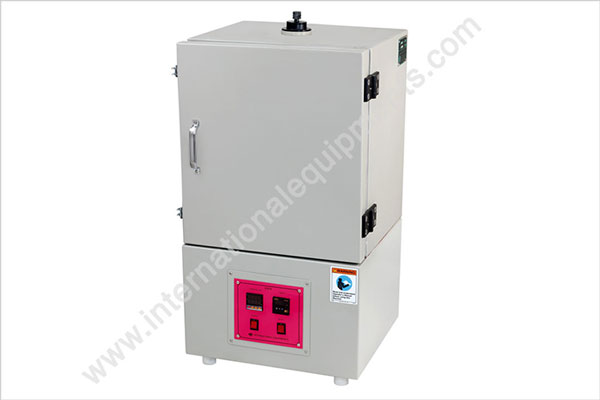
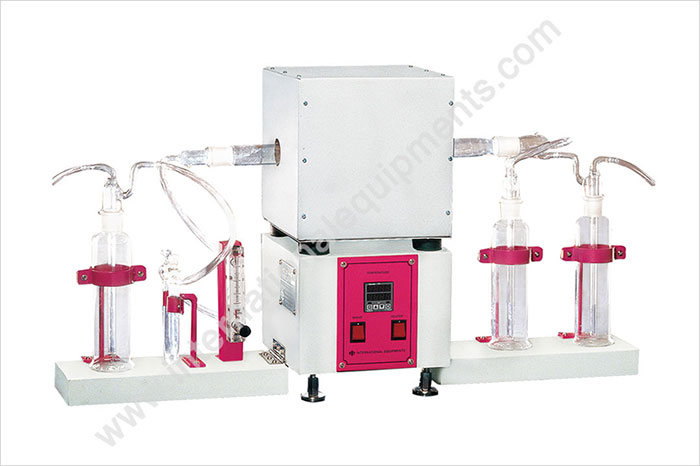
International Equipments is a leading manufacturer, supplier and exporter of Carbon Black Content Apparatus in India. Built at our Mumbai facility, our Carbon Black Content Apparatus is a purpose-built pyrolysis-based instrument that determines the exact percentage of carbon black in plastic samples — primarily HDPE water and gas pipes — strictly as per ASTM D 1603, IS 4984 and IS 2530.

Carbon black content is one of the four most important QC tests for any HDPE water pipe, PE gas pipe or HDPE PLB telecom duct (along with Hydrostatic Pressure, Carbon Black Dispersion and OIT). The 2.0% to 2.5% carbon black loading required by Indian and international standards is what protects the pipe from UV degradation over its 50-year service life — the difference between a pipe that lasts five decades and one that becomes brittle and cracks within months of outdoor exposure. Our Carbon Black Content Apparatus delivers the exact percentage measurement that BIS-certified HDPE pipe manufacturers need for ISI mark documentation, BIS audit and routine batch QC.
★ VIEW INSTALLED CLIENTS
Manufacturers and Suppliers of Carbon Black Content Apparatus

Specifications Table

Parameter Specification
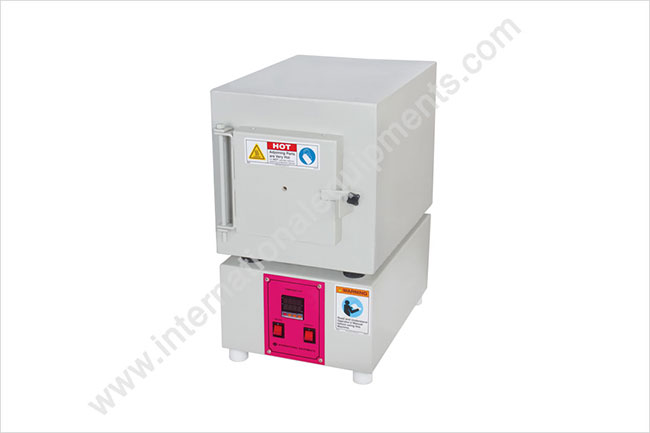
Size of Furnace 10 inch × 8 inch × 8 inch
Material of Construction M.S. (Mild Steel)
Temperature Range Ambient to 1150°C
Paint Finish Powder Coated
Power Supply 230 Volts, 50 Hz, Single Phase
Primary Application Determination of carbon black content of plastics as per ASTM D 1603, IS 4984, and IS 2530.

What is a Carbon Black Content Apparatus?

A Carbon Black Content Apparatus — also called a Carbon Black Tester, Pyrolysis Furnace Apparatus or Carbon Content Determination Setup — is a specialised laboratory instrument that determines the carbon black percentage of a polymer sample by the pyrolysis method specified in ASTM D 1603. The sample is placed in a combustion boat inside a heated combustion tube, then heated to a controlled high temperature (typically around 550°C) in a nitrogen atmosphere. The nitrogen prevents the carbon black itself from burning while the polymer matrix is pyrolysed (thermally decomposed) away. After cooling, the residual carbon black is weighed — giving the carbon black content as a percentage of the original sample mass.

The apparatus consists of a refractory-lined furnace (the heating unit), plus a complete set of glassware accessories — combustion tube, combustion boat, glass U-tube, glass end caps, glass traps, rotameter and rubber tubing — which together form the controlled nitrogen-gas-flow pyrolysis path. This is fundamentally different from a generic muffle furnace, which heats samples in air and would simply burn off both the polymer AND the carbon black, giving no useful carbon content data. The dedicated combustion tube + nitrogen flow is what makes accurate carbon black content measurement possible.

About Our Carbon Black Content Apparatus

Our Carbon Black Content Apparatus is built around a precision furnace with a 10 inch × 8 inch × 8 inch working chamber — comfortably sized to accommodate the standard combustion tube assembly used in ASTM D 1603 testing. The furnace covers the full ambient-to-1150°C range, which gives ample margin above the ~550°C pyrolysis temperature specified for the carbon black content test, plus the higher temperatures needed for subsequent ash-content measurements when required.

The mild-steel outer body is powder-coated for long lab life in busy QC laboratory environments. Standard 230 V / 50 Hz single-phase operation makes the apparatus compatible with any Indian or export laboratory power point — no three-phase connection required.

Every essential glassware item is supplied as part of the standard accessory pack — combustion tube, combustion boat, glass U-tube, two glass end caps, three glass traps, a rotameter for nitrogen flow control and rubber tubing. The customer needs to arrange only the nitrogen gas cylinder, the precision analytical balance (typically 0.1 mg readability) and a desiccator for cooling — all standard items in any well-equipped polymer QC laboratory.

Why Carbon Black Content Testing is Mandatory for HDPE Pipes

Carbon black content is one of the most heavily tested QC parameters in the plastic pipe industry. Here is why every HDPE pipe, PE gas pipe and HDPE PLB duct manufacturer needs in-house carbon black content testing capability:

UV Protection for 50-Year Service Life

HDPE pipes carry water, gas and telecom cables for service lives of 25, 50 even 100 years — often with significant outdoor exposure during storage, installation and (in some applications) full-time service. Without carbon black loading, polyethylene degrades quickly under UV radiation, becoming brittle and cracking. The 2.0% to 2.5% carbon black loading required by IS 4984 is what absorbs UV light and protects the polymer chain — giving the pipe its rated long-term life.

Mandatory for ISI Mark Certification (IS 4984, IS 14333)

BIS certification for ISI mark on HDPE water pipes (IS 4984), HDPE sewerage pipes (IS 14333) and HDPE PLB ducts (IS 14930) all require the manufacturer to demonstrate in-house carbon black content testing capability. The Carbon Black Content Apparatus is one of the mandatory instruments listed in the BIS scheme of testing and inspection for HDPE pipe products.

Required by DOT Specification for PLB Duct

Department of Telecom (DOT) specifications for HDPE PLB duct (used by BSNL, BharatNet, Reliance Jio, Airtel and most government telecom infrastructure projects) explicitly require carbon black content in a tight 2.0–2.5% range. Without documented carbon black content test reports, PLB duct cannot be supplied to most telecom infrastructure tenders.

Catches Compounder Errors and Master-Batch Variation

Most HDPE pipe manufacturers buy carbon-black-loaded compound from polymer compounders, or add carbon black master-batch at the extruder. Either way, dosing errors happen — the wrong concentration master-batch, a let-down ratio mistake, a tired master-batch feeder. The Carbon Black Content Apparatus catches these errors batch-by-batch before they reach the customer.

Too Little Carbon Black = Premature Brittleness

An HDPE pipe with significantly less than 2.0% carbon black will become brittle and crack under UV exposure — sometimes within months of installation. Field failures of this kind generate warranty claims, project disputes and long-term damage to the manufacturer's brand reputation. Carbon black content testing prevents this.

Too Much Carbon Black = Wasted Material Cost

Carbon black is more expensive than the host polyethylene. Over-dosing wastes raw material cost on every kilogram of compound produced — a cost saving that adds up quickly across the millions of metres of pipe extruded annually. Carbon black content testing ensures the loading is on target — not below spec (failure) and not wastefully high

How the Carbon Black Content Test Works

The carbon black content test is a multi-step procedure that takes 1-2 hours per sample, depending on furnace warm-up and cool-down times:

  • Step 1 — Prepare the Combustion Boat
    Take a clean, pre-weighed combustion boat from the desiccator and record the empty boat weight on the precision analytical balance (W1). Place a measured 1.0-gram pipe-wall sample, cut into small pieces, into the boat. Reweigh and record the boat plus sample weight (W2). The difference between W2 and W1 represents the exact sample mass used for the test.
  • Step 2 — Load into the Combustion Tube
    Position the combustion boat at the centre of the combustion tube. Connect the glass end caps, glass U-tube and glass traps to create the closed nitrogen-flow path. Connect the rotameter at the inlet and adjust the nitrogen flow rate as specified by ASTM D 1603 (typically a few hundred millilitres per minute). Start the nitrogen flow to purge all air from the system before heating.
  • Step 3 — Heat in the Furnace at 550°C
    Set the furnace to the pyrolysis temperature specified by ASTM D 1603, typically around 550°C. During heating, the polymer matrix decomposes while the nitrogen flow carries the decomposition products through the traps. Carbon black remains in the combustion boat because it is protected from oxidation by the inert nitrogen atmosphere. Maintain the specified temperature for the required duration, usually 5–10 minutes after complete decomposition of the sample.
  • Step 4 — Cool, Weigh and Calculate
    After pyrolysis, allow the combustion boat to cool to room temperature inside a desiccator. This step is essential to prevent weighing errors and moisture absorption. Reweigh the boat containing the residual carbon black and record the weight as W3. Calculate the carbon black content using the formula: CB % = (W3 − W1) / (W2 − W1) × 100. Compare the result with the product specification, typically 2.0% to 2.5% for HDPE pipe materials.

Accessories Supplied with the Apparatus

The standard supply includes a complete accessory set for the ASTM D 1603 pyrolysis method — everything needed to run the test except customer-supplied nitrogen gas, analytical balance and desiccator:

Combustion Tube (1 no.)

The central glass tube in which the sample is heated under nitrogen atmosphere. Houses the combustion boat at its centre.

Combustion Boat (1 no.)

The small refractory boat that holds the polymer sample inside the combustion tube. Resists the pyrolysis temperature without contamination.

Glass U-Tube (1 no.)

Routes the nitrogen gas flow path between the combustion tube and the downstream glass traps. Standard ASTM D 1603 glassware item.

Glass End Caps (2 nos.)

Seal the ends of the combustion tube and connect to the nitrogen inlet and outlet plumbing.

Glass Traps (3 nos.)

Collect the volatile pyrolysis products from the nitrogen exhaust stream so they do not enter the lab environment. Standard ASTM D 1603 glassware.

Rotameter (1 no.)

Variable-area flow meter for setting the nitrogen gas flow rate to the value specified by the test standard.

Rubber Tube (1 no.)

Flexible interconnection between the nitrogen cylinder, rotameter and inlet glassware.

Desiccator (1 no.)

Sample chamber that holds the combustion boat under low-moisture conditions before and after the test — essential for accurate weight measurement.


Carbon Black Content vs Carbon Black Dispersion — Both Tests are Required

Carbon Black Content Test (This Product) — Tells You HOW MUCH

The Carbon Black Content Apparatus measures the percentage of carbon black in the polymer. IS 4984 requires 2.0% to 2.5%. Too little: pipe will become brittle under UV exposure. Too much: wasted material cost. This is a quantitative percentage test — gives a single number (% carbon black) per sample.

  • Carbon Black Dispersion Test (Separate Product) — Tells You HOW WELL DISTRIBUTED

    The Carbon Black Dispersion Tester measures how uniformly the carbon black is distributed throughout the polymer matrix — even when the percentage is correct, poorly-dispersed carbon black forms agglomerates that create stress concentration points in the pipe wall. ISO 18553 grades the dispersion against reference images on a 1-6 scale. This is a microstructural quality test.

  • Why Both Tests Are Mandatory

    Together, the two tests catch all carbon-black-related problems: Content catches dosing errors; Dispersion catches mixing and compounding errors. IS 4984 (HDPE water pipes), IS 14333 (HDPE sewerage), and the DOT specification for PLB duct all require BOTH tests as part of mandatory acceptance testing. A pipe that passes Content but fails Dispersion will still fail in service from agglomerate-driven brittle fracture. A pipe that passes Dispersion but fails Content will still fail from UV degradation due to insufficient carbon black.


Technical Specifications

The following specifications are kept exactly as published on the existing website — no changes have been made to any technical detail:
  • ASTM D 1603 — Standard Test Method for Carbon Black Content in Olefin Plastics (Primary International Reference Standard)
  • ASTM D 4218 — Standard Test Method for Determination of Carbon Black Content in Polyethylene Compounds by the Muffle-Furnace Procedure
  • IS 4984 — HDPE Pipes for Potable Water Supply (Carbon Black Content Clause)
  • IS 14333 — HDPE Pipes for Sewerage Systems
  • IS 14930 — HDPE Corrugated Pipes / PLB Telecom Ducts
  • IS 2530 — Methods of Test for Polyethylene Moulding Materials
  • DOT (Department of Telecommunications) Specifications — Testing Requirements for HDPE PLB Ducts used by BSNL, BharatNet, Reliance Jio and Airtel
  • ISO 6964 — Polyolefin Pipes and Fittings: Determination of Carbon Black Content by Calcination and Pyrolysis
  • ISO 4427 — Plastics Piping Systems: Polyethylene (PE) Pipes for Water Supply
  • ISO 4437 — Polyethylene (PE) Pipes for the Supply of Gaseous Fuels
  • Carbon black content determination of HDPE water-supply pipes as per IS 4984
  • Carbon black content determination of HDPE sewerage pipes as per IS 14333
  • Carbon black content testing of HDPE PLB telecom ducts as per IS 14930 and DOT specifications
  • Carbon black content determination of PE gas pipes as per ISO 4437
  • Quality control of carbon black masterbatch dosing during pipe extrusion
  • Verification of carbon-loaded HDPE compounds supplied by compounders
  • Routine batch quality control testing before dispatch of HDPE pipe products
  • ISI certification and compliance testing of HDPE pipe products
  • BIS audit demonstrations for in-house carbon black content testing capability
  • Testing and documentation support for government and infrastructure project tenders
  • Research and development of new HDPE pipe formulations and compounds
  • Quality verification of recycled HDPE compounds prior to pipe extrusion
  • Carbon black content analysis of HDPE films and outdoor polyolefin products
  • Educational and laboratory use in polymer engineering, plastics technology, and material science institutions
  • HDPE Pipe Manufacturers (water supply, sewerage, irrigation, gas distribution)
  • HDPE PLB Duct Manufacturers (telecom & power cable ducting)
  • PE Gas-Pipe Producers
  • Polymer & Master-batch Compounders (carbon black master-batches)
  • Recycled HDPE Compounders and Pipe Processors
  • Petrochemical & Resin Producers
  • Plastic Film & Outdoor Polyolefin Product Manufacturers
  • Government Testing Labs, NABL Accredited Labs & BIS-Approved Test Houses
  • Telecom Infrastructure Companies (BSNL, Reliance Jio, Airtel)
  • Municipal & Government Water-Supply Departments (third-party verification)
  • R&D Centres of HDPE Pipe Manufacturers
  • Complete Pyrolysis Glassware Set Included
    Standard supply includes every essential glassware item for the ASTM D 1603 test — combustion tube, combustion boat, glass U-tube, 2 glass end caps, 3 glass traps, rotameter, rubber tubing, and desiccator. No separate glassware sourcing required.
  • Furnace Range up to 1150°C
    Provides a comfortable margin above the ~550°C pyrolysis temperature specified by ASTM D 1603. The same furnace can also be used for ash-content measurement at higher temperatures when required.
  • 10 × 8 × 8 Inch Chamber Size
    Accommodates the standard combustion tube assembly used in ASTM D 1603 testing, eliminating the need for specialised glassware.
  • Built for ASTM D 1603 / IS 4984 / IS 2530
    Designed specifically for carbon black content testing required for HDPE pipe ISI mark certification, rather than being a general-purpose furnace adapted for the application.
  • Used by Leading Indian HDPE Pipe Manufacturers
    Our Carbon Black Content Apparatus is installed in many of India's largest HDPE water pipe, PLB duct, and PE gas pipe manufacturing plants. Client references are available upon request.
  • Pairs with Our Carbon Black Dispersion Tester
    Carbon Black Content Apparatus (this product) and Carbon Black Dispersion Tester together provide the complete carbon-black quality control capability required by IS 4984, IS 14333, and DOT PLB duct specifications. Both instruments are commonly supplied as a matched package.
  • ISO & CE Certified Manufacturing
    Designed and manufactured at our Mumbai facility under ISO-certified quality systems and CE-marked for export to the Middle East, Africa, South-East Asia, Europe, and South America.
  • Installation, Training & Calibration
    Includes free online commissioning, operator training on the ASTM D 1603 test procedure (including correct nitrogen flow setup), and factory calibration certificates for the furnace temperature controller.

FAQs

A normal muffle furnace heats samples in air. In air, BOTH the polymer matrix AND the carbon black burn away — leaving no useful residue. The ASTM D 1603 test specifically requires a nitrogen atmosphere because nitrogen is inert: the polymer thermally decomposes (pyrolyses) but the carbon black cannot oxidise. This is why our Carbon Black Content Apparatus includes the complete glassware set (combustion tube, end caps, U-tube, traps and rotameter) that creates the controlled nitrogen-flow path. A generic muffle furnace cannot perform this test without major modification.
IS 4984 (HDPE water pipes) and IS 14333 (HDPE sewerage pipes) specify 2.0% to 2.5% carbon black for standard black-pigmented pipe grades. Below 2.0%, the pipe may become brittle under UV exposure. Above 2.5%, raw material costs increase unnecessarily because carbon black is more expensive than polyethylene. HDPE PLB telecom duct specifications typically require a similar 2.0–2.5% range. Always verify the requirement in the applicable product standard.
Carbon Black Content testing tells you HOW MUCH carbon black is present in the polymer. Carbon Black Dispersion testing tells you HOW WELL it is distributed. Even with the correct percentage, poorly dispersed carbon black creates agglomerates that act as stress concentration points and can lead to premature brittle fracture. IS 4984, IS 14333, ISO 18553 and DOT PLB duct specifications require both tests for complete quality control.
In addition to the apparatus supplied, you will need: (1) a nitrogen gas cylinder with regulator, (2) a precision analytical balance with 0.1 mg readability, and (3) standard laboratory consumables such as distilled water, cleaning solvents and sample preparation tools. The desiccator is already included with the apparatus.
Yes. The furnace can be used independently for general laboratory heating applications up to 1150°C. However, the complete apparatus is specifically optimised for ASTM D 1603 carbon black content testing. For routine ash-content work and general laboratory heating applications, a dedicated muffle furnace is usually the more economical choice.
When performed according to ASTM D 1603 using a balance with 0.1 mg readability and proper operating procedures, typical reproducibility is within approximately ±0.05% to ±0.1% carbon black content. This level of precision is sufficient to verify compliance with the 2.0–2.5% carbon black requirement specified in pipe standards such as IS 4984.
Yes. The same ASTM D 1603 pyrolysis method is commonly specified for HDPE PLB duct, PE gas pipe, HDPE water pipe and sewerage pipe applications. The test parameters — approximately 550°C pyrolysis temperature, nitrogen atmosphere and weight-based determination — remain essentially the same across these applications.
Yes. We provide free online installation, commissioning, operator training on the ASTM D 1603 test procedure (including correct nitrogen flow setup and sample preparation), and factory calibration certificates for the furnace temperature controller.

Need a reliable Carbon Black Content Apparatus for HDPE pipe, PE gas pipe or PLB duct QC, ISI mark certification, or DOT specification compliance?

Contact International Equipments today for a personalised quotation. Tell us your pipe type and the test standards you follow (ASTM D 1603, IS 4984, IS 14333, IS 14930, DOT specification) — our team will share pricing, delivery timeline and the matched Carbon Black Content + Carbon Black Dispersion package option for the complete carbon-black QC requirement.

Get Free Quote