Quote Request
Quote
Manufacturers and Suppliers of Charpy Impact Tester / Izod Impact Tester

Digital Opacity Tester — Plastic Pipe Opaqueness Tester Manufacturer in India

To check the opaqueness of plastic samples as per IS 4985 and IS 12235 (Part 3).

International Equipments is a leading manufacturer, supplier and exporter of Digital Opacity Testers in India. Built at our Mumbai facility, our Digital Opacity Tester is a precision instrument that measures the opaqueness (light blockage) of plastic samples — primarily HDPE and PVC pipe wall samples — strictly as per IS 4985 and IS 12235 (Part 3) Indian Standards.

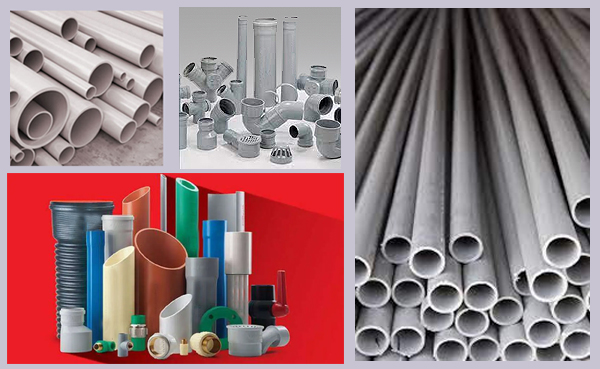
Opacity is one of the most critical and most frequently tested QC parameters for any plastic pipe that will carry potable water. A pipe that allows even small amounts of sunlight through the wall supports algae, bacterial and fungal growth on the inside surface — contaminating the water and making the pipe unfit for drinking-water service. The Digital Opacity Tester gives the pipe manufacturer a fast, repeatable, accurate measurement of light transmission through every batch of finished pipe — essential for ISI mark certification and routine QC.

★ CLIENT USING THIS MODEL
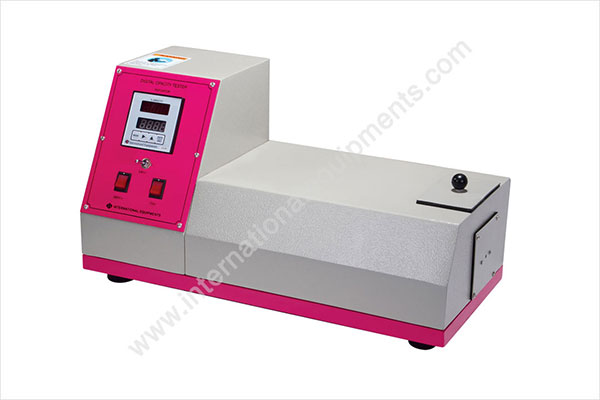
Digital Opacity Tester Manufacturer India — Plastic Pipe Opaqueness Tester per IS 4985 IS 12235 by International Equipments

Specifications at a Glance

Parameter Specification
Test Standards IS 4985 (uPVC pipes), IS 12235 (Part 3 — PVC pipes); also applicable to IS 4984 (HDPE pipes)
Measurement Range 0 to 99.9% opaque
Direct Display % opaque (direct digital readout)
Paint Finish Powder coated
Power Supply 230 Volts, 50 Hz, single phase

What is a Digital Opacity Tester?

A Digital Opacity Tester — also called an Opaqueness Tester, Light Transmission Tester or Pipe Opacity Meter — is a laboratory instrument that measures the percentage of light blocked by a thin sample of plastic, expressed as % opaque. A 100% opaque sample blocks all light; a 0% opaque sample is fully transparent. For potable-water HDPE and PVC pipes, the Indian Standards require effectively 99.9%+ opaque material so that no algae or bacterial growth can occur from light penetrating the pipe wall.

The instrument works on a simple, robust principle. A calibrated light source on one side of the sample chamber projects light through the sample; a photodetector on the other side measures the small amount of light that passes through. The instrument calculates the % opaque value directly and displays it on the digital readout — giving the operator an immediate pass/fail result against the Indian Standard requirement.

About Our Digital Opacity Tester

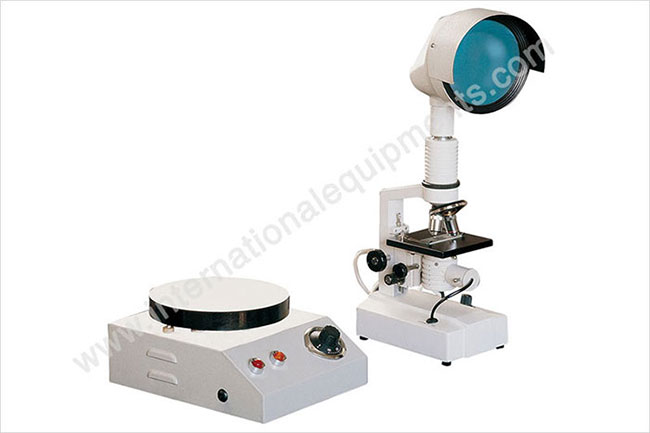
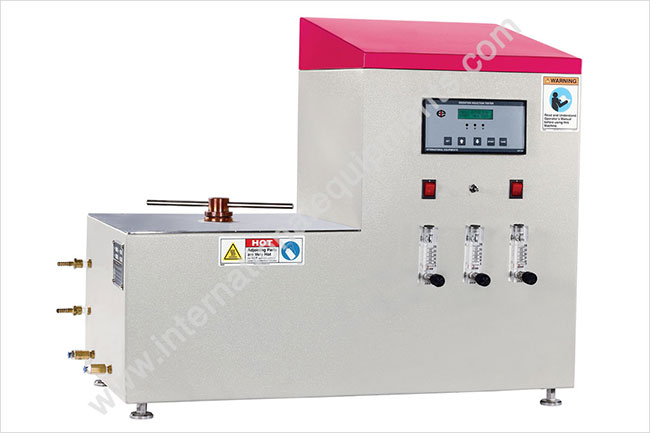
Our Digital Opacity Tester is a compact, table-top instrument designed specifically for the daily QC needs of HDPE and PVC pipe manufacturers. The instrument covers the full 0 to 99.9% opaque range with direct digital display — no manual readings, no chart interpolation, no calculation step. The operator simply places a small disc cut from the pipe wall into the sample chamber, presses the start button, and reads the % opaque value off the controller.

The instrument is built strictly to the test geometry specified in IS 4985 (for uPVC pipes), IS 12235 Part 3 (for PVC pipes) and IS 4984 (for HDPE pipes). Robust mild-steel construction with powder-coated finish gives long lab life. Single-phase 230 V / 50 Hz operation makes the instrument compatible with any standard laboratory power point in India or for export.

Compared to costly imported colorimetric or spectrophotometric opacity instruments, our purpose-built Digital Opacity Tester gives the exact result that BIS-certified pipe manufacturers need at a small fraction of the price — without compromising on accuracy, repeatability or compliance with the Indian Standards.

Why Opacity Testing is Critical for HDPE & PVC Pipes

Opacity testing is one of the four most important QC tests for any HDPE or PVC water pipe (along with Hydrostatic Pressure, Carbon Black Content and OIT). Here is why every plastic pipe manufacturer needs in-house opacity testing:

Prevents Algae & Bacterial Growth Inside the Pipe

When sunlight penetrates a partially-translucent pipe wall, the moist interior surface becomes an ideal habitat for algae, bacteria and fungi. These contaminate the water flowing through the pipe — sometimes to the point that the water becomes unfit for drinking. Sufficient opacity is the single most effective defence against this problem, which is why IS 4985, IS 12235 and IS 4984 all mandate opacity testing.

Mandatory for ISI Mark Certification

BIS (Bureau of Indian Standards) certification for ISI mark on HDPE water pipes, uPVC water pipes and PVC sewerage pipes all require the manufacturer to demonstrate in-house opacity testing capability. Without this test data on file, ISI mark cannot be retained — and without ISI mark, the pipe cannot be sold for most government, municipal and certified-private projects in India.

Confirms Correct Carbon Black Loading (HDPE)

For HDPE water pipes, opacity is achieved by adding 2.0% to 2.5% carbon black to the polymer compound. The Opacity Tester is the daily QC check that this carbon black loading is correct — complementing the periodic Carbon Black Content Apparatus test which measures the actual percentage. Together, the two tests catch carbon-black loading errors before they reach the customer.

Confirms Correct Pigment Loading (PVC)

For PVC water and sewerage pipes, opacity is achieved by titanium dioxide (TiO2) or other pigment loading. The same Opacity Tester verifies the correct pigment dose batch by batch — preventing wastage of expensive TiO2 (over-dosing) or pipe rejection (under-dosing).

Daily QC Test — Fast, Simple, Operator-Friendly

Opacity is a daily, every-batch QC test on the pipe production line. The Digital Opacity Tester gives a result in seconds — fast enough to test every batch without bottlenecking the QC laboratory or delaying production releases.

Required by Government Tender Specifications

Most government and municipal water-supply tenders explicitly require opacity test reports along with the dispatch documentation for HDPE and PVC pipes. Without these reports, tender payments and project clearances are delayed.

How the Opacity Test Works

The opacity test follows a simple, repeatable procedure that operators can master in a single training session:

Step 1 — Cut a Sample from the Pipe Wall

A small flat disc or strip is cut from the wall of the finished pipe to the standard dimensions specified by IS 4985 / IS 12235 / IS 4984. The sample surface should be clean and free of moulding marks or debris.

Step 2 — Place the Sample in the Test Chamber

The sample is placed in the dedicated sample holder of the Digital Opacity Tester. The instrument's calibrated light source illuminates one side; the photodetector measures the transmitted light on the other side.

Step 3 — Read the Direct % Opaque Result

The instrument calculates the % opaque value automatically and displays it directly on the digital readout. The operator notes the value against the IS standard pass/fail criterion (typically requires very high opacity, close to 99.9%, for potable-water pipes).

Step 4 — Record and Report the QC Data

The result is recorded in the QC register or QMS system for ISI mark documentation, BIS audit and dispatch-with-pipe traceability.

Technical Specifications

Parameter Specification
Test Standards IS 4985 (uPVC pipes), IS 12235 (Part 3 — PVC pipes); also applicable to IS 4984 (HDPE pipes)
Measurement Range 0 to 99.9% opaque
Direct Display % opaque (direct digital readout)
Paint Finish Powder coated
Power Supply 230 Volts, 50 Hz, single phase

Test Standards Supported (IS 4985, IS 12235, IS 4984)

  • IS 4985 — Indian Standard for unplasticized PVC (uPVC) pipes for potable water supply (opacity clause)
  • IS 12235 (Part 3) — Methods of test for unplasticized PVC pipes for potable water supplies
  • IS 4984 — Indian Standard for HDPE pipes for potable water supply (opacity / pigment dispersion clause)
  • IS 14333 — Indian Standard for HDPE pipes for sewerage system
  • IS 14930 — Indian Standard for HDPE corrugated PLB duct (opacity clause)
  • ISO 1452 — Plastics piping systems for water supply (uPVC)
  • ISO 4427 — Plastics piping systems — PE pipes for water supply

Applications of the Digital Opacity Tester

  • Opacity (% opaque) testing of finished HDPE water-supply pipes per IS 4984
  • Opacity testing of uPVC water-supply pipes per IS 4985 and IS 12235 (Part 3)
  • Opacity QC of PVC sewerage and drainage pipes
  • Opacity testing of HDPE PLB duct (telecom & power cable) per IS 14930
  • Verification of correct carbon black loading in HDPE pipe compound
  • Verification of correct TiO2 / pigment loading in PVC pipe compound
  • Daily batch QC of incoming pipe material at the dispatch stage
  • BIS audit documentation for ISI mark certification renewal
  • Government tender dispatch documentation
  • QC testing of HDPE film, plastic sheet and other opacity-sensitive products

Industries We Serve

  • HDPE Pipe Manufacturers (water supply, irrigation, sewerage)
  • uPVC & PVC Pipe Manufacturers (water supply, drainage, sewerage)
  • HDPE PLB Duct Manufacturers (telecom, power cable ducting)
  • Polymer & Master-batch Compounders (carbon black & TiO2 master-batches)
  • Recycled Plastic Pipe Processors
  • Plastic Film & Sheet Producers (where light blockage matters)
  • Petrochemical & Resin Producers
  • Government Testing Labs, NABL Accredited Labs & BIS-Approved Test Houses
  • Municipal & Government Water-Supply Departments (third-party verification)
  • R&D Centres of Plastic Pipe Manufacturers

Why Choose International Equipments?

  • Built Strictly to IS 4985 & IS 12235 Test Geometry
    Sample chamber, light path and detector geometry built exactly to the dimensions specified by IS 4985 and IS 12235 (Part 3) — your opacity readings will match any BIS-approved lab anywhere in India.
  • Direct Digital % Opaque Readout
    Calibrated readout in % opaque — no manual readings, no graph interpolation, no calculation step. Operator-friendly for daily high-volume QC use.
  • Full 0 to 99.9% Range
    Covers the full measurement range — from highly translucent natural HDPE through to the 99.9% opaque value required for potable-water pipes.
  • Purpose-Built for ISI Mark QC
    Designed specifically for the daily QC needs of BIS-certified HDPE and PVC pipe manufacturers — many of the largest pipe manufacturers in India already use our Opacity Tester for their ISI mark documentation.
  • Economical Compared to Spectrophotometers
    Delivers the exact result the Indian Standards require at a fraction of the price of imported colorimetric or spectrophotometric instruments. No expensive consumables, no specialist training needed.
  • Compact Table-Top Footprint
    Fits easily on any QC lab bench alongside the Hydrostatic Pressure Panel, Carbon Black Content Apparatus, OIT Apparatus and other pipe QC equipment.
  • ISO & CE Certified Manufacturing
    Designed and built at our Mumbai facility under ISO certified quality systems, with CE marking for export to the Middle East, Africa, South-East Asia, Europe and South America.
  • Calibration Support
    We offer one calibration visit per year, which is sufficient to maintain the accuracy and performance of the equipment. The calibration visit is provided after completion of the initial 1-year warranty period.

Frequently Asked Questions

When light penetrates the pipe wall, the moist interior surface becomes an ideal habitat for algae, bacteria and fungi to grow. These contaminate the water flowing through the pipe — sometimes to the point that the water becomes unsafe for drinking. The Indian Standards (IS 4984 for HDPE, IS 4985 for uPVC, IS 12235 for PVC) all mandate that potable-water pipes block essentially all light, which is achieved by adding carbon black (HDPE) or titanium dioxide (PVC) to the pipe compound. Opacity testing on every batch is the QC check that the pigment loading is correct.
Carbon Black Content testing (done on our Carbon Black Content Apparatus) measures exactly how much carbon black is in the polymer — typically 2.0% to 2.5% for HDPE pipe. Opacity testing measures the END EFFECT on the pipe wall — how much light is actually blocked. Both tests are required: carbon black content tells you the input, opacity tells you the result on the finished pipe. The two together catch problems with either the loading percentage OR the dispersion of the carbon black in the polymer.
Compliant HDPE water pipe material (with correct carbon black loading and dispersion) typically gives opacity readings very close to the maximum 99.9% — essentially total light blockage. The IS 4984 standard requires that the material block light to the extent that no algae growth is supported in service. If your pipe shows opacity below the threshold specified in your applicable IS standard, the carbon black loading is most likely too low or the dispersion is poor (check on our Carbon Black Dispersion Tester).
Yes. While our Opacity Tester is primarily designed for HDPE and PVC pipe QC, the same instrument and method work on any flat or near-flat plastic sample where light transmission is the property of interest — plastic films and sheets where light blockage is a quality parameter, sun-protective plastic products, certain coated plastic substrates, opaque cosmetic and pharmaceutical packaging samples, etc. Please mention your specific application in your enquiry so we can confirm test compatibility.
Yes. Bureau of Indian Standards (BIS) certification for ISI mark on HDPE water pipes (IS 4984), uPVC water pipes (IS 4985) and PVC sewerage pipes (IS 12235) all require the manufacturer to demonstrate in-house opacity testing capability. The Opacity Tester is one of the mandatory instruments listed in the BIS scheme of testing and inspection for plastic pipes.
The Digital Opacity Tester gives accurate, repeatable readings across the full 0 to 99.9% range with direct digital display. Calibration is verified at the factory before dispatch and a calibration certificate is supplied with each instrument. For QC documentation purposes (BIS audits, NABL accreditation), periodic re-calibration through our service network is recommended.
Yes. We provide free on-site installation, commissioning, operator training on the IS 4985 / IS 12235 opacity test procedure and a factory calibration certificate at the customer's location anywhere in India. The instrument is straightforward to operate — most operators are independent after a single training session. Annual Maintenance Contracts (AMC) and recalibration are available through our service network. International customers receive commissioning support remotely with detailed documentation; on-site international installation can be arranged at additional cost.

Need a reliable Digital Opacity Tester for HDPE or PVC pipe QC, ISI mark certification, or BIS-audit documentation?

Contact International Equipments today for a personalised quotation. Tell us your pipe type (HDPE, PVC, PLB duct) and the Indian Standard you follow — our team will share pricing, delivery timeline and the list of leading BIS-certified pipe manufacturers already using our Opacity Testers.

Get Free Quote