Quote Request
Quote
Manufacturers and Suppliers of Charpy Impact Tester / Izod Impact Tester

Oxidation Induction Test Apparatus (OIT) — Thermal Analyzer Manufacturer in India

About Oxidation Induction Test Apparatus (OIT) — Thermal Analyzer Manufacturer in India

Designed to check the oxidation induction time of polymers. The referred ASTM standard recommend two procedures to determine Oxidation induction time test. One is Differential Scanning Calorimeter (DSC) method & second is Differential thermal Analysis (DTA) method.

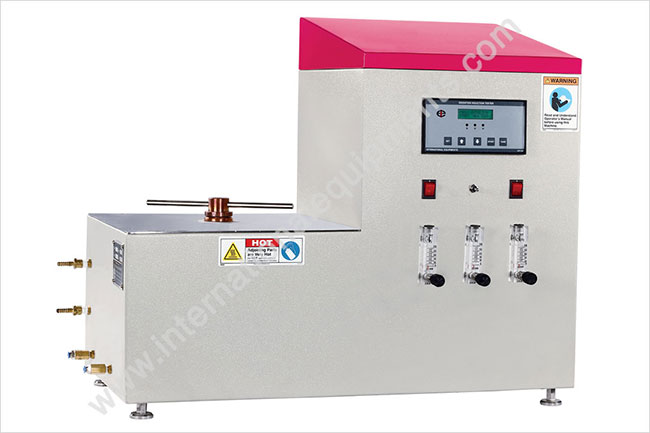
International Equipments is a leading manufacturer, supplier and exporter of Oxidation Induction Test (OIT) Apparatus in India. Built at our Mumbai facility, our OIT Apparatus — also known as a Thermal Analyzer, OIT Machine, Differential Thermal Analyzer or DTA Apparatus — measures the Oxidation Induction Time of polyolefin polymers as required by HDPE / PE pipe standards, DOT specifications and most international polymer specifications.

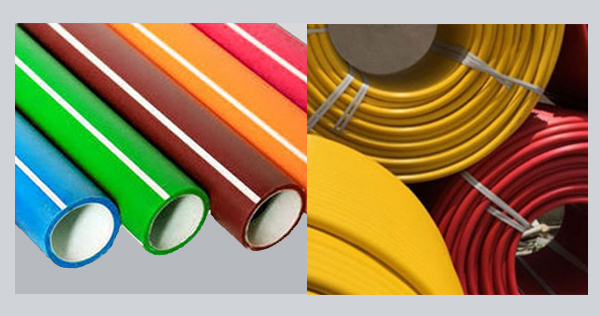
OIT is one of the most important quality-control tests for HDPE pipe, PE pipe, PLB duct, gas pipe, polyolefin film and any polymer product where long-term resistance to oxidative degradation is critical. Our apparatus is built on the Differential Thermal Analysis (DTA) principle, comes with a complete starter pack of 500 aluminium pans, full PC software for graph plotting and printouts, and Indium calibration material — everything needed to run the test from day one.

★ VIEW INSTALLED CLIENTS
Suppliers of Oxidation induction test apparatus

Specifications

Parameter Specification
Test Method / Principle Differential Thermal Analysis (DTA)
Temperature Controller Digital PID Controller; range up to 300°C; resolution 0.1°C; accuracy ±0.5°C
Cooling System Water-cooled barrel for accurate baseline control
Sample Pans Supplied 500 nos. aluminium pans with 40-mesh screen in SS 316 (as per DOT specification)
Gas Flow Control Gas regulators and rotameters supplied for Nitrogen and Oxygen separately
Calibration Material Indium reference material (melting point 156.6°C) supplied for temperature calibration
Typical Test Conditions 200°C test temperature, 80 cm³ Oxygen, 8–10 mg sample weight
PC Interface Yes — Windows-compatible software supplied
Paint Finish Powder coated
Power Supply 230 Volts, 50 Hz, single phase

What is the OIT Test?

The Oxidation Induction Time (OIT) test measures how long a polymer sample can resist oxidation when held at a fixed elevated temperature in pure oxygen. Polymers — especially polyolefins like HDPE, LDPE and PP — are normally protected from oxidation by antioxidants blended into the raw material. The OIT test tells you, in minutes, how much antioxidant 'life' is left in the sample at the test temperature. A high OIT value means the polymer will resist ageing for many years in service; a low OIT value means the antioxidant has been depleted and the product will fail prematurely.

Because of this, OIT is the single most important long-term life-prediction test for HDPE pipe, PE gas pipe, PLB duct (used in telecom and power cable ducting), PE-coated wire and cable, and many polyolefin packaging products. Standards such as IS 4984 (HDPE pipes), IS 14333 (PE pipes for water supply), IS 4985 (PVC), ASTM D 3895 and ISO 11357-6 all reference OIT as a mandatory acceptance test.

About Our OIT Apparatus / Thermal Analyzer

Our Oxidation Induction Test Apparatus uses the Differential Thermal Analysis (DTA) principle — measuring the temperature difference between a reference (empty) aluminium pan and a sample pan as both are heated under controlled conditions. When the polymer sample begins to oxidise (an exothermic reaction), the sample pan temperature rises faster than the reference, producing a clear deflection in the Delta-Temperature-versus-Time graph. The time from oxygen introduction to this deflection point is the Oxidation Induction Time.

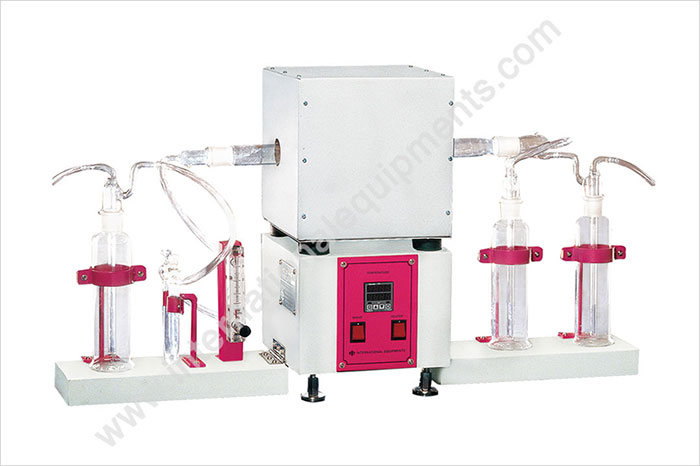
The apparatus is supplied complete with: a precision PID temperature controller (up to 300°C, 0.1°C resolution), water-cooled barrel for accurate baseline control, gas-flow regulators and rotameters for both nitrogen and oxygen, a starter pack of 500 aluminium pans with 40-mesh SS 316 screens (as per DOT specification), Indium reference material for temperature calibration, and full Windows-compatible PC software for graph display, calibration plotting and detailed test-report printouts.

Compared to a high-end laboratory DSC instrument (which can cost many times more and requires highly trained operators), our DTA-based OIT Apparatus delivers the same OIT result that pipe and polymer manufacturers actually need for production-line QC — at a fraction of the capital cost and with operator-friendly software.

International Equipments offer Oxidation Induction test apparatus based on Differential Thermal Analysis (DTA) principle. Tests carried out with both DTA or DSC methods are similar comprising of two pans inside a thermal equilibrium zone with one reference "Empty Pan" and Second "Specimen Pan". "Oxidation Induction Time" the term itself specifys its meaning. Time required for a polymeric material to oxidise (degrade) when induced ("subjected to" or "reacted") with oxygen. Oxygen being a highly penetrating gas even polymers tend to oxidise or degrade when exposed to oxygen. Oxidation is an exothermic reaction (reaction where polymer starts throwing heat out of it before it completely degrades or oxidises. This test confirms the sustainability of any polymeric material when subjected to oxygen. Time taken for a material to degrade under specified condition of temperature (200 degree Centigrade) and certain level (80 Cubic.Centimeter) of Oxygen.

This "Oxidation Induction Time Test" test requires only 8 to 10 mg of polymer mixed with antioxidants and is a very sensitive test. This test being conducted under very stringent conditions of Oxygen and Nitrogen, it is recommended to test this equipment for temperature calibration with metals like "INDIUM" having fixed melting point of 156.6 degree centigrade under inert atmosphere of Nitrogen. The same provision is offered by us in the working and construction of this equipment and its software.

OIT Apparatus Equipment is known as Thermal Analyzer / OIT Machine, Differential Thermal Analyzer Apparatus, Thermal Analysis Equipment, OIT Instruments, Thermal Analyzer OIT Machine, Thermal Analysis Machine, OIT Apparatus, Thermal Analysis Products, Thermal Analysis Testing Machines, Thermal Analysis Tester, Thermal Analysis Testing, Thermal Analysis Instruments, etc.

DSC vs DTA Comparison

PC Software Printouts & Reporting

The full PC software is included as standard and delivers print-ready test reports containing every parameter required by IS, DOT and ASTM specifications. The Delta-Temperature versus Time graph plus the calculated Oxidation Induction Time appear directly on screen at the end of every test, and the same data prints to any standard PC printer.

Each test report automatically includes:

Indium Calibration Section

Indium is a pure metal with a precisely known melting point of 156.6°C. Because of this, it is the international reference material used to calibrate temperature in all DTA and DSC instruments worldwide.

Before any OIT test on a critical specimen, the operator runs a calibration cycle on a small piece of Indium under inert nitrogen atmosphere. The instrument software detects the sharp endothermic peak as the Indium melts, compares the measured temperature to the known 156.6°C reference, and applies any correction needed. This guarantees that when the OIT test is run at the specified 200°C, the actual sample temperature is truly 200°C — not 198°C or 202°C — which would shift the OIT result by several minutes.

Our apparatus is supplied with Indium calibration material as standard, and the calibration routine plus calibration-graph printout is built into the PC software per DOT specification.

Technical Information

  • ASTM D3895 — Standard Test Method for Oxidative-Induction Time of Polyolefins by Differential Scanning Calorimetry
  • ISO 11357-6 — Plastics: Differential Scanning Calorimetry (DSC) — Part 6: Determination of Oxidation Induction Time (Isothermal OIT)
  • IS 4984 — Indian Standard for HDPE Pipes for Potable Water Supplies (includes OIT requirements)
  • IS 14333 — Indian Standard for HDPE Pipes for Water Supply
  • IS 14151 — Indian Standard for Polyethylene Pipes Used in Irrigation Systems
  • ISO 4427 — Plastics Piping Systems: Polyethylene (PE) Pipes and Fittings for Water Supply
  • ISO 4437 — Polyethylene (PE) Pipes for the Supply of Gaseous Fuels
  • Department of Telecommunications (DoT) Specifications — HDPE PLB Duct Testing Requirements
  • Acceptance QC of HDPE pipes for potable water supply
  • OIT testing of PE / HDPE gas pipes for sustained antioxidant life
  • Quality control of HDPE PLB duct (telecom and power cable ducting) as per DoT specifications
  • OIT testing of PE-coated cables and wires
  • Long-term life prediction of polyolefin packaging films and bottles
  • Antioxidant efficiency comparison between different masterbatches and additives
  • Incoming raw material OIT verification of HDPE, LDPE, and PP granules
  • R&D testing during development of new polymer grades and blends
  • Validation of recycled polyolefin material before re-extrusion into pipes or ducts
  • Certification testing in NABL-accredited laboratories and certification bodies
  • HDPE Pipe Manufacturers (water supply, irrigation, and sewerage applications)
  • PE Gas Pipe Manufacturers
  • HDPE PLB Duct Manufacturers (DoT-compliant telecom and power ducting)
  • PE-Coated Wire and Cable Manufacturers
  • Polyolefin Film and Packaging Producers
  • Polymer Masterbatch and Compounding Units
  • Recycled Plastic Processors
  • Petrochemical and Polymer Producers (HDPE, LDPE, LLDPE, and PP)
  • Government Testing Laboratories, NABL-Accredited Laboratories, and Certification Bodies
  • R&D Centres of Plastic and Pipe Manufacturers
    • DTA Principle — Lower Cost, Same Result
      Our DTA-based apparatus delivers the same OIT value that HDPE pipe and PLB duct quality control requires, at a fraction of the cost of a high-end laboratory DSC instrument.
    • DOT Specification Compliant
      Built to comply with Department of Telecom (DoT) specifications for HDPE PLB duct OIT testing. Supplied with 500 aluminium pans, SS 316 40-mesh screens, Indium calibration material, calibration printout, and software-driven reporting.
    • Complete Starter Pack
      Includes 500 aluminium pans with screens, Indium reference material, gas regulators, and rotameters for nitrogen and oxygen—everything required to begin testing from day one.
    • PC Software with Detailed Print Reports
      Generates comprehensive reports containing party name, batch number, operator name, sample weight, temperature, gas flow rate, complete Delta-T vs. Time graph, and calculated OIT result for QC, NABL audits, and customer documentation.
    • Indium Calibration Built-In
      Supplied with Indium reference material, integrated calibration routine, and calibration graph printout to ensure traceable and accurate OIT measurements.
    • Water-Cooled Barrel
      Active water cooling provides a stable baseline temperature and faster return-to-ambient conditions between tests, improving productivity for high sample volumes.
    • ISO & CE Certified Manufacturing
      Designed and manufactured at our Mumbai facility under ISO-certified quality systems and CE-marked for export to the Middle East, Africa, South-East Asia, Europe, and South America.

Frequently Asked Questions

OIT tells you how much antioxidant 'life' is left in your polymer sample at the test temperature. Polyolefins like HDPE, LDPE and PP are protected by antioxidants blended into the raw material. The OIT test holds the sample at a fixed elevated temperature (typically 200°C) under pure oxygen and measures the minutes before exothermic oxidation begins. A high OIT value (typically 20+ minutes for HDPE pipe-grade material) means long service life; a low OIT value means the antioxidant has been depleted and the product will fail prematurely — often well within its expected service period.
DSC (Differential Scanning Calorimetry) measures the heat flow difference between sample and reference; DTA (Differential Thermal Analysis) measures the temperature difference. For the OIT test specifically, both methods produce the same usable result. ASTM D 3895 and most Indian/ISO pipe standards accept either method. DSC instruments are more expensive and complex; DTA instruments are simpler, cheaper, and ideal for production-line QC. Our apparatus uses DTA — purpose-built for HDPE pipe, PLB duct and polyolefin QC at the right cost point.
Indium is a pure metal with a precisely defined melting point of 156.6°C — internationally accepted as the temperature-calibration reference for DTA and DSC instruments. Before any critical test, the operator runs a calibration cycle on a small piece of Indium under nitrogen atmosphere. The software detects the melting peak, compares the measured temperature to the 156.6°C reference, and applies any correction needed. This ensures the OIT test temperature is truly accurate. Indium calibration material is supplied as standard with our apparatus.
The standard OIT test for HDPE pipe and PLB duct material is conducted at 200°C with an oxygen flow rate of 80 cm³ per minute on a sample size of 8 to 10 mg. The sample sits in an aluminium pan with a 40-mesh SS 316 screen as per DOT specification. The test starts under inert nitrogen, then switches to oxygen at the test temperature, and the time from oxygen introduction to the onset of the exothermic oxidation peak is the OIT result. Our apparatus is supplied with all the consumables and software needed for this exact procedure.
We supply 500 aluminium pans with 40-mesh SS 316 screens as standard with every OIT Apparatus — meeting the DOT specification requirement. This starter pack typically lasts a production-QC lab several months. Additional pans can be ordered separately at any time.
Yes. The apparatus is supplied with gas regulators and rotameters for both Nitrogen (inert atmosphere phase) and Oxygen (oxidation phase). The customer arranges standard high-purity industrial cylinders of both gases at the lab — these are widely available from any industrial gas supplier in India and worldwide. We will recommend the right purity grade in the quotation.
The OIT test as defined by ASTM D 3895 and the related Indian/ISO standards is specifically for polyolefins (HDPE, LDPE, LLDPE, PP and their copolymers). The exothermic oxidation peak is most clearly defined for these materials. Other polymer families have different degradation mechanisms and are typically tested by other methods. If you have a specific non-polyolefin application, please discuss it with our team in your enquiry.
Yes. We provide free on-site installation, commissioning, operator training on the OIT method and the PC software, plus a factory calibration certificate at the customer's location anywhere in India. Because OIT is a sensitive test, we put extra emphasis on operator training during commissioning so your team is confident running the test from day one. Annual Maintenance Contracts (AMC), software updates and consumable supply (aluminium pans, Indium) are available through our service network. International customers receive commissioning support remotely with detailed documentation; on-site international installation can be arranged at additional cost.

Looking for a reliable Oxidation Induction Test (OIT) Apparatus / Thermal Analyzer for HDPE pipe, PE gas pipe, PLB duct or polyolefin QC?

Contact International Equipments today for a personalised quotation. Tell us the standard you follow (IS, ASTM, ISO or DOT) — our team will share pricing, delivery timeline, software demo and the list of leading pipe and duct manufacturers already using our OIT apparatus.

Get Free Quote