Request
Quote


International Equipments is a leading manufacturer, supplier and exporter of complete testing equipment for the yarn, woven sacks, raffia tape and fabric manufacturing industry in India. Built at our Mumbai facility and exported to over 60 countries, our testing instruments are used at every step of the yarn and woven-sack production line — from incoming polymer granule testing through to finished-product strength, weight, denier and consistency checks.
Whether you manufacture polypropylene (PP) raffia tape, HDPE woven sacks, FIBC (jumbo bags), polyester yarn, technical textiles, or general-purpose woven fabrics, the same set of laboratory tests determines whether your product meets specification — tensile strength, elongation, denier, ash content, carbon black content and melt flow rate. This page presents the complete recommended testing setup with direct links to each individual instrument page.
Yarn, raffia tape, woven sacks and FIBCs are sold by tensile strength, denier and weight specifications. A 30-kg cement bag, a 1-tonne FIBC, or a kilometre of polypropylene packaging tape must each meet the strength specification not just on average but on every batch — because a single failure in service (a torn sack, a snapped tape, a burst FIBC) costs the manufacturer their reputation and creates a safety hazard at the customer's site.
At the same time, yarn and fabric producers operate on tight margins. Over-engineering the product (using too much polymer per metre of tape, or higher-grade resin than required) wastes raw material cost. Under-engineering it (saving polymer at the cost of strength) creates field failures. Accurate, lab-grade tensile, denier and tear-strength testing is therefore essential for both quality assurance AND for raw-material cost optimisation.
On the incoming-material side, the production of strong, consistent woven products requires consistent polymer granules. Melt Flow Index (MFI), ash content and carbon black content of incoming PP/HDPE granules directly affect the strength and durability of the finished tape, yarn and sack. Testing both the raw material and the finished product is therefore standard practice for any serious yarn or woven-sack manufacturer.
Yarn is the main ingredient for a textile industry. It portrays a long chain of interlocked fibres ideal for use in production of textiles, sewing, knitting, weaving, embroidery and rope making. Yarn can be acquired from natural products or can be synthesized artificially. We offer a range of yarn and fibre testing equipment for our clients. Our yarn checking machine can be used to determine the strength as well as denier of different yarns and fibres.
Also our yarn strength testing machines are utilized to check properties of yarn, woven sacks and fabric materials with few tests as listed below:
This is a small capacity machine ranging between 50 kg to 500 kg capacity mainly used for checking thin yarn, tapes and fabrics in accordance with different standards such as IS 1969, ASTM D 5034 / ASTM D 882 / ISO 527 / ASTM D 412 standards.
The Single Screw Tensile Tester is the workhorse instrument for measuring tensile strength and elongation of thin yarn, polypropylene raffia tape, woven fabric strips, FIBC straps and similar lower-load products. Built-in pneumatic and yarn grips give consistent clamping without slippage or specimen crushing. The instrument also runs Peel, Bond and Cyclic Endurance test routines from the same controller, making it a true multi-test tester for textile and packaging QC labs.
What it tests: Tensile strength, elongation, breaking load, peel strength of yarn, tape, woven fabric and FIBC strap
This is a higher capacity machine with range between 500 kg to 5000 kg for checking higher thickness Yarn, Belts, Higher thickness and strength fabrics.
For products that exceed the 500 kg load range of the Single Screw Tensile Tester — heavy-duty industrial yarn, woven belts, FIBC bottom seams, geotextiles and heavy technical fabrics — the Twin Column UTM is the right choice.
What it tests: Tensile strength, elongation, breaking load, compression and flexural properties of heavy yarn, woven belts, FIBC seams and technical fabrics
Melt flow index tester to measures the rate of extrusion of a thermoplastic granules used to manufacture these yarn and fabric materials.
The Melt Flow Index Tester measures the flow rate of polypropylene and polyethylene granules at the test temperature — directly indicating whether the incoming raw material will draw cleanly into thin uniform tape on the extrusion line. Yarn and woven-sack producers run MFI on every incoming polymer batch to catch off-spec granules before they go into production and cause tape breaks, denier variation or product rejection. Available in manual, auto-cut and computerized models.
What it tests: Melt flow rate (MFR in g/10 min) of incoming PP, HDPE and other thermoplastic granules used for tape and yarn extrusion
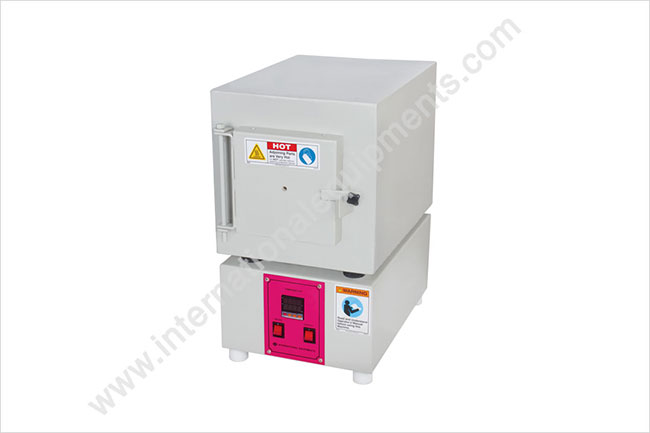
Muffle furnace to check the ash percentage. This test can be performed on granules as well as the end product such as yarn, tapes, fabrics cutting them down in to small pieces.
The Muffle Furnace heats samples to high temperature (typically up to 1000°C) in an air atmosphere so all organic polymer burns away — leaving only the inorganic residue (ash). The ash percentage indicates the mineral filler content or inorganic contamination in the polymer. The test runs equally well on raw polymer granules and on small pieces of finished yarn, tape or sack, helping the manufacturer verify the filler loading and pick up any unexpected mineral content that could weaken the product.
What it tests: Ash content (inorganic residue percentage) of polymer granules, yarn, tape, woven sacks and fabric
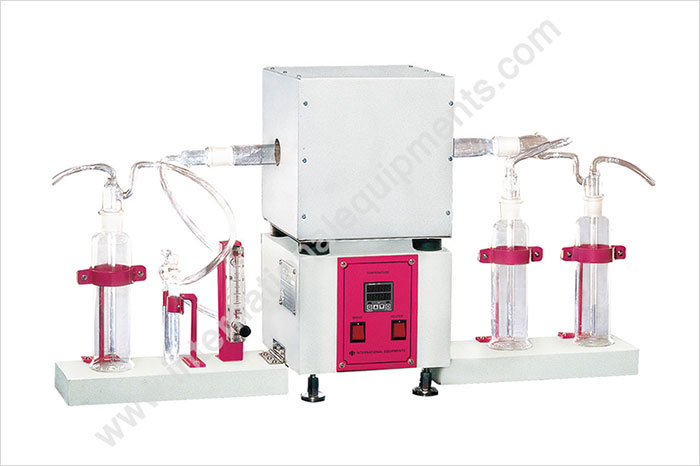
Carbon Black content apparatus can also perform carbon % test on granules as well as end product.
Carbon black is the most common UV stabiliser added to polypropylene tape and HDPE woven-sack products that will be used outdoors — its black colour absorbs UV and blocks polymer degradation. Too little carbon black means premature UV cracking in the field; too much wastes raw material. The Carbon Black Content Apparatus uses pyrolysis in inert nitrogen atmosphere to separate the polymer (which burns away) from the carbon black (which remains as residue), giving the exact carbon black percentage in granules or finished products.
What it tests: Carbon black percentage (UV stabiliser content) of polymer granules, yarn, tape, woven sacks and finished products
IS 1969 — Indian Standard for breaking strength and elongation of textile fabrics
ASTM D 5034 — Standard Test Method for Breaking Strength and Elongation of Textile Fabrics (Grab Test)
ASTM D 882 — Tensile Properties of Thin Plastic Sheeting (Films)
ASTM D 412 — Tensile Properties of Vulcanized Rubber and Thermoplastic Elastomers
ISO 527 — Plastics: Determination of Tensile Properties
ASTM D 1238 / ISO 1133 — Melt Flow Index (MFR) of polypropylene and polyethylene granules
ASTM D 1603 / ASTM D 4218 — Carbon Black Content of polyolefins
IS 7016 — Indian Standard for coated and impregnated textile fabrics
IS 11652 — Indian Standard for woven HDPE sacks
IS 16187 — Indian Standard for FIBC (Flexible Intermediate Bulk Containers)
Different products in the yarn and woven-sack industry require different combinations of tests. The matrix below shows which tests are typically applied to each product type:
Polypropylene (PP) Raffia Tape
Tensile Tester (denier, strength, elongation), MFI Tester (incoming granules), Carbon Black Content (UV stability)
HDPE / PP Woven Sacks
Tensile Tester (warp & weft strength), UTM (seam strength), MFI Tester (granules), Ash Content (filler check), Carbon Black Content
FIBC / Jumbo Bags
UTM up to 5000 kg (lifting loop / seam strength), Tensile Tester (fabric strip strength), Carbon Black Content (UV-grade FIBCs)
Industrial Yarn (PP, HDPE, Polyester)
Tensile Tester with yarn grips (tenacity, denier, elongation), MFI Tester (raw material consistency)
Woven & Technical Fabrics
Tensile Tester (warp & weft strip strength), UTM (for heavy technical fabrics), Ash Content
Geotextiles & Belts
Twin Column UTM (high-load tensile, grab test), Carbon Black Content (outdoor UV stability)
Complete Industry Package, One Supplier
Buy your full yarn, woven-sack and fabric QC laboratory from a single manufacturer — Tensile Tester, UTM, MFI Tester, Muffle Furnace and Carbon Black Content Apparatus — ensuring instrument compatibility and one point of contact for service.
Capacity to Match Every Product
50–500 kg range Single Screw Tensile Tester for thin yarn and tape, plus 500–5000 kg Twin Column UTM for FIBC seams and heavy fabrics — no compromise on either light or heavy product testing.
Built-In Yarn, Pneumatic & Roller Grips
Dedicated yarn grips, capstan rollers, pneumatic film grips and self-tightening grips supplied with the testers — designed specifically for yarn, tape and woven-fabric specimens without slippage or specimen crushing.
ISO & CE Certified Manufacturing
Designed and built at our Mumbai facility under ISO certified quality systems, with CE marking for export to the Middle East, Africa, South-East Asia, Europe and South America.
Used by Leading Yarn & Woven-Sack Manufacturers
Our equipment is installed in many of India's largest polypropylene tape, HDPE woven-sack and FIBC manufacturing plants — client list available on request.
Calibration Support
We offer one calibration visit per year, which is sufficient to maintain the accuracy and performance of the equipment. The calibration visit is provided after completion of the initial 1-year warranty period.

Tensile strength is the single most important quality parameter for PP raffia tape and woven sacks. The Tensile Testing Machine measures the breaking force and elongation of individual tape strips, fabric warp and weft directions, and the seams of finished sacks. Combine this with regular Melt Flow Index (MFI) testing of incoming polymer granules to catch off-spec material before it enters extrusion. Together these two tests catch over 80% of typical yarn/woven-sack quality issues.
It depends on what you test. For thin yarn, raffia tape strips, and individual fabric strips, the 50–500 kg Single Screw Tensile Tester is more than enough. For heavy products — FIBC lifting loops, FIBC seams, geotextiles, woven belts, technical fabrics over 200 GSM — the 500–5000 kg Twin Column UTM is required. Many FIBC manufacturers buy both: the smaller tester for fabric-strip QC and the larger UTM for seam and lifting-loop validation testing.
Tensile testing tells you what the product is doing today; ash and carbon black tell you what it will do over time. Excess ash content (mineral filler / contamination) silently weakens the product and causes premature service failures even when the tensile result looks fine. Carbon black content determines outdoor UV life — too little carbon black on a tarpaulin, FIBC or outdoor sack and it cracks within months of UV exposure. These tests are low-frequency (typically one per batch of incoming granules) but they protect your product's long-term reputation.
Yes — provided it is supplied with the right grips. Yarn requires capstan or pneumatic yarn grips to avoid slippage. Tape and fabric strips work well with pneumatic film grips or wave grips. Woven-sack seams typically require heavy-duty mechanical grips. Our Tensile Testing Machine ships with a selection of these grips (chosen in the quotation to match the customer's primary application) and additional grips can be added at any time as the product mix changes.
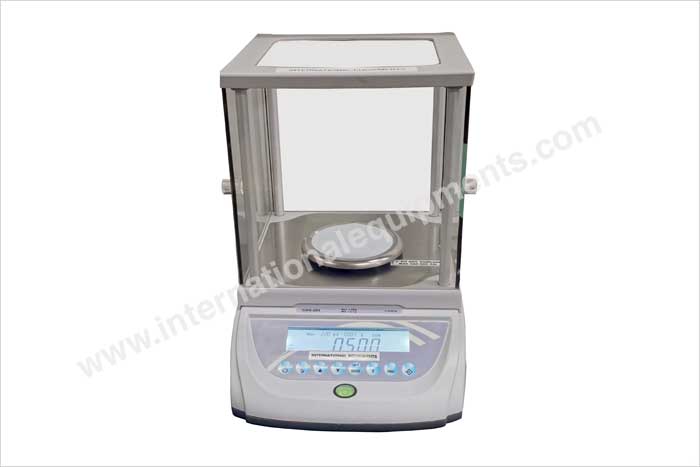
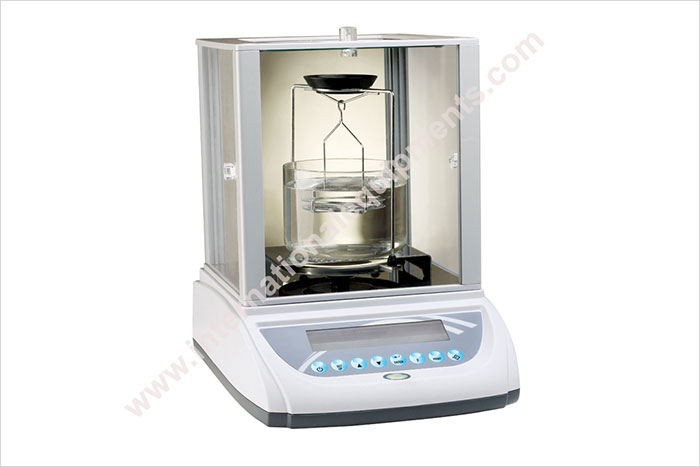
Denier is a unit of yarn linear density — the mass in grams of 9000 metres of yarn. A higher denier means a thicker, heavier yarn. Denier is calculated from the breaking-strength test by combining the tensile result with the measured weight of a known length of yarn. The Tensile Testing Machine provides the strength data; a precision balance (such as our Digital GSM Weighing Balance or our Digital Density Apparatus's 220 g / 1 mg balance) provides the weight data. Some standards report 'tenacity' — strength per unit denier — which is the more accurate quality indicator.
Yes. They serve very different purposes. The Hot Air Oven works in the ambient-to-250°C range — used for drying, conditioning and accelerated ageing without burning the polymer. The Muffle Furnace works up to 1000°C — used to burn off the polymer completely so only inorganic residue (ash) remains for weighing. For ash content testing you specifically need the Muffle Furnace; the Hot Air Oven cannot reach the required temperature.
Yes. The typical complete laboratory for a yarn / woven-sack / FIBC manufacturer includes: Tensile Testing Machine + Twin Column UTM (for larger producers) + Melt Flow Index Tester + Muffle Furnace + Carbon Black Content Apparatus + Digital Density Apparatus + Hot Air Oven. We commonly supply this as a package with a single quotation, single commissioning visit and single calibration cycle — please ask in your enquiry for a package quote.
Yes. For customers buying a complete yarn/woven-sack/fabric QC laboratory from us, we provide free on-line installation of every instrument, operator training on each test method and each instrument's software, and factory calibration certificates anywhere in India. A single commissioning team installs and commissions all the instruments together, minimising disruption.
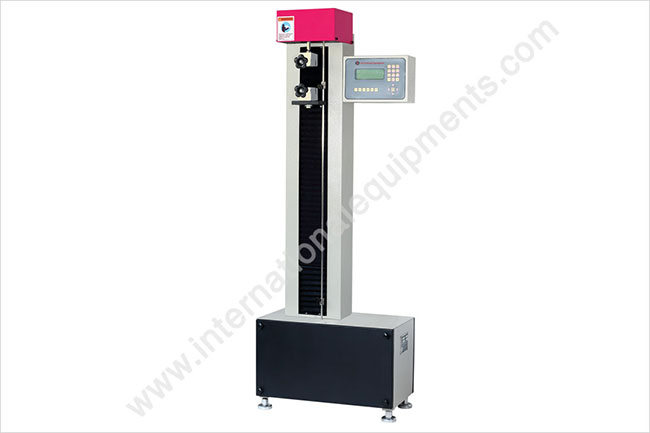
Tensile Testing Machine (Single Screw)
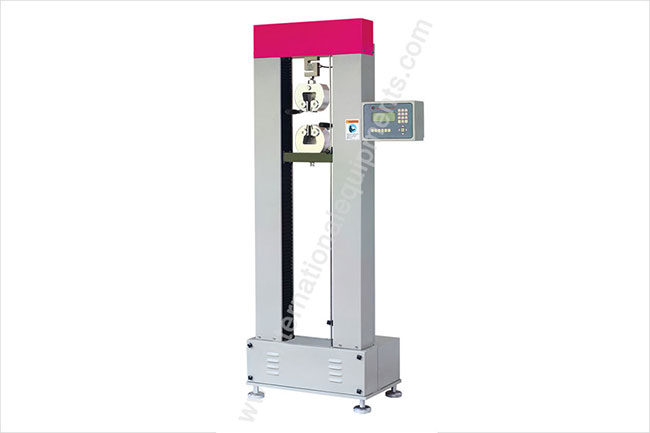
Universal Testing Machine (UTM) — Twin Screw / Column
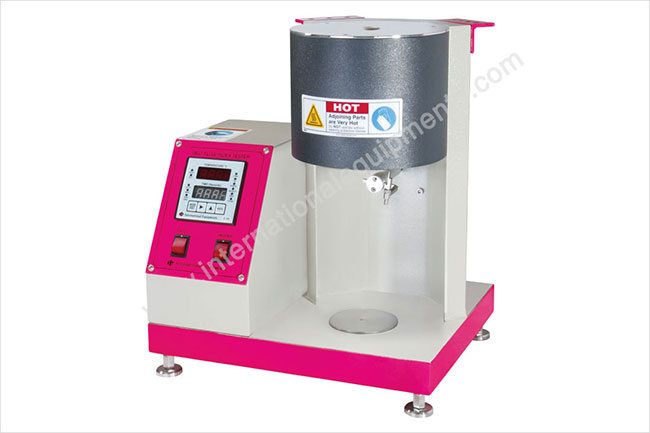
Melt Flow Index Tester
Muffle Furnace
Carbon Black Content Apparatus
Digital GSM Weighing Balance
Digital Density Apparatus
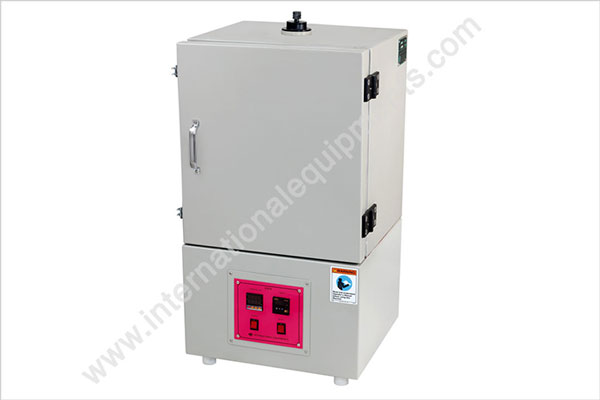
Hot Air Oven

Testing Equipment for Packaging Industry
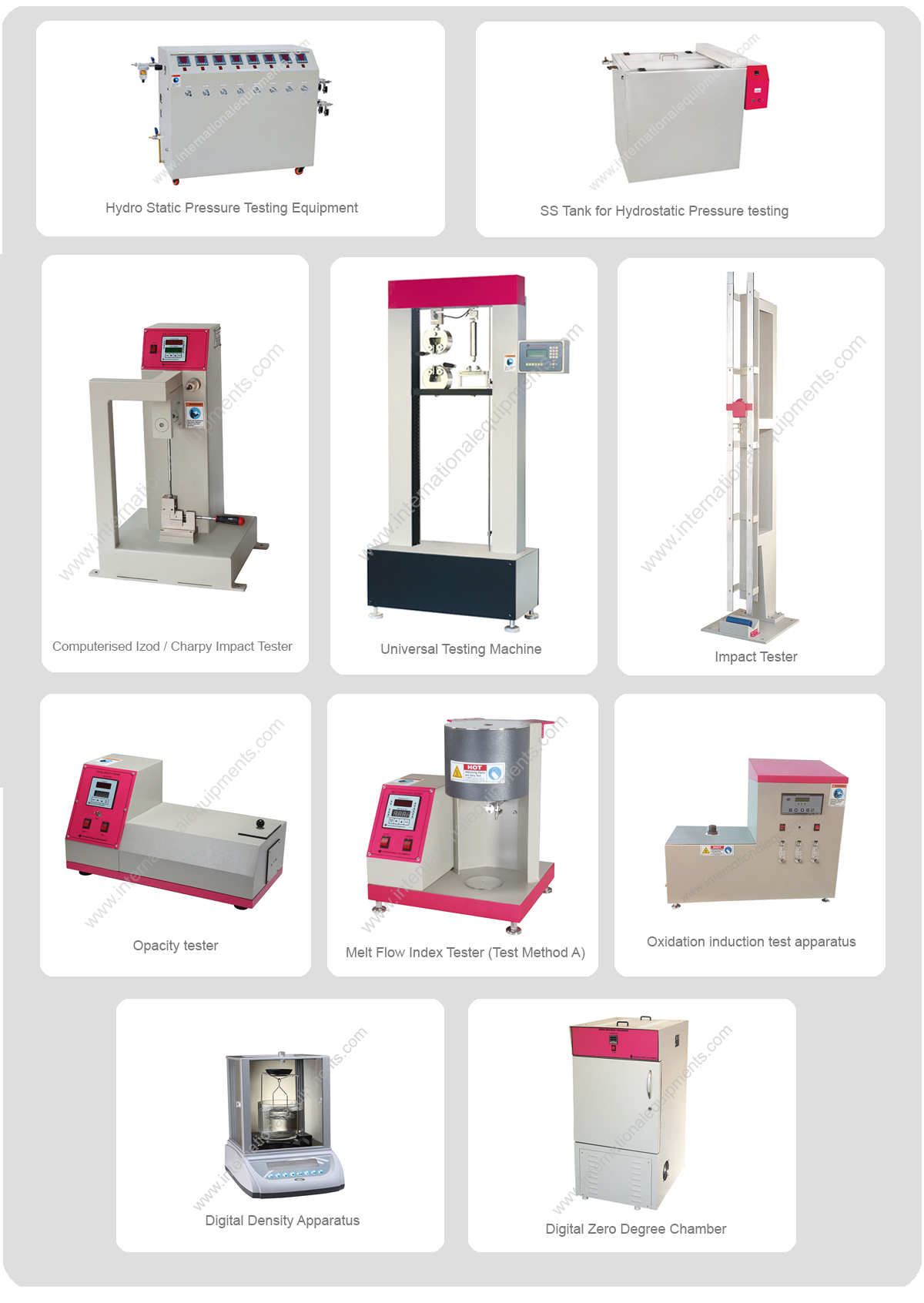
Testing Equipment for Plastic Pipe Manufacturers
Tensile Testing Machine (Single Screw)
Universal Testing Machine (UTM) — Twin Screw / Column
Melt Flow Index Tester
Muffle Furnace
Carbon Black Content Apparatus
Digital GSM Weighing Balance
Digital Density Apparatus
Hot Air Oven
Testing Equipment for Packaging Industry
Testing Equipment for Plastic Pipe Manufacturers
Contact International Equipments today for a personalised quotation, demo video, or factory visit. Our team is ready to help you choose the right MFI tester model for your laboratory.
Get Free Quote