Request
Quote

International Equipments is one of India's most experienced manufacturers, suppliers and exporters of Rubber Testing Equipments — built at our Mumbai facility since 1971 and exported to over 63 countries worldwide. Our rubber testing instruments are installed in the QC laboratories of natural rubber compounders, EPDM and synthetic rubber producers, tyre manufacturers, automotive rubber component plants, gasket and seal manufacturers, footwear plants and government testing laboratories across India and globally.
Rubber testing covers a focused set of laboratory measurements that determine the mechanical performance, durability and chemical composition of vulcanised rubber compounds. The core property tests — tensile strength, elongation, hardness, ageing resistance, ash content, carbon black content and dispersion — together tell the QC team whether the rubber compound will perform reliably across its design life in real service conditions. Our equipment range covers ALL these tests plus the sample preparation instruments (Hydraulic Press with dies, Contour Cutter) needed to produce standard-shape test specimens from rubber sheet samples.
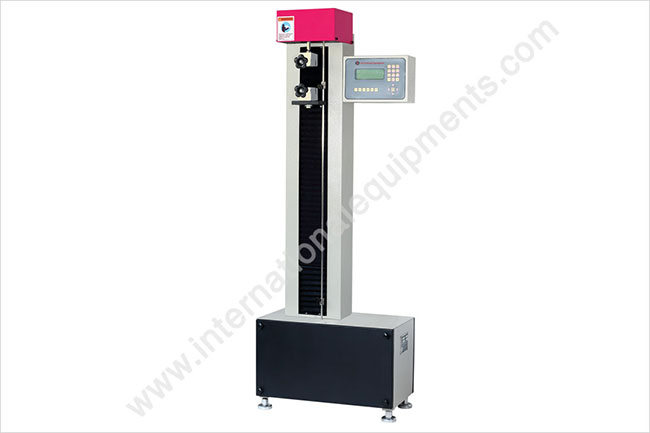 Tensile Testing MachineRead More
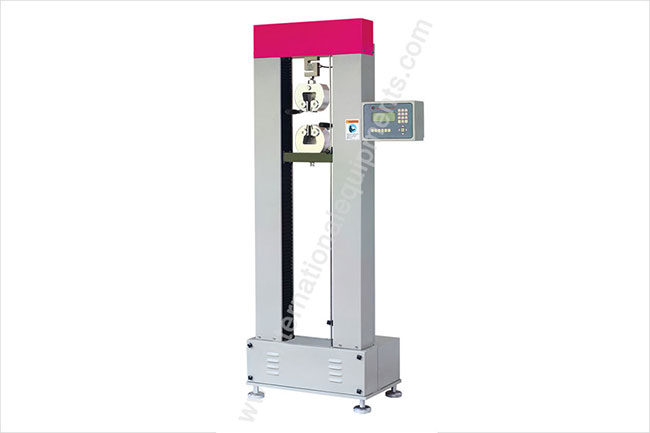
 Universal Testing MachineRead More
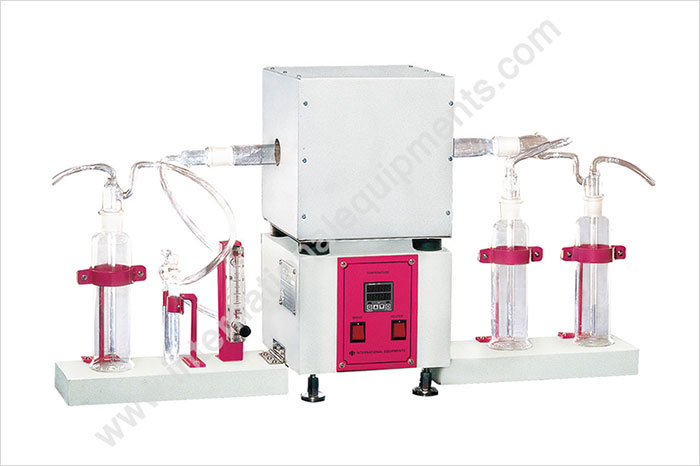
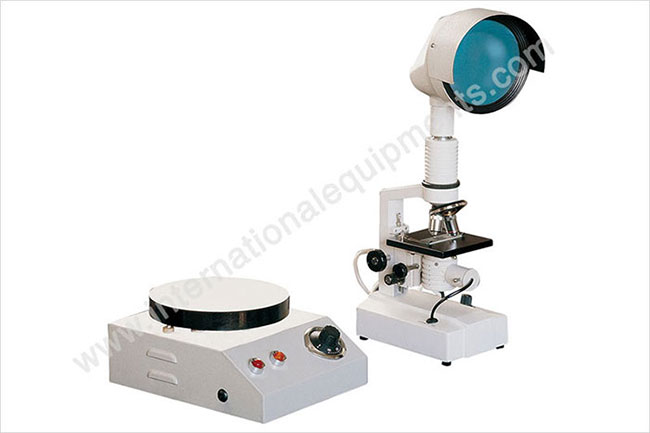 Carbon Content ApparatusRead More
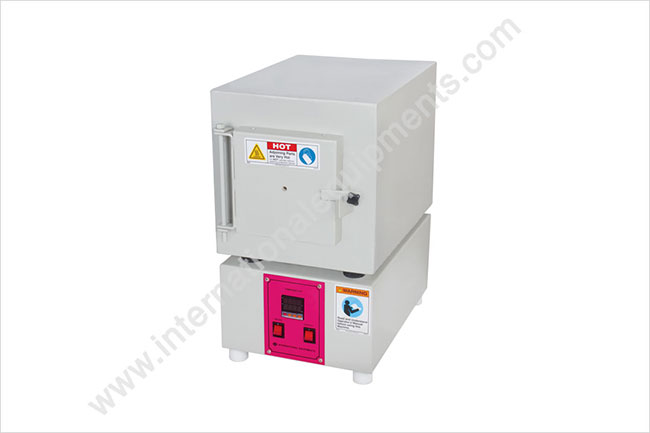 Muffle FurnaceRead More
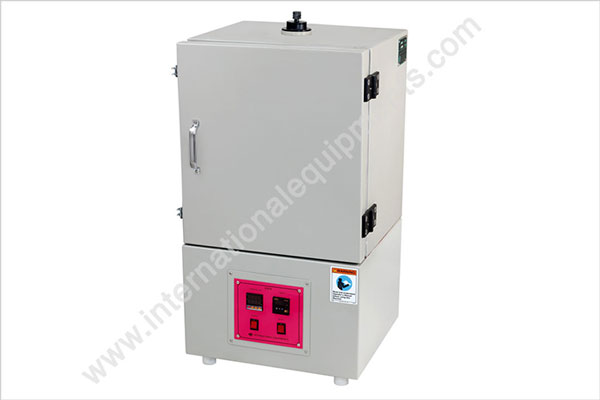 Hot Air OvenRead More
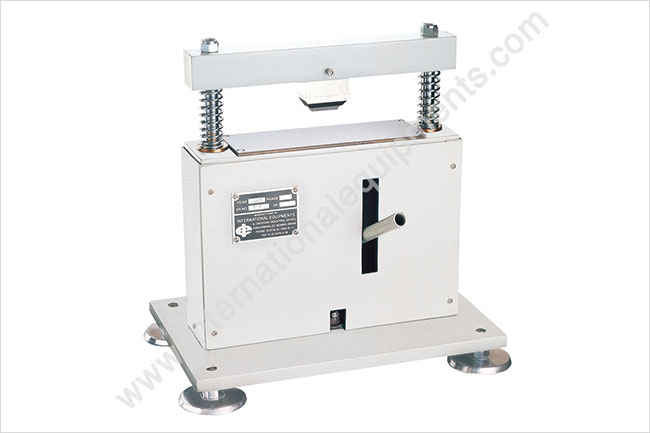 Hydraulic Press And DieRead More
International Equipments is involved in the manufacturing of Rubber Testing Equipments in India since year 1971. These equipment are supplied and exported to more than 63 countries across the world. "Rubber" in a synthetic form also called as EPDM - (ethylene propylene diene monomer) has typical property of flexiblity and is highly resistant to shock absorption. Therefore rubber is used in applications where high abrasion or elasticity is a specific requirement. At International Equipments, we produce equipment to check limited physical properties such as tensile strength, elongation, hardness, Ageing test, Carbon content, Carbon dispersion, Ash content similarly we also produce few equipment for preparation of specimen required for conducting these tests such as hydraulic Press with Dies, Contour cutter with templates. Following Machines and Instruments use for Checking Rubber Strength.
Rubber testing is the systematic laboratory measurement of vulcanised rubber's mechanical, physical and chemical properties to verify that a finished rubber compound meets the specification it was designed and procured against. Rubber differs fundamentally from plastic — it is an elastomer that returns to its original shape after deformation, can stretch to several times its original length without breaking, and absorbs shock and vibration far better than rigid materials. These unique properties make rubber irreplaceable in tyres, gaskets, seals, hoses, automotive bushings, footwear, conveyor belts and thousands of other applications where flexibility, resilience and damping are essential.
Quality control of rubber compounds is just as critical as for plastics, but the test methods are different. Tensile testing of rubber uses dumbbell specimens cut from vulcanised sheet (ASTM D 412 / ISO 37) and measures both tensile strength at break AND elongation at break — the latter often more important than the former for rubber applications. Heat ageing in a Hot Air Oven (per ASTM D 573) verifies the rubber will retain its properties through years of service. Ash content via Muffle Furnace (per ASTM D 297) and carbon black content + dispersion give compositional QC. Hardness testing (Shore A / IRHD) is the most-run rubber QC test in production lines worldwide.
The rubber testing laboratory measures six key property groups. Each requires specific instruments — most QC labs need at least one instrument from each group:
Mechanical Properties — Tensile, Tear, Compression
Tensile strength, elongation at break, modulus at specified elongation (M100, M300) are the primary mechanical-property tests for rubber. Tear strength (ASTM D 624) is also important for tyre and automotive applications. Compression set tests (ASTM D 395) determine how well rubber recovers its shape after sustained compression — critical for seals and gaskets. Tested on Tensile Testing Machine or Universal Testing Machine using ASTM D 412 Type C dumbbell specimens.
Thermal / Ageing Properties — Heat Ageing and Retention
Rubber must retain its mechanical properties after years of service. Heat ageing tests (ASTM D 573 / ISO 188) condition rubber specimens in a Hot Air Oven at elevated temperature (typically 70°C, 100°C, 150°C) for specified durations (typically 70 hours to 7 days) — then re-test tensile properties and compare to unaged values. The percentage change in tensile strength, elongation and hardness is the indicator of long-term performance.
Hardness (Shore A / IRHD)
Rubber hardness is the most-run QC test on rubber production lines worldwide — measured with a portable Shore A durometer or laboratory IRHD hardness tester. Hardness directly correlates with the compound formulation and the cure state, making it the fastest QC check that the rubber has been compounded and vulcanised correctly. Most rubber products are specified within a tight hardness range (e.g., 60-65 Shore A for automotive seals, 70-75 for tyre tread).
Chemical Composition — Ash and Carbon Black Content
Ash content (ASTM D 297 / D 5630) measured on the Muffle Furnace tells you the mineral filler loading of the rubber compound. Carbon black content (ASTM D 1603 / D 297) measured on the Carbon Black Content Apparatus tells you the carbon black loading — typically 25-40% in tyre compounds, lower in non-tyre applications. Both are essential QC checks on incoming compound and on finished rubber products.
Carbon Black Dispersion
Even with the correct carbon black percentage, the dispersion quality (how uniformly the carbon black is distributed) significantly affects rubber properties. Tested on the Carbon Black Dispersion Tester per ISO 11345 / ASTM D 7723 — particularly important for tyre applications where dispersion drives wear resistance and rolling resistance.
Density
Rubber density (ASTM D 297 / ISO 2781) is measured on the Digital Density Apparatus by water immersion (Archimedes' principle). Routine QC check — density variation indicates compound or cure inconsistency. Typical rubber densities range from 0.95 g/cm³ (lightly-filled compounds) to 1.5 g/cm³ (heavily-filled tyre compounds).
Economical single-screw tensile tester — the foundation rubber QC instrument. Higher-elongation capability than typical plastic-only testers, which is essential for rubber where elongation at break can exceed 500-700%.
What it tests: Tensile strength and elongation at break of rubber dumbbells per ASTM D 412 Type C and ISO 37.
Twin-column UTM with PC software — handles tensile + compression set + tear strength on a single machine. Best choice for labs running multiple rubber test methods. Variable cross-head speeds (10 to 1000 mm/min) accommodate all rubber test standards.
What it tests: Tensile, compression and tear testing of rubber per ASTM D 412, D 395, D 624 and ISO 37, 815, 34-1.
Precision hot air oven (ambient to 250°C) — critical for heat ageing studies that determine long-term rubber durability. Used alongside the tensile tester for the standard 'unaged vs aged' tensile-property comparison.
What it tests: Heat ageing of rubber specimens per ASTM D 573 and ISO 188 (typically 70°C, 100°C, 150°C for 70 hours to 7 days).
High-temperature furnace (ambient to 1150°C) — burns away the rubber matrix, leaving only the inorganic filler residue. Foundation for filler loading verification and compound composition QC.
What it tests: Ash content of rubber compounds per ASTM D 297 and ASTM D 5630.
Dedicated pyrolysis furnace + complete glassware set — critical for tyre and automotive rubber QC where carbon black loading (typically 25-40%) drives wear, hardness and electrical properties.
What it tests: Carbon black percentage of rubber compounds by pyrolysis per ASTM D 1603 and D 297.
Integrated hot plate + dual-magnification microscope — grades the uniformity of carbon black distribution in rubber compounds. Especially critical for tyre tread compounds where dispersion drives wear and rolling resistance.
What it tests: Carbon black dispersion quality in rubber per ISO 11345 and ASTM D 7723 grading scale.
5-tonne bench-top sample cutting press — the foundation instrument for any rubber QC lab. Cuts standard ASTM D 412 Type C dumbbells, tear test specimens and compression set buttons. Dies supplied separately and matched to your test standards.
What it tests: Cuts ASTM D 412 Type C dumbbell specimens and other standard-shape rubber test samples up to 4 mm thick.
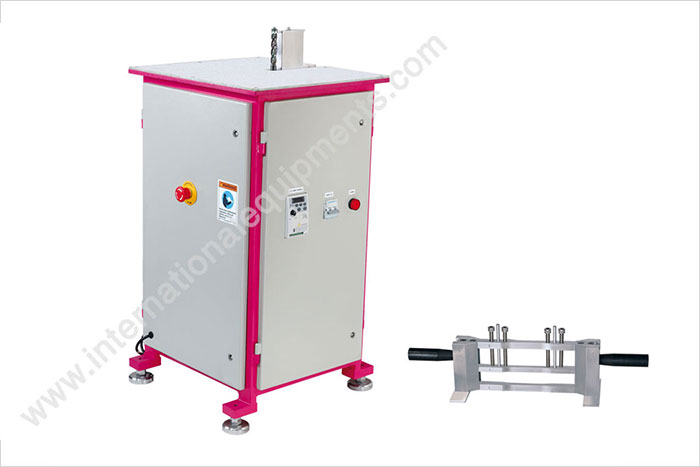
Companion to the Hydraulic Press — handles thin rubber sheet and custom specimen shapes. Useful for tear test specimens (angle, crescent) and any custom geometry not covered by standard dies.
What it tests: Powered cutting tool for thin rubber sheet and complex specimen shapes that the Hydraulic Press cannot easily handle.
Digital balance with built-in density-determination kit — gives direct density readout. Routine QC check that catches compound mixing and cure inconsistencies before product release.
What it tests: Density of rubber samples per ASTM D 297 and ISO 2781 (water immersion / Archimedes method).
Specialised UTM configuration for adhesion testing — handles rubber-to-metal bonded gaskets, rubber-to-fabric belts, rubber-coated component adhesion testing.
What it tests: Bond strength of rubber-to-substrate adhesion (rubber bonded to metal, fabric, plastic).
Dedicated peel and bond strength tester — economical alternative to a full UTM for routine peel work on rubber laminates and conveyor-belt-style structures.
What it tests: Peel adhesion of rubber-bonded laminates and rubber-coated fabric structures.
Reliable rubber test results start with correctly-prepared test specimens. Two instruments form the rubber sample preparation chain — both essential for any well-equipped rubber QC laboratory:
Hydraulic Press + Standard ASTM D 412 Type C Dumbbell Die
The bench-top 5-tonne Hydraulic Press fitted with a standard ASTM D 412 Type C dumbbell die produces clean, dimensionally accurate tensile specimens from vulcanised rubber sheet in a single press stroke. Type C is the dumbbell geometry specified by ASTM D 412 (the central rubber tensile standard) — gauge length 25 mm, width 6.0 mm. Many labs also need tear test dies (Type A, B, C per ASTM D 624) and compression set button dies — we supply all of these separately.
Contour Cutter with Templates for Complex Shapes
The Contour Cutter is the companion tool for specimen shapes that cannot be efficiently cut with a single press die — angle tear specimens (ASTM D 624 Type A), crescent tear specimens, custom geometries and very thin rubber films. The Contour Cutter follows a template outline with a powered cutting wheel, producing clean edges on materials too thin or too tough for full-thickness die punching.
ASTM D 412 — Standard Test Methods for Vulcanised Rubber and Thermoplastic Elastomers — Tension (Type C dumbbell)
ASTM D 624 — Standard Test Method for Tear Strength of Conventional Vulcanised Rubber and Thermoplastic Elastomers
ASTM D 573 — Standard Test Method for Rubber — Deterioration in an Air Oven (heat ageing)
ASTM D 395 — Standard Test Methods for Rubber Property — Compression Set
ASTM D 297 — Standard Test Methods for Rubber Products — Chemical Analysis (ash, carbon black)
ASTM D 1603 — Standard Test Method for Carbon Black Content in Olefin and Rubber Compounds
ASTM D 5630 — Standard Test Method for Ash Content in Plastics and Rubber
ASTM D 7723 — Carbon Black Dispersion in Rubber by Microscope (companion to ISO 11345)
ASTM D 2240 — Standard Test Method for Rubber Property — Durometer Hardness (Shore A)
ASTM D 1415 — Standard Test Method for Rubber Property — International Hardness (IRHD)
ISO 37 — Rubber, Vulcanised or Thermoplastic — Determination of Tensile Stress-Strain Properties
ISO 34-1 — Rubber, Vulcanised or Thermoplastic — Determination of Tear Strength
ISO 188 — Rubber, Vulcanised or Thermoplastic — Accelerated Ageing and Heat Resistance Tests
ISO 815 — Rubber, Vulcanised or Thermoplastic — Determination of Compression Set
ISO 2781 — Rubber, Vulcanised or Thermoplastic — Determination of Density
ISO 11345 — Rubber — Assessment of Carbon Black and Carbon Black/Silica Dispersion
ISO 247 — Rubber: Determination of Ash
ISO 7619 — Rubber, Vulcanised or Thermoplastic — Determination of Indentation Hardness (Shore)
IS 3400 — Indian Standard methods of test for rubber and rubber-like materials
IS 7916 — Indian Standard for vulcanised rubber gaskets
Different rubber products require different combinations of tests. The matrix below shows which tests are typically applied to each product category:
Tyres & Tyre Components (Tread, Sidewall, Inner Liner)
Tensile (D 412), Tear (D 624), Carbon Black Content + Dispersion (D 1603 / D 7723), Hardness (D 2240), Heat Ageing (D 573), Density (D 297)
Automotive Rubber Components (Gaskets, Seals, Hoses, Bushings)
Tensile (D 412), Compression Set (D 395), Hardness (D 2240), Heat Ageing (D 573), Density (D 297), Bond Strength (D 429 with Adhesive UTM)
EPDM Roofing & Weatherstrip
Tensile (D 412), Tear (D 624), Heat Ageing, UV Ageing, Hardness (D 2240), Compression Set
Industrial Rubber Hoses & Belts
Tensile (D 412), Tear (D 624), Peel Adhesion of Bonded Plies (with Peel Tester), Density, Heat Ageing
Conveyor Belts (Rubber + Fabric Composite)
Tensile (D 412), Tear, Peel Adhesion of Plies (Peel Tester), Heat Ageing, Bond Strength (UTM for Adhesives)
Footwear & Footwear Components (Soles, Insoles)
Tensile (D 412), Tear, Hardness (D 2240), Abrasion, Heat Ageing, Density
Natural Rubber & Synthetic Rubber Compounds (Raw)
Ash Content (Muffle Furnace), Carbon Black Content + Dispersion, Density, Tensile of test sheet, Cure cycle verification
Rubber-Bonded Metal Components (Engine Mounts, Bushes)
Bond Strength (UTM for Adhesives, ASTM D 429), Tensile (D 412), Compression Set, Hardness, Heat Ageing
Latex / NBR / Nitrile / Silicone Specialty Compounds
Tensile (D 412), Hardness, Density, Heat Ageing, plus chemical-resistance soak tests (oils, fuels, chemicals)
Tyre Manufacturers (passenger car, truck, OTR, two-wheeler)
Automotive Rubber Component Manufacturers (gaskets, seals, hoses, bushings, weatherstrips, engine mounts)
EPDM Roofing & Weatherproofing Manufacturers
Industrial Rubber Hose & Belt Manufacturers
Conveyor Belt Manufacturers (mining, port, manufacturing)
Footwear & Footwear Component Manufacturers
Rubber Compounders & Master-batch Producers
Natural Rubber & Latex Producers
Synthetic Rubber Producers (SBR, BR, EPDM, NBR, Silicone)
Rubber-Bonded Metal Component Manufacturers
Cable & Wire Insulation Manufacturers (rubber-insulated cables)
Sports Goods, Toys & Speciality Rubber Product Manufacturers
Government Testing Labs, NABL Accredited Labs & BIS-Approved Test Houses
R&D Centres of Rubber & Tyre Companies
Polytechnic Colleges & Rubber Technology Institutes
Manufacturing Rubber Testing Equipment Since 1971
Over 50 years of focused experience in rubber testing instrumentation — our equipment is built on decades of feedback from rubber, tyre and automotive customers across India and 63 export countries.
Exported to 63+ Countries
Our rubber testing instruments are installed in customer laboratories across the Middle East, Africa, South-East Asia, Europe, South America and beyond — proven international reliability.
Complete Rubber QC Range Under One Roof
Tensile + UTM + Hot Air Oven + Muffle Furnace + Carbon Black Content & Dispersion + Hydraulic Press + Contour Cutter + Density Apparatus — all designed and built at our Mumbai facility. One supplier for the complete rubber QC laboratory.
Used by Leading Indian and Multinational Rubber Manufacturers
Our instruments are installed in QC laboratories of major Indian tyre manufacturers, automotive rubber component plants, EPDM roofing producers, conveyor belt makers and government testing labs — including BIS-approved test houses.
Full Coverage of ASTM, ISO, BIS / IS Standards
Every instrument complies with the relevant ASTM (USA), ISO (international) and IS (India) rubber test standards — covers domestic, USA-export and European-export rubber compound specifications from a single supplier.
Complete Laboratory Package Pricing
Buy your entire rubber QC laboratory from us — package quotations cover the instrument suite needed for your specific rubber product type, with single commissioning visit, single training programme.
Custom Configurations Available
UTM load ranges, Hot Air Oven sizes, Muffle Furnace chamber dimensions, custom dies for non-standard specimen geometries — all configurable to match the customer's specific rubber product range.
ISO Certified, CE Marked Manufacturing
Designed and built at our Mumbai facility under ISO certified quality systems, with CE marking for export to the Middle East, Africa, South-East Asia, Europe and South America.
Calibration Support
We offer one calibration visit per year, which is sufficient to maintain the accuracy and performance of the equipment. The calibration visit is provided after completion of the initial 1-year warranty period.
For a starter rubber QC lab the typical 'minimum viable' suite is: (1) Tensile Testing Machine — for ASTM D 412 tensile and elongation; (2) Hydraulic Press + ASTM D 412 Type C dumbbell die — for specimen preparation; (3) Hot Air Oven — for heat ageing studies per ASTM D 573; (4) Digital Density Apparatus — for density verification; (5) a portable Shore A hardness durometer (sourced separately). These five capabilities cover the fundamental rubber QC tests required for most rubber product specifications. Beyond these foundations, ash content (Muffle Furnace), carbon black content + dispersion, and compression set on the UTM are common next-stage additions.
Rubber can stretch to 500-700% or more of its original length before breaking — far higher than most plastics. The tensile tester must have enough cross-head travel to accommodate this elongation, plus the load cell must read accurately at low loads (rubber tensile is generally much lower force than plastic tensile). Our Tensile Testing Machine and UTM are configurable for the higher-elongation, lower-load regime that rubber testing requires. Please mention 'for rubber testing' in your enquiry — we will ensure the right configuration.
Both measure rubber hardness but use different methods and scales. Shore A (ASTM D 2240) uses a spring-loaded indenter that gives a quick portable readout — widely used on production lines for routine QC. IRHD (International Rubber Hardness Degree, per ASTM D 1415 / ISO 48) uses a dead-weight indenter on a laboratory bench instrument — more accurate and reproducible than Shore A, preferred for laboratory QC of finished rubber products. The two scales correlate but are NOT directly interchangeable. Most rubber specifications nominate one method (Shore A is most common in automotive/tyre, IRHD more common in laboratory R&D). We do not currently manufacture hardness testers ourselves — please source from a hardness-specialist supplier; we can supply all the OTHER rubber QC instruments.
Rubber slowly degrades under heat and oxygen exposure over its service life — the polymer chains undergo oxidative chain scission and crosslinking, gradually changing tensile, elongation and hardness properties. A rubber gasket that performs perfectly when installed may become brittle and crack after 5-10 years of service in a hot engine compartment. Heat ageing testing (ASTM D 573 / ISO 188) accelerates this degradation by exposing rubber specimens to elevated temperature (typically 70°C, 100°C or 150°C) for fixed durations (typically 70 hours, 168 hours or 504 hours) — then measures the change in tensile properties. The percentage retention indicates long-term durability.
Yes. We commonly supply complete rubber QC laboratories as a single integrated quotation — covering the full instrument suite for the customer's specific rubber product type, with one commissioning visit, one training programme covering all instruments, one set of factory calibration certificates, and one AMC contract. Package pricing is significantly more attractive than instrument-by-instrument pricing. Please share your rubber product type (tyre, automotive components, footwear, gaskets, hoses, conveyor belts, etc.) and the test standards you must follow — our team will recommend the right instrument suite and quote the complete package.
Yes. Thermoplastic elastomers and thermoplastic vulcanisates (TPE, TPV, SBS, SEBS, TPO) are tested using the same fundamental methods as vulcanised rubber — ASTM D 412 for tensile, ASTM D 624 for tear, ASTM D 573 for heat ageing, ASTM D 297 for ash and carbon black. Our equipment range fully supports TPE / TPV testing. The main practical difference is processing — TPE / TPV is melt-processable like plastic (so MFI testing of the raw material is also relevant), while traditional rubber is vulcanised in moulds.
There is significant equipment overlap between the two categories — many instruments (Tensile Tester, UTM, Hot Air Oven, Muffle Furnace, Carbon Black Content, Density Apparatus, Hydraulic Press) serve both plastic and rubber QC. The category pages are organised by SEO-targeted terminology — customers searching for 'rubber testing equipment' are more likely focused on tyre, automotive, gasket and footwear applications; customers searching for 'plastic testing equipment' are more likely focused on pipe, film, container and engineering plastic applications. The underlying instruments largely overlap. Please use whichever category page best matches your terminology.
Yes. For customers buying multiple instruments from us, we provide free on-line installation of every instrument, operator training on each test method and each instrument's software, and factory calibration certificates anywhere in India. Rubber-specific training includes correct ASTM D 412 Type C dumbbell preparation and tensile-test procedure, heat ageing methodology per ASTM D 573, and carbon black dispersion grading.
Tensile Testing Machine (Single Screw)
Universal Testing Machine (UTM)
Hot Air Oven
Muffle Furnace
Carbon Black Content Apparatus
Carbon Black Dispersion Tester
Hydraulic Press (Sample Cutting Press)
Contour Cutter with Templates
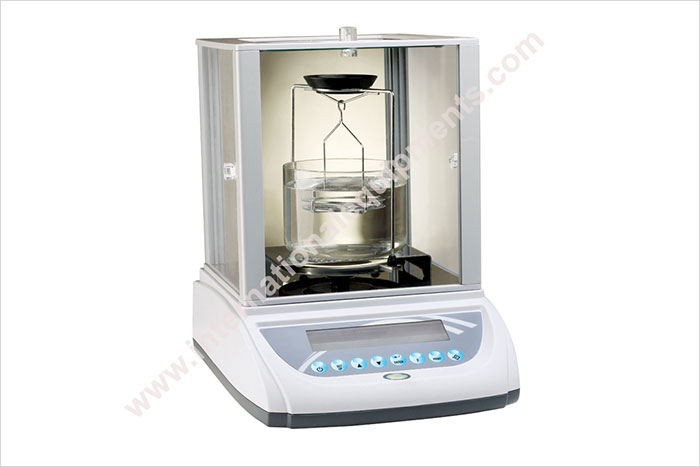
Digital Density Apparatus
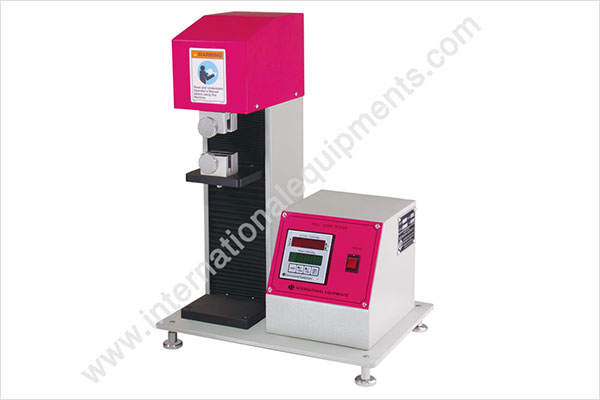
Digital Peel Tester
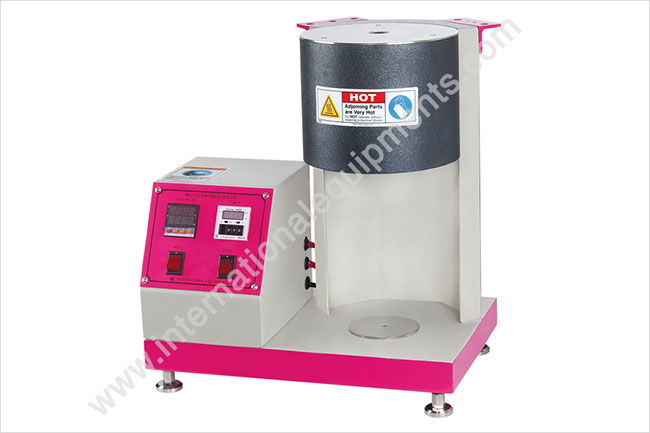
Plastic Testing Equipments

Polymers Testing Equipments
Material Testing Equipments
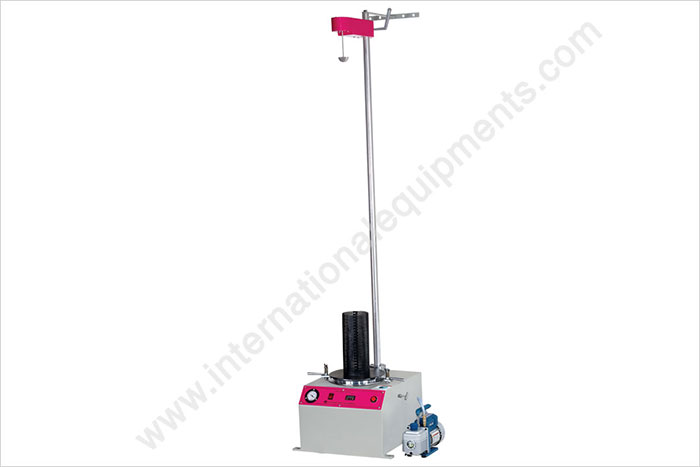
Film Testing Equipments
Pipe Testing Equipments

Testing Equipment for Packaging Industry
Testing Equipment for Plastic Pipe Manufacturers
Tensile Testing Machine (Single Screw)
Universal Testing Machine (UTM)
Hot Air Oven
Muffle Furnace
Carbon Black Content Apparatus
Carbon Black Dispersion Tester
Hydraulic Press (Sample Cutting Press)
Contour Cutter with Templates
Digital Density Apparatus

Universal Testing Machine for Adhesives, Ceramic Tiles & Mosaics
Digital Peel Tester
Plastic Testing Equipments
Polymers Testing Equipments
Material Testing Equipments
Film Testing Equipments
Pipe Testing Equipments
Testing Equipment for Packaging Industry
Testing Equipment for Plastic Pipe Manufacturers
Contact International Equipments today for a personalised quotation, demo video, or factory visit. Our team is ready to help you choose the right MFI tester model for your laboratory.
Get Free Quote