Quote Request
Quote
Manufacturers and Suppliers of Charpy Impact Tester / Izod Impact Tester

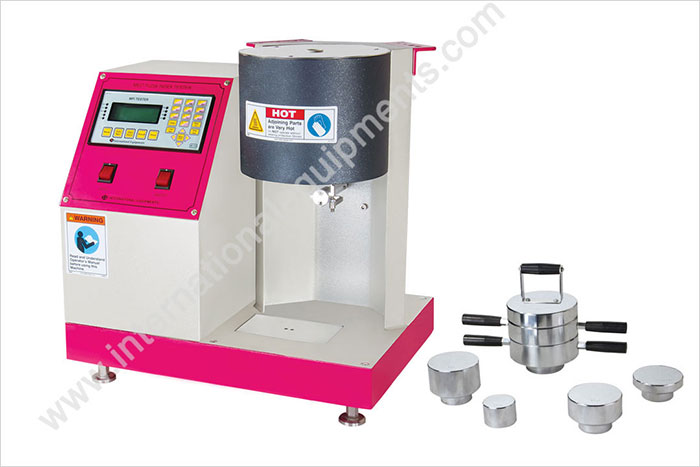
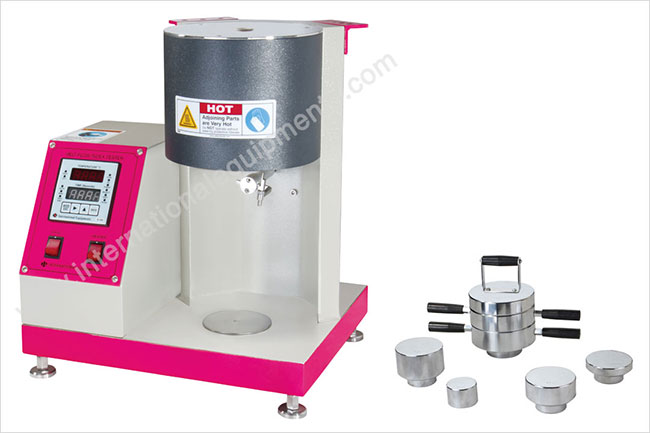
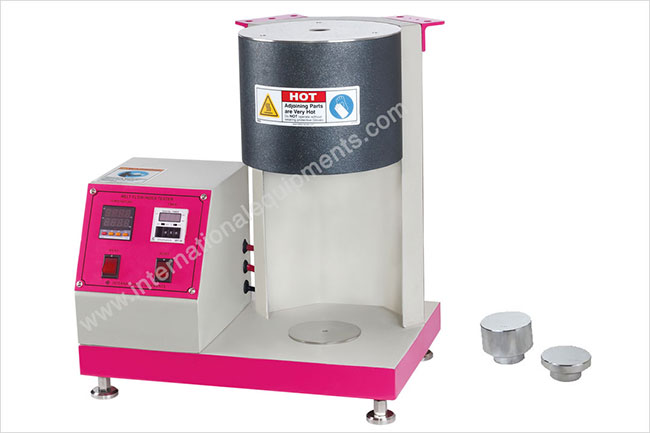
Computerized Melt Flow Index Tester (Test Method A & B)

About Computerized Melt Flow Index Tester (Test Method A & B)

As per ASTM D 1238 & ISO 1133 - (Test Method A & B) to check the melt flow rate (MFR), melt volume rate (MVR) & melt density of thermoplastics and compounds with automatic result.

The Computerized Melt Flow Index Tester (Test Method A & B) is the flagship instrument in our MFI range. It is a fully automatic, microcontroller-based, PC-interfaced tester that determines three critical melt flow properties — Melt Flow Rate (MFR in g/10 min), Melt Volume Rate (MVR in cu.cm/10 min) and Melt Density (g/cu.cm) — in a single test, in full compliance with ASTM D 1238 and ISO 1133 Test Methods A and B.

This model is designed for laboratories that test a wide range of polymers, including high-MFI grades above 50 g/10 min where Test Method A becomes unreliable. Test Method B uses linear displacement measurement of the piston to derive MVR directly, while the built-in weighing scale derives melt density from the same test. The combined output of MFR, MVR and Melt Density gives a complete rheological fingerprint of the polymer sample.

With auto loading of weights, auto cutting of flow extrudate, auto weighing of the extrudate and software-driven result calculation, the instrument is virtually hands-free. It is the recommended model for export-oriented polymer producers, R&D laboratories and contract testing houses that need to satisfy international QC audits.

★ VIEW INSTALLED CLIENTS
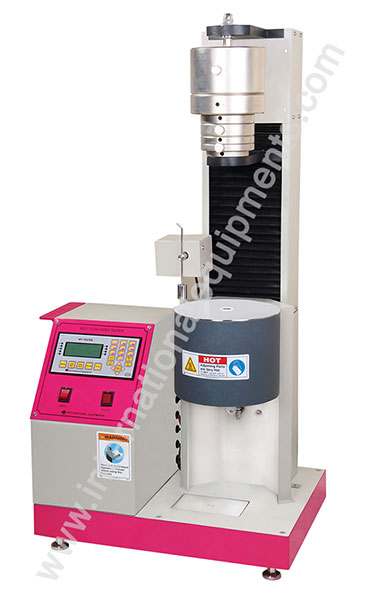
Computerized Melt Flow Index Tester Suppliers

Specifications

Parameter Specification
Test Standard ASTM D 1238 & ISO 1133 (Test Method A & B)
Microcontroller Microcontroller with alpha-numeric keypad and built-in temperature controller
Temperature Range Up to 400°C; resolution 0.1°C; accuracy ± 0.1°C
Timer Range Built-in timer up to 999.9 seconds
Piston Travel Up to 25 mm; resolution 0.02 mm
Specimen Cutting Motorized
Specimen Weighing Automatic up to 60 gm; resolution 5 mg
PC Output Through serial port with Windows 7 compatible software
Weights Supplied 0.325 kg, 1.2 kg, 2.16 kg, 3.8 kg, 5 kg, 10 kg & 21.6 kg hard chrome plated weights
Digital Display Individual MFI, MVR & Melt Density results, plus average results
Accessories Orifice, Piston, Spoon, Spanner, Plumb line, Funnel, Material charger, Mirror, Tweezer, Orifice cleaner, Barrel cleaner, Sample cutter, Accessory stand
Paint Finish Powder coated
Power Supply 230 Volts, 50 Hz, single phase

Unique Features

  • Specialised model with auto loading of weights, auto program control, auto cutting of flow extrudate, auto weighing of extrudate, and linear displacement measurement.
  • Software-driven calculation of MFI (g/10 min), MVR (cu.cm/10 min), and Melt Density (g/cu.cm) in a single test cycle.
  • Test Method A measures MFR by time-based extrudate cutting, ideal for polymers with MFI below 50 g/10 min.
  • Test Method B measures MFR through linear piston travel (cm) versus time, essential for high-MFI polymers above 50 g/10 min.
  • Wide weight range from 0.325 kg to 21.6 kg covers all ASTM and ISO test conditions, including light-load and high-load polymers.
  • Piston travel measurement with 0.02 mm resolution ensures highly accurate MVR calculation.
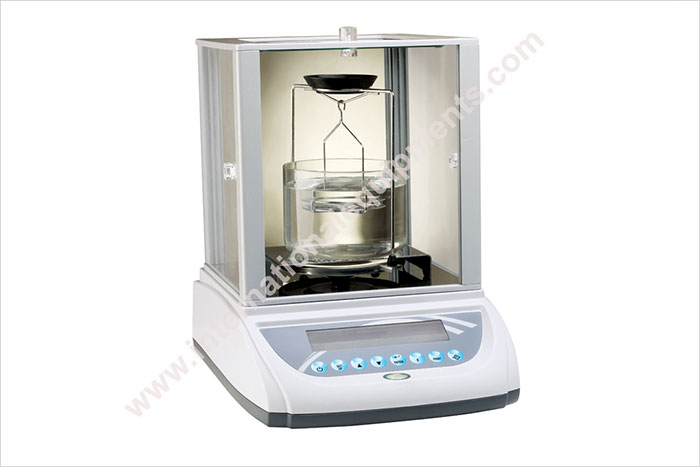
  • Built-in weighing system derives melt density directly from the test, eliminating the need for a separate density measurement apparatus.

Technical Information

  • ASTM D 1238 — Standard Test Method for Melt Flow Rates of Thermoplastics by Extrusion Plastometer (Test Methods A and B)
  • ISO 1133 — Plastics: Determination of the Melt Mass-Flow Rate (MFR) and the Melt Volume-Flow Rate (MVR) of thermoplastics
  • Polymers with MFI above 50 g/10 min where Test Method A becomes less reliable for accurate measurement.
  • Full rheological characterisation requiring combined MFR, MVR, and Melt Density analysis in a single system.
  • Research and development (R&D) and product development laboratories of polymer manufacturers.
  • Contract testing laboratories and third-party certification bodies performing standardized polymer testing.
  • Export-oriented manufacturers requiring internationally accepted ASTM D 1238 and ISO 1133 compliant data.
  • Universities, engineering institutes, and research organisations working on polymer science and formulation.
  • Petrochemical companies and resin grade developers involved in material design and quality optimisation.
  • Three Tests, One Machine : MFR, MVR and Melt Density in a single test cycle — no need to buy separate instruments.
  • Covers High-MFI Polymers : Method B with linear piston displacement makes it possible to test polymers above 50 g/10 min reliably.
  • Auto Loading of Weights :Unique auto-loading feature reduces operator effort and human error during the test.
  • Widest Weight Range in our Range :Seven hard chrome plated weights from 0.325 kg to 21.6 kg cover light-load polymers, standard conditions and high-load grades.
  • Software Reporting:All results stored and exportable for QC audit trails, ISO 9001 documentation and export certification.
  • Made in India by International Equipments:Engineered and manufactured at our Mumbai facility, with full after-sales support and AMC available.

Frequently Asked Questions

Test Method A measures MFR by collecting and weighing the extrudate over a fixed time interval. It is reliable primarily for polymers with MFI below approximately 50 g/10 min. Above this range, the flow becomes too fast, and timing or cutting errors can significantly affect accuracy. Test Method B eliminates this limitation by measuring linear piston travel with time, directly giving MVR without relying on manual or timed cutting. It is essential for high-flow polymers such as LDPE film grades, low-viscosity masterbatches, and recycled PP.
MFR (Melt Flow Rate) is measured in grams per 10 minutes and represents the mass of polymer flowing through the die. MVR (Melt Volume Rate) is measured in cubic centimetres per 10 minutes and represents the volume of material flowing. The relationship between them is defined by melt density: MFR = MVR × melt density. Since different standards require different parameters, our Method A & B system provides MFR, MVR, and melt density in a single test.
ASTM D 1238 and ISO 1133 define multiple test condition codes such as 190°C/2.16 kg, 230°C/2.16 kg, 230°C/5 kg, 300°C/1.2 kg, and 190°C/21.6 kg. To comply with all standard test conditions, the instrument includes a full set of hard chrome plated weights ranging from 0.325 kg to 21.6 kg.
The built-in 60 g weighing system with 5 mg resolution measures the extrudate mass, while the piston travel sensor with 0.02 mm resolution measures the corresponding volume. The software calculates melt density from these parameters, providing results comparable to dedicated density apparatus within standard laboratory tolerances.
Yes. The Windows-compatible software stores all readings, calculates averages, and generates exportable test reports in PDF format. Reports can include polymer name, operator details, test conditions, and all measured values, making them suitable for ISO 9001 quality documentation.
Yes. We provide free online installation, commissioning, and operator training. On-site installation can also be arranged at an additional cost depending on location and requirements.

Need the most advanced MFI tester available in India?

Request a detailed quotation for the Computerized Melt Flow Index Tester (Method A & B). Our team will share the brochure, software demo and a list of leading polymer manufacturers and R&D labs already using this flagship model.

Get Free Quote